Honey bees (Apis mellifera) are among the most extraordinary creatures on Earth. They play a vital role in pollinating crops, sustaining ecosystems, and producing honey—a natural wonder cherished for centuries. But beyond their economic and ecological importance, honey bees captivate scientists, naturalists, and the curious alike with their complex biology and intricate social behaviors.
Open for yourself the fascinating world of honey bee biology and behavior, unraveling their anatomy, life cycle, communication methods, and more. By the end, you’ll gain a newfound appreciation for these remarkable insects — little miracle workers.
Honey bees, classified under the genus Apis, are found in various regions across the globe. Among the known species, the western honey bee, Apis mellifera, stands out as the most widely “domesticated” and studied.
Actually: Can honey bees be domesticated? The short answer is — No. The explanation lies in their biology.
These little wonders have adapted to various climates and landscapes, making them resilient pollinators in diverse ecosystems. By enabling plants to bear fruit and seeds, bees support biodiversity and food production, and so without knowing it they form a kind of partnership with us, humans.
Learning more about honey bees paves the way for more informed efforts toward their preservation and our shared future.
Anatomy of a Honey Bee
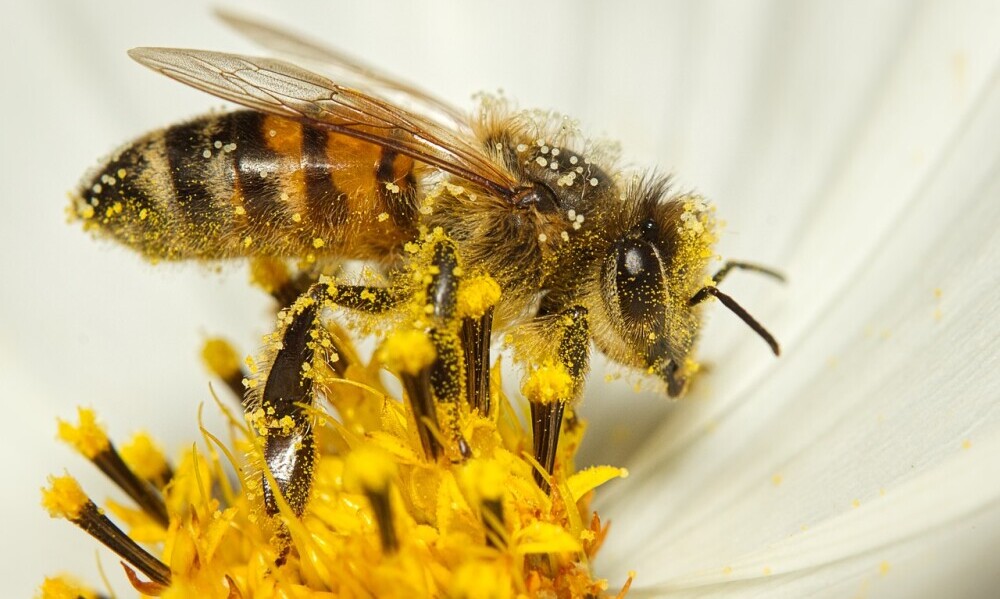
Understanding honey bee biology begins with their anatomy. A honey bee’s body is divided into three main sections:
1. Head
- Compound Eyes: honey bees have two large compound eyes made up of thousands of tiny lenses. These eyes are excellent for detecting movement and UV patterns on flowers.
- Ocelli: in addition to their compound eyes, bees have three simple eyes (ocelli) on top of their head, aiding navigation by sensing light intensity.
- Antennae: packed with sensory receptors, antennae are crucial for smelling, tasting, and feeling vibrations.
- Mouthparts: adapted for sipping nectar, the proboscis acts like a straw, while the mandibles handle tasks such as chewing wax and grooming.
2. Thorax
The thorax is the powerhouse of the bee, housing:
- Wings: honey bees have two pairs of wings that can beat up to 230 times per second.
- Legs: six segmented legs, equipped with special structures like the pollen baskets (corbicula), are used for collecting pollen and propolis.
3. Abdomen
The abdomen houses vital organs and unique features:
- Stinger: only female bees have a barbed stinger, used as a defense mechanism. It’s fatal for the bee when deployed.
- Wax Glands: worker bees secrete wax from glands to build comb structures.
- Spiracles: tiny openings that facilitate breathing.
Social Structure of the Hive: A Balanced Community
In a hive, each bee knows its job, and so they act as a well-oiled machine. The roles within the hive ensure its success and efficiency, highlighting a fascinating model of social structure.
At the top of this hierarchy sits the queen bee. Her responsibility is significant: she lays thousands of eggs (a productive queen can lay up to 2,000 eggs daily (!) during peak season), ensuring the hive continues growing and thriving. Her unique pheromones also keep everyone in line, maintaining order within the hive.

Worker bees (female bees), the true workforce, handle almost everything you can think of. They are the ones foraging for food, taking care of the young, building the honeycomb, and defending the hive from threats. With a lifespan that generally lasts six weeks during active seasons, they embody tireless dedication.
Their short life span is probably the main reason honey bees cannot be domesticated in a sense that they would not recognise the beekeeper as their owner — honey bees will just carry on with their natural life and duties regardless of whether their hive has been provided by a human or if they have found a suitable place themselves.
Then there are the drones (male bees), whose primary role is reproduction. They mate with the queen to ensure the next generation. Once their task is done, they are usually cast out before winter since they don’t contribute to the hive’s sustenance. Harsh, one can say, but in nature survival is the main factor.
Every bee in the hive, regardless of its role, is crucial. If something disrupts this balance, the colony can suffer. Understanding this structure not only enriches our appreciation of these creatures but also offers insights into how cooperation and specialisation are effective in nature.
For those looking to protect and support honey bee populations, maintaining environments where bees can flourish in their roles is essential. Providing diverse plant life and reducing chemical usage can help ensure that hives maintain their intricate social structures naturally.
Communication and Navigation: The Bee’s Dance Language
Honey bees have an incredible method for sharing information, especially when it comes to sourcing food. Among their many fascinating behaviours is their famous waggle dance — a unique form of communication used to tell other hive members where to find the best pollen and nectar. By waggling and moving in specific patterns, a honey bee can indicate both the direction and distance of a food source from the hive.
Honey bees are also expert navigators. Using the sun as a compass, they can find their way even when it’s cloudy, relying on polarised light invisible to humans. Furthermore, they possess the ability to detect Earth’s magnetic field, aiding them in navigation over long distances.
Unfortunately, modern challenges have made communication and navigation harder for bees. Pesticides and pollutants disrupt the chemical signals needed for them to communicate effectively. These chemicals can impair a honey bee’s ability to learn and remember, key skills for effective navigation back to the hive after foraging.
To support these incredible creatures, reducing pesticide use in gardens and farms can significantly help. By keeping bees in a healthier, less polluted environment, we can ensure they maintain their ability to communicate effectively using the age-old waggle dance. Creating bee-friendly spaces with ample flowers and providing clean water sources can further enhance their natural abilities to thrive.
Lifecycle of a Honey Bee: From Egg to Adult
From a tiny egg to a full-grown bee, the lifecycle of a honey bee is a marvel of nature.
It all begins when the queen lays an egg in a honeycomb cell. Over the course of three days, this egg hatches into a larva.

The transformation from larva to pupa marks the next big change. This phase lasts about a week, during which the bee undergoes remarkable changes while cocooned in the cell.
It emerges as an adult bee, ready to take on its role in the hive community.
Bees grow at different rates depending on what they’re destined to become.
A queen, needing to start her work as soon as possible, develops faster than workers and drones. Queen bees mature in about 16 days, while workers take around 21 days, and drones mature in about 24 days.
Conditions within the hive, like temperature and food supply, can also influence how quickly bees develop. Ensuring a stable environment is essential for a healthy colony.
To help these critical stages, humans can contribute by planting diverse flowers that provide ample nectar and pollen. Also, reducing environmental stresses like pesticides and pollutants is vital for supporting healthy bee growth.
Understanding this lifecycle not only helps in appreciating the intricate world of bees but also emphasises the care needed to sustain them. Keeping beekeeping practices natural and sustainable can aid in preserving these stages, ensuring the hive remains vibrant and active.
Foraging and Feeding: Sustenance for the Hive
For honey bees, securing food is a daily mission. Foraging is not just about survival for the individual but ensuring the entire hive thrives. The intricate process begins with worker bees scouring the surroundings for nectar and pollen.
Nectar, the sweet liquid found in flowers, is collected by the foragers using their long tongues. It’s stored in a special stomach where it’s partially converted into honey before being deposited back at the hive. This honey becomes a primary food source, especially during the colder months.
Pollen, on the other hand, is gathered and packed into special baskets on their legs. It provides essential proteins and fats, necessary for the growth of new bees.

This delicate balance between nectar and pollen ensures the hive remains healthy.
However, the availability of diverse floral resources has waned due to urbanisation and agricultural practices. This decline affects bees’ ability to get varied nutrition, leading to weaker colonies.
To combat this, planting a wide variety of flowers, particularly native species, can supply bees with abundant and diverse foraging options. Additionally, reducing chemical treatments and opting for organic methods in gardens and farms can greatly benefit bee health and nutrition.
Through conscious efforts to enhance foraging conditions, we not only help honey bee populations but contribute to a more sustainable and biodiverse environment overall.
Hive Construction: Architectural Marvels
In the world of bees, the hive isn’t just a home; it’s an architectural masterpiece. Honey bees are natural builders, crafting complex structures from scratch with nothing but beeswax as their primary material. This wax is secreted by worker bees, then expertly molded into hexagonal cells—the hallmark of an efficient design.
The use of hexagonal cells isn’t merely aesthetic—it’s a masterclass in engineering efficiency. This shape allows bees to cover the maximum area with the least material and store large quantities of honey without waste or structural compromise.
Each hive is a hub of vibrant construction activity. Workers tirelessly assemble different parts, each supporting specific purposes like brood rearing and honey storage. A well-constructed hive ensures the colony can thrive amidst varying external conditions.
Interestingly, the temperature within the hive is regulated naturally, showcasing another marvel of bee engineering. This temperature control is crucial for maintaining both comfort and optimal development conditions for larvae.
To support these natural architects, fostering environments where hives can be safely and naturally placed is vital. It’s also helpful to avoid disturbing hives unnecessarily to ensure bees can maintain their structures and climate control without undue stress.
Honey Production: Nature’s Sweet Gift
Honey production is an extraordinary example of nature’s alchemy. It begins when worker bees collect nectar from flowers, storing it temporarily in their honey stomachs. During their flight back to the hive, they mix the nectar with enzymes, transforming it into a substance that becomes honey.
Once inside the hive, this enzyme-rich nectar passes from bee to bee, a process that further breaks down the complex sugars. The nectar’s water content is also reduced through a communal effort, involving the rhythmic beating of wings to create airflow across the stored nectar, aiding evaporation.
The transformation culminates with nectar turning into thick, golden honey, ready for storage in the honeycomb cells. To preserve it for future use, bees cap these cells with wax, sealing the honey inside, making it a reliable food source for times when foraging isn’t possible.
Defensive Strategies: Protecting the Hive
Safety is crucial for any thriving bee colony, and honey bees have developed impressive strategies to defend their home against threats. Their main tool for defense is a combination of keen senses and chemical signals.
When danger approaches, bees use pheromones—a type of chemical signal—to alert and rally others. A single sting from one bee can release alarm pheromones, calling reinforcements to the hive’s forefront. These pheromones act like a rallying cry, mobilising the hive into defensive readiness. And that is a good reason for any beekeeper to try and avoid alarming their hives too much :).
The bee sting itself, equipped with venom, serves as both a deterrent and a last-resort weapon. While each bee only stings once, given it usually results in its death, this sacrifice is a testament to their commitment to hive safety.
Beyond individual stings, bees also employ strategic behaviours, like forming tight clusters to increase heat and drive away intruders or using vibrations to warn off threats.
Today, modern challenges like pesticide exposure and habitat destruction can compromise these natural defense mechanisms. Ensuring bees have a clean environment with minimal chemical interference helps maintain their natural protective systems.
Those interested in supporting hive defense can assist by creating bee-friendly gardens, avoiding harsh pesticides, and respecting wild hives’ space, allowing bees to naturally ward off potential intruders. Supporting local biodiversity enriches their defensive toolkit.
The Future of Honey Bees: Challenges and Conservation
The survival of honey bees faces numerous challenges today, driven by factors like climate change, habitat loss, and widespread pesticide use. These stressors are causing significant declines in bee populations worldwide, threatening both their future and the essential ecological services they provide.
Climate change affects the timing and availability of floral resources, disrupting bee foraging activities. Unpredictable weather patterns are also contributing to the loss of suitable habitats. This consistent pressure is causing bees to struggle to adapt quickly enough to their rapidly changing environments.
Pesticides, particularly neonicotinoids, are another major concern. They interfere with bees’ nervous systems, impairing their ability to navigate, communicate, and, ultimately, survive. This makes it critical to address pesticide use by promoting organic and bee-friendly farming practices.
Supporting biodiversity by planting diverse, native flora can help restore and maintain healthy foraging conditions.
By educating and encouraging more people to take small steps, like setting up bee baths (Read about Importance of Water for Honey Bees) and pesticide-free gardens, collectively we can foster environments where honey bees thrive.
Frequently Asked Questions (FAQ)
1. How long do honey bees live?
- Worker bees live about 5-7 weeks during summer but can survive several months in winter. Queens live approximately 5 years, while drones typically live only a few weeks.
2. Can all bees sting?
- Only female bees (workers and queens) can sting. Drones lack stingers. Workers’ stingers are barbed, causing them to die after stinging.
3. What do honey bees eat?
- Honey bees consume nectar, pollen, and honey. Larvae are fed royal jelly, bee bread, or both, depending on their role.
4. How do bees make honey?
- Forager bees collect nectar and store it in their honey stomachs. Back at the hive, they pass the nectar to house bees, who process it by adding enzymes and evaporating moisture until it thickens into honey.
5. Are honey bees endangered?
- While not endangered globally, honey bees face significant threats, including habitat loss, pesticide exposure, and climate change.