What makes Colonsay Honey unique is not spectacle, record-breaking prices, or dramatic harvest stories.
Its distinction lies in protection.
Produced exclusively on the Isle of Colonsay in Scotland’s Inner Hebrides, this honey comes from a legally safeguarded population of native European dark bees (Apis mellifera mellifera).
In 2013, Colonsay and neighbouring Oronsay were designated as protected areas to preserve this rare black bee lineage — making it one of the few places in the United Kingdom where bee genetics are formally defended by law.
But the bees are only part of the story.
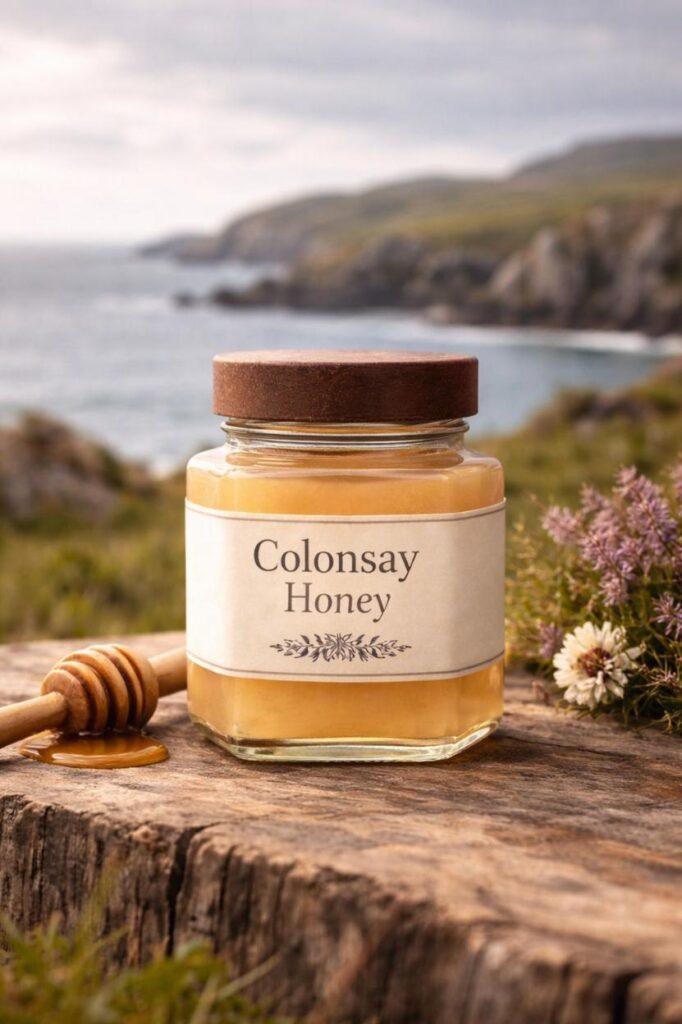
Colonsay’s remarkable botanical diversity — often noted as representing a significant proportion of the flowering plant species found across the British Isles — creates a complex and seasonally shifting nectar landscape.
Heather moorland, coastal grasslands, wildflower meadows, and Atlantic-influenced flora all contribute to a honey that reflects its island ecosystem with quiet precision.
In a world where rarity is often defined by luxury positioning, Colonsay offers a different model — one where protection defines value.
What Makes Colonsay Honey Rare?
Colonsay Honey is rare because it is rooted in biodiversity, isolation, and conservation.
Geographic isolation
The island setting limits the number of colonies.
Legal protection of native bees
The black bee population is safeguarded from hybridisation.
Limited beekeepers
Only a small number of licensed producers operate on the island.
PDO status
Colonsay Honey holds Protected Designation of Origin recognition, meaning authentic product must come from the defined geographic area.
Colonsay honey features in our curated Rare & Luxury Honey selection, where rarity is defined not only by price, but by protection and provenance.
Where Is Colonsay?
Colonsay is a small island off Scotland’s west coast, located between Islay and Mull. Reached by ferry or small aircraft, it remains lightly populated and largely untouched by intensive development.
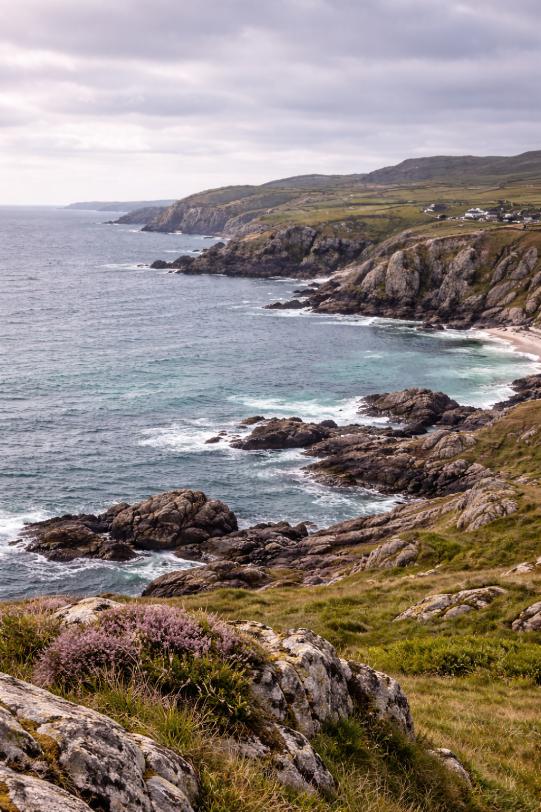
The landscape is varied for its size. Low rolling hills give way to sheltered bays, machair grasslands, pockets of woodland, and open moor. Atlantic weather systems shape the island’s rhythm — cool summers, strong winds, and high exposure to salt-laden air.
Agriculture is present but limited, and large-scale commercial farming is absent. Much of the land remains semi-wild, supporting native plant species that flourish in coastal conditions. This creates a foraging environment that shifts with the seasons rather than being dominated by a single crop.
Because of its modest scale, Colonsay’s beekeeping activity is inherently small and local. Production volumes depend heavily on annual weather patterns, particularly during the short flowering window of late spring and summer.
The island setting does not merely provide a backdrop — it sets natural limits. And those limits are part of what defines the honey produced here.
The Black Bees of Colonsay
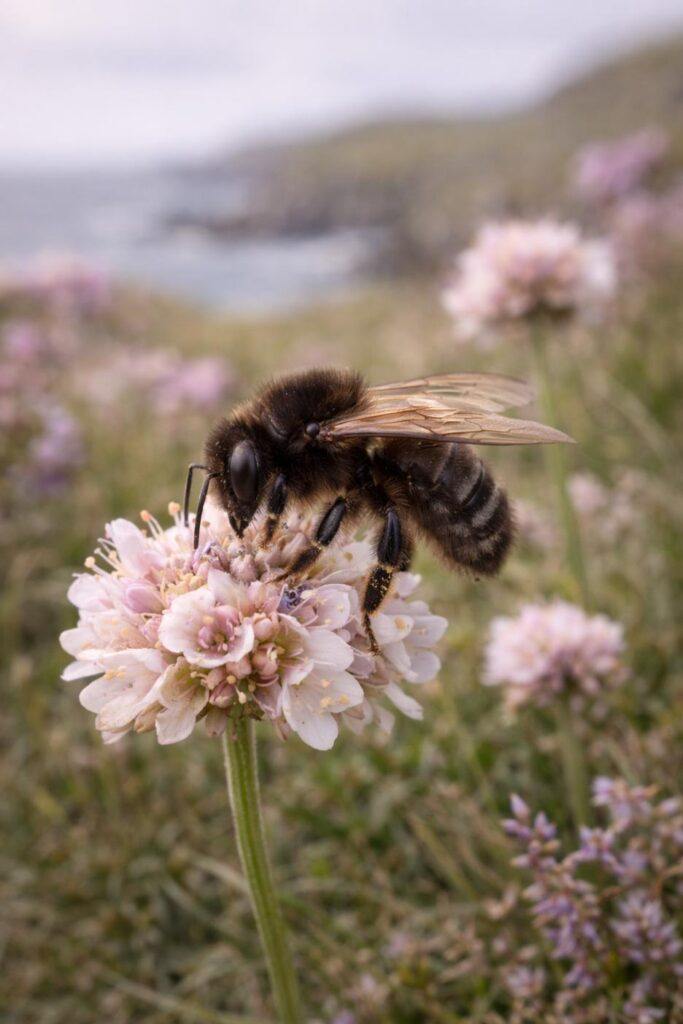
The honey is produced by Apis mellifera mellifera, the native European dark bee — a subspecies once widespread across northern Europe but now increasingly rare in much of its original range.
These bees are:
• Adapted to cooler climates
• More resilient to harsh winds
• Efficient foragers in variable weather
• Known for strong overwintering ability
Their preservation on Colonsay has become a model of biodiversity protection in the UK.
Unlike luxury cave honey narratives, like Elvish honey, this story is scientifically documented and legally structured.
Beekeeping Practices on the Island
Beekeeping on Colonsay prioritises:
• Low-intervention hive management
• Seasonal awareness of forage availability
• Strict disease monitoring
• No introduction of external queens
The scale remains small and traditional. Production volumes fluctuate seasonally depending on weather, particularly in Scotland’s unpredictable climate.
The honey reflects heather, wildflowers, bramble, and coastal flora typical of the Hebridean landscape.
The Flora of Colonsay: A Botanical Mosaic
One of the defining features of Colonsay Honey is not simply the bee — but the landscape.
Despite its modest size, the Isle of Colonsay supports an extraordinary range of plant life. Botanists have noted that the island contains a significant proportion of the flowering plant species recorded across the British Isles — often cited as over half of the national flora within a compact geographic area.
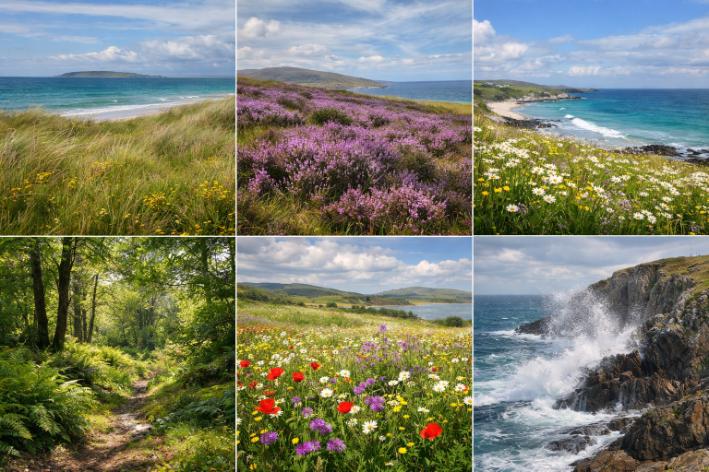
This diversity is shaped by:
• Coastal grasslands
• Heather moorland
• Machair habitats
• Woodland pockets
• Wildflower-rich meadows
• Salt-laden Atlantic exposure
Because the island is relatively free from intensive agriculture, wild forage dominates.
Key Nectar Sources
Depending on season and weather patterns, Colonsay bees forage from:
- Heather (Calluna vulgaris)
- Bell heather (Erica cinerea)
- Bramble
- Clover
- Vetch
- Thistle
- Coastal wildflowers
- Sea-influenced meadow species
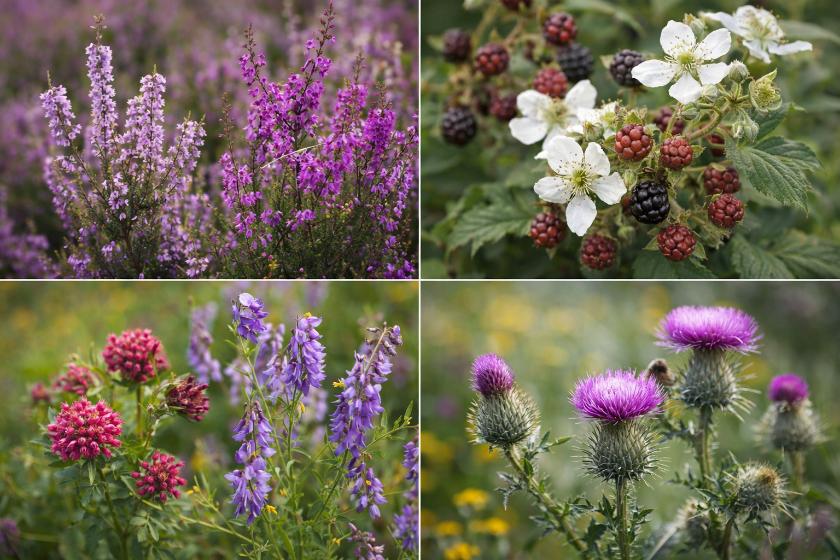
This shifting mosaic means that Colonsay honey is rarely strictly monofloral. Instead, it reflects the island’s seasonal rhythms.
How the Flora Defines the Flavour Profile
Colonsay Honey’s character is best understood as an expression of landscape.
The botanical diversity contributes to:
• Layered floral notes
• Gentle herbal undertones
• Occasional heather warmth in late-season batches
• Clean, bright sweetness
• Subtle maritime freshness
The influence of Atlantic winds and salt-laden air may indirectly affect nectar composition and flowering patterns, contributing to a freshness that distinguishes island honey from mainland equivalents.
In contrast to single-flower honeys like Manuka or Lavender, Colonsay honey behaves more like a blended wine — complex, balanced, and reflective of terroir.
It is not aggressively bitter, nor medicinally intense.
Its appeal is balance and clarity.
Because it is minimally processed and locally jarred, it retains pollen and natural enzymes.
Colonsay Honey – Formal Tasting Notes
(Seasonal variation may occur depending on forage dominance.)
Appearance
- Light to medium amber
- Clear to slightly opaque depending on pollen content
- Fine, natural crystallisation over time
- Smooth texture when freshly harvested
Late-season batches influenced by heather may appear slightly darker and more viscous.
Aroma
- Fresh wildflower bouquet
- Soft herbal undertones
- Subtle hints of clover and meadow florals
- Occasional light heather warmth
- Faint maritime freshness on the nose
The aroma is clean and balanced rather than intense or resinous.
Palate
- Gentle initial sweetness
- Layered floral character
- Mild herbal complexity
- Soft, rounded texture
- Balanced acidity
Unlike strong heather honey, Colonsay typically avoids bitterness or heavy tannic notes. It leans toward elegance rather than intensity.
Finish
- Clean and lightly lingering
- Delicate floral persistence
- Subtle dry herbal echo
- No harsh aftertaste
The finish reflects its wild-forage blend — cohesive rather than dominant in any one direction.
Seasonal Influence on Flavour
Colonsay Honey can shift subtly across harvests:
• Early season — lighter, more floral, clover-led
• Mid season — meadow and bramble complexity
• Late season — increased heather influence, deeper tone
This seasonal variation reinforces its identity as a landscape honey rather than a single-flower product.
How It Differs from Scottish Heather Honey
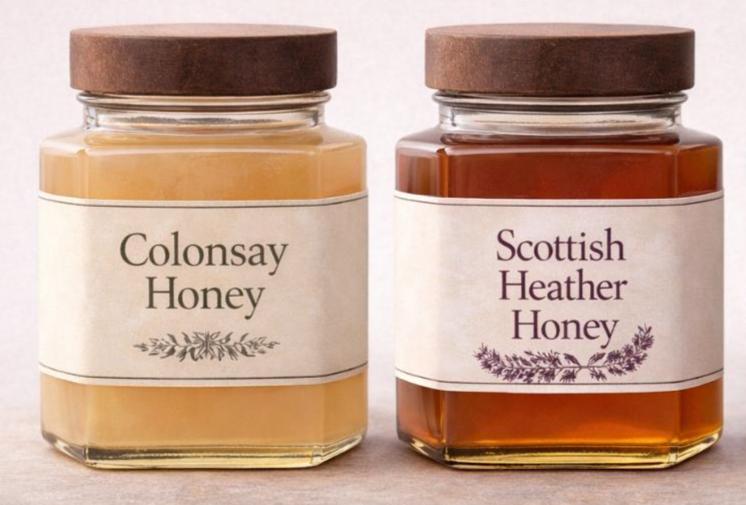
| Colonsay honey is: | Heather honey is: |
| – Lighter – More balanced – Floral-forward – Easier to drizzle | – Thicker – Stronger – More earthy and malty – Often thixotropic (gel-like texture) |
Is Colonsay Honey Expensive?
Colonsay Honey does not compete with ultra-luxury honeys like:
• Centauri
• Elvish
• High-UMF Manuka
However, it commands a premium relative to standard supermarket honey due to:
• PDO certification
• Limited production
• Protected black bee lineage
• Island logistics
The price reflects provenance and conservation rather than marketing spectacle.
Scientific & Conservation Significance
Colonsay represents one of the UK’s most important native bee conservation efforts.
Research and monitoring focus on:
• Maintaining genetic purity
• Monitoring disease resistance
• Studying adaptation to northern climates
Unlike rare honeys marketed for mystique, Colonsay’s value is documented in environmental policy and biodiversity science.
Its story is less about exclusivity — more about ecological responsibility.
Culinary Uses
Colonsay honey pairs beautifully with:
• Scottish oatcakes
• Soft cheeses
• Smoked salmon glazes
• Heather-infused desserts
• Herbal teas
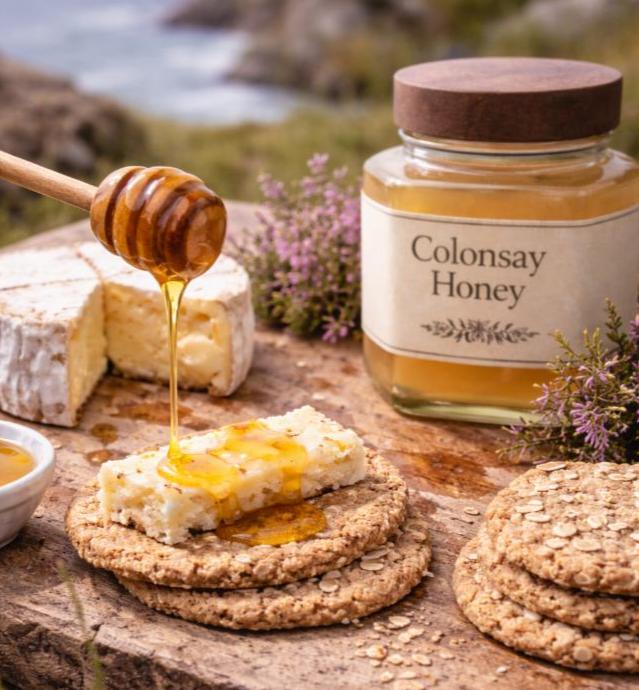
Its lighter character makes it versatile in both savoury and sweet applications.
Preservation & Future
Climate change, invasive pests, and globalised bee trade remain long-term risks.
However, community-led initiatives and legal protection give Colonsay Honey a stronger structural safeguard than many other regional honeys.
It stands as proof that honey can be protected not only as a food — but as a genetic heritage.
Where to Buy Colonsay Honey
If you would like to try genuine Colonsay Honey, the best option is to purchase directly from island producers (colonsayblackbees.co.uk) or authorised Scottish specialist retailers.
Because production is limited and protected under PDO status, availability varies seasonally and often sells out after harvest.
Always look for clear labelling referencing Colonsay origin and black bee provenance, and be cautious of generic “Scottish honey” listings that do not specify the island. Buying direct ensures authenticity — and supports the conservation of this unique bee population.
Frequently Asked Questions About Colonsay Honey
What makes Colonsay Honey different from other Scottish honeys?
Colonsay Honey is produced exclusively on the Isle of Colonsay under Protected Designation of Origin (PDO) status. The island is legally protected to preserve the native European dark bee (Apis mellifera mellifera), making it one of the most geographically controlled honeys in the UK.
What is a black bee?
The black bee refers to Apis mellifera mellifera, the native European honey bee. On Colonsay, this bee population is protected from hybridisation, helping preserve a rare genetic lineage adapted to cooler northern climates.
Does Colonsay Honey have PDO status?
Yes. Colonsay Honey holds Protected Designation of Origin (PDO) status, meaning authentic product must be produced, processed, and prepared within the designated island area.
Is Colonsay Honey expensive?
Colonsay Honey is priced above standard supermarket honey due to its limited production and PDO status. However, it is not priced at the ultra-luxury levels of honeys such as high-grade Manuka or cave-harvested varieties.
What does Colonsay Honey taste like?
It is typically light to medium amber, floral, and balanced, sometimes influenced by heather depending on the season. The flavour is clean and nuanced rather than intensely bitter or medicinal.
Can you visit Colonsay and see the bees?
Yes. Visitors to the island can often engage with local beekeepers through tours and educational initiatives, which support conservation and sustainable honey production.
A Different Kind of Rare
Colonsay Honey is not rare because it is dramatic.
It is rare because it is protected.
In the world of exclusive honeys, some command headlines through record prices.
Colonsay commands respect through restraint.
It is a quiet luxury — rooted in landscape, legislation, and lineage.
And in today’s world, that may be the rarest quality of all.