Propolis has been a staple in traditional medicine for centuries. It’s a resin-like substance bees collect from tree buds and sap flows. Its healing properties have led to its use in treating wounds, infections, and mouth ailments. Beyond traditional uses, modern science has begun to recognise its potential, particularly for oral health.
This natural mouthwash recipe uses propolis, essential oils, and baking soda to create a refreshing propolis mouth rinse that helps reduce bacteria, freshen breath, and support healthy gums.
One of the most compelling reasons to use propolis is its antibacterial and anti-inflammatory properties. It fights off harmful bacteria in the mouth, reducing the risk of cavities, gingivitis, and other oral diseases. The anti-inflammatory effects also help soothe gums, making it beneficial for those with sensitive or bleeding gums.
The way propolis contributes to oral health doesn’t stop there. It coats the mouth, forming a protective barrier against bacteria and infections. This can lead to fresher breath and overall cleaner, healthier teeth and gums. Plus, it helps in quickening the healing of oral sores and injuries.
Numerous scientific studies back up these benefits. Research has shown that propolis mouthwash significantly reduces oral bacteria and inflammation. Some studies even suggest it might be more effective than traditional mouthwashes at fighting certain types of bacteria. This makes propolis a viable, natural alternative for those looking to avoid chemical-laden products.
Propolis is one of the most fascinating substances produced by honey bees. Alongside honey, beeswax, pollen, and royal jelly, it belongs to a remarkable group of substances often referred to as bee products used in natural wellness preparations.
Why Make a Homemade Propolis Mouthwash?
Making your own homemade mouthwash allows you to control the ingredients and avoid artificial colours, alcohol, or synthetic preservatives that are often found in commercial rinses. This DIY mouthwash uses propolis – a resinous substance collected by honey bees – together with baking soda and essential oils to create a refreshing rinse that supports oral hygiene naturally.
Because propolis contains flavonoids and phenolic compounds with antimicrobial properties, it has attracted increasing interest as a natural ingredient for mouth rinses and oral care products.
Propolis Mouthwash DIY Recipe
Creating your own propolis mouthwash is easier than you might think. With a few simple ingredients and some basic knowledge, you can make a powerful, natural mouthwash at home.
Ingredients
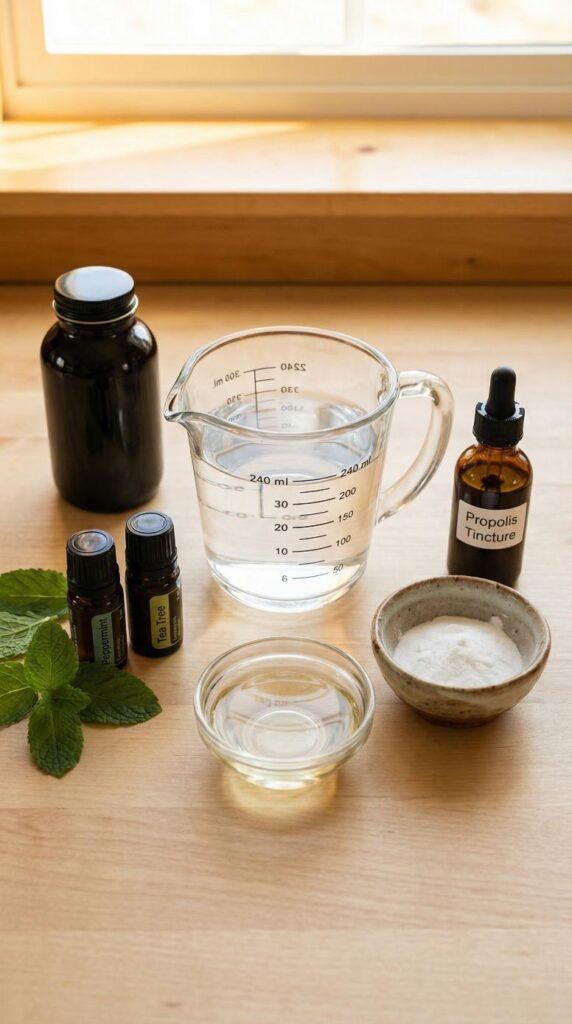
- 240 ml water (distilled, strongly recommended)
- 1 teaspoon propolis tincture (alcohol based, use 1 tablespoon if water-based)
- 1 teaspoon baking soda (optional, for neutralising acids and whitening)
- 1 teaspoon liquid carrier oil (for even distribution of essential oils, if they are used)
- 5 drops peppermint or spearmint essential oil (for fresh breath and antibacterial properties)
- 5 drops tea tree essential oil (optional, for additional antimicrobial benefits)
- Glass bottle with lid (preferably dark glass to protect from light)
Step-by-Step Recipe
Step # 1: Prepare the Water
- Boil the Water: bring 240 ml (approximately 1 cup) of water to a boil. This ensures that the water is sterile and free from any impurities. Let the water cool to room temperature before proceeding to the next step. (If possible, use filtered water, then there is no need to boil it.) Use a measuring PYREX jar as it will be easy to pour the mixture in the bottle when it is ready.
Step # 2: Combine Ingredients
- Mix Baking Soda: if using, dissolve 1 teaspoon of baking soda in the cooled water. Baking soda helps to neutralise acids in the mouth and can aid in whitening teeth.
- Add Propolis Tincture: add 1 teaspoon of propolis tincture to the water. Propolis has strong antimicrobial properties, making it effective against bacteria that cause plaque and bad breath.
- Add the Carrier Oil Mixed with Essential Oils: add 1 teaspoon liquid carrier oil (for example, sweet almond, fractionated coconut, or grapeseed) and 5 drops of peppermint or spearmint essential oil for its freshening and antibacterial effects, plus 5 drops of tea tree essential oil for additional antimicrobial support.
Step # 3: Mix and Store
- Stir Well: stir the mixture thoroughly to ensure all ingredients are evenly distributed.
- Transfer to Bottle: pour the mixture into a clean glass bottle with a lid or a BPA-free plastic container. If possible, use a dark glass bottle to protect the mouthwash from light, which can degrade the essential oils and propolis over time.
- Label and Store: label the bottle with the date and contents. Since it’s homemade, it doesn’t contain preservatives, so store it in a cool, dark place or in the refrigerator and use it within two weeks. Shake well before each use to mix any settled components.
Usage
- Rinse Your Mouth: pour about 1-2 tablespoons of the mouthwash into your mouth.
- Swish and Gargle: swish the mouthwash around your mouth for 30 seconds to 1 minute. Gargle briefly to help cleanse the throat.
- Spit Out: do not swallow the mouthwash. Spit it out after use.
- Use Daily: for best results, use the propolis mouthwash 1-2 times daily, preferably after brushing your teeth.
Tips
- Avoid Swallowing: while propolis is safe for most people, mouthwash should be spat out after use to avoid ingesting the essential oils.
- Customise the Flavour: you can customise the flavour of your mouthwash by adding other essential oils, for example cinnamon, clove, sweet orange, wintergreen, lavender, thyme. (Just keep the total number of drops as 10 for the stated amount of final product).
- Adjust Strength: if the mouthwash is too strong, you can dilute it with more water.
- Use High-Quality Propolis Tincture: the tincture should come from a reputable source and be free of excessive additives. Or use your own homemade propolis tincture. It is extremely easy to make.
This homemade propolis mouthwash recipe provides a natural, effective way to support oral hygiene. The combination of propolis, essential oils, and baking soda helps to reduce bacteria, freshen breath, and promote healthy gums and teeth. The mouthwash is easy to make and can be customised to your taste and needs. Use it daily to maintain a healthy, clean mouth.
Propolis is just one of several remarkable substances produced by bees that can be used in natural wellness preparations. If you enjoy making your own remedies, you may also like exploring Bee-Products in DIY: A Complete Guide to Apitherapy Creations, where you will find ideas for salves, balms, tinctures, and other handmade products using honey, beeswax, propolis, and pollen.
It’s essential to be mindful of potential allergies. If you’re new to using propolis, conduct a patch test first by applying a small amount on your skin. If there’s no adverse reaction within 24 hours, it should be safe to use. However, if any irritation, itching, or swelling occurs, discontinue use and consult an apitherapist or a relevant healthcare professional.
Best Practices for Using Propolis Mouthwash
Integrating propolis mouthwash into your daily routine can elevate your oral hygiene. Use it after brushing and flossing, twice daily for best results. Swish around in your mouth for about 30 seconds before spitting it out. Consistent use can help maintain a cleaner mouth and fresher breath.
Regarding dosage and frequency, it’s generally safe to use about a tablespoon per rinse. If you’re using a stronger concentration, consider starting with less and adjusting based on your comfort and effectiveness. Remember that natural remedies can be potent, so monitor your mouth’s response.
Potential side effects from propolis are rare but possible.
Some people might experience mild irritation or allergic reactions. If you notice any discomfort, reduce the frequency of use or try diluting the mouthwash further. It’s always wise to consult with a dentist if you have any concerns.
Hearing others’ experiences can be reassuring. Many users report significant improvements in their oral health after incorporating propolis mouthwash. Stories often highlight reduced gum inflammation, fewer mouth sores, and overall fresher breath. It’s encouraging to see the positive impact of this natural remedy.
Frequently Asked Questions about Propolis Mouthwash
‘How long does it take to see results?’
Generally, within a few weeks of regular use, you should notice improvements.
‘Can kids use propolis mouthwash?’
Yes, but in a milder concentration and always supervised.
‘Is propolis mouthwash better than traditional mouthwash?’
It can be, especially for those looking to avoid synthetic chemicals. Your dentist can provide personalised advice regarding your specific needs.
Is propolis mouthwash a natural alternative to commercial mouthwash?
Yes. Propolis mouthwash can be used as a natural mouthwash alternative because propolis contains flavonoids and phenolic compounds that show antimicrobial activity against several oral bacteria. When combined with ingredients such as baking soda and essential oils, it forms a simple natural mouthwash recipe that helps freshen breath and support gum health.
‘Can I add salt to propolis mouthwash?‘
Yes, a small amount of salt can be added if desired, but it is not necessary for the effectiveness of the rinse. Saltwater rinses have long been used in dentistry because salt (sodium chloride) creates a mildly hypertonic solution, which can help draw excess fluid from inflamed tissues through osmosis. This may reduce swelling and help cleanse the mouth after irritation or minor dental procedures.
However, salt itself has only mild antimicrobial activity. The main antibacterial and anti-inflammatory effects in this mouthwash come from propolis, which contains flavonoids and phenolic compounds that inhibit many oral bacteria and help support gum health.
Because propolis already provides these properties, salt is optional rather than essential.
If you would like to learn more about this remarkable bee product, see my guide to propolis and its natural uses.
‘Will salt interfere with propolis?‘
Salt does not chemically destroy propolis compounds, but it can slightly change the solution. Propolis contains resinous plant compounds that are only partially water-soluble. Adding salt increases the ionic strength of the solution, which may cause some propolis particles to settle more quickly or form light sediment. This does not reduce the effectiveness of the rinse, but it may mean you need to shake the bottle before use.
‘Can I add bicarbonate (baking soda) as well?‘
Some people combine salt and sodium bicarbonate (baking soda) in mouth rinses. Sodium bicarbonate works differently from salt. It acts as a buffer, helping to raise oral pH and neutralise acids produced by bacteria in dental plaque. A slightly more alkaline environment may help discourage acid-producing bacteria and support enamel health.
When combined with propolis, the rinse may provide:
- Propolis – antimicrobial and anti-inflammatory compounds
- Salt – mild cleansing and soothing effect
- Bicarbonate – pH buffering and acid neutralisation
This combination can work well, but it is still optional.
‘How much salt should be used?‘
If adding salt, keep the concentration mild. A commonly recommended dental rinse is approximately: ½ teaspoon salt in about 250 ml warm water (roughly a 0.9–1% solution).
Using stronger salt solutions may:
- irritate oral tissues
- dry the mouth
- overpower the taste of propolis.
‘Should I add salt to the recipe?‘
For everyday use, propolis mouthwash works perfectly well without salt. The recipe in this article focuses on propolis because it provides the key antimicrobial and gum-supporting benefits.
If you enjoy the soothing effect of a salt rinse, you can experiment with a small amount, but it is a personal preference rather than a required ingredient.
You might also like
If you enjoy creating natural remedies from bee products, these guides may interest you:
• Bee-Products in DIY: A Complete Guide to Apitherapy Creations – discover how honey, beeswax, propolis, and pollen can be used to create natural remedies, skincare, and wellness preparations at home.
• Calendula Beeswax Salve Recipe – a soothing herbal salve combining beeswax and botanical ingredients for natural skin care.
Do you think adding some salt will work with the mixture? I had been using a salt and bicarb wash for a while and thought I may add the propolis to that?
Hi Caryn, thank you, that is a question that deserves an answer with a bit of explanation, and I think it will be useful for others too. So, I added all that to the FAQ section: please check it, there are 4 new points there regarding salt.
Oops, not tincture! Looking forward to making the dental rinse.
You are very welcome, and if you get stuck with something, please let me know. If you are going to make your tincture, it’s brilliant, as it is very versatile: I use it in so many ways, for example, just lately for cold sore that had started emerging but was stopped in time. I am still amazed how effective propolis can be.
In my post the recipe for tincture is headlined Alcohol-Based Propolis Extract.
Thanks for your response and suggestions. I’m looking forward to making the tincture when all the ingredients arrive. I’ll be sure to add the carrier oil as recommended.
Thanks for the wealth of information on your site. I’m particularly interested in making a propolis dental rinse to fight plaque. Your formula is the closes to what I’m looking for. Does the propolis tincture mix well with the water and essential oils? Have you had any trouble with it sticking to your teeth? Locally I’m having trouble sourcing propolis tincture in an alcohol base. Should I keep looking or do you think a tincture in glycerin is as effective?
Thanks for your time,
Annemarie
Hello Annemarie,
Thank you for your feedback and contacting me. I always use my own homemade propolis tincture (alcohol based) for mouthwash, the recipe is in the Bee Products in DIY (https://thebeekeepingcraft.com/water-and-alcohol-based-propolis-extracts-diy-recipes/). When I did not keep bees, I used to buy propolis extracts, and yes, they were a bit sticky to my teeth 🙂 The one I make does not have this issue (actually, any of them: alcohol or water based). It all mixes well with water and oils. Also, I always continue researching and offer updated options. The only slight change to the mouthwash I am going to make is adding 1 more ingredient: 1 teaspoon liquid carrier oil, as it will ensure an even distribution of essential oils. The update should be ready tomorrow. If I were to buy a propolis tincture I would try a tincture in glycerin as it should be water-soluble (look for high-quality with a 1:3 ratio of dry propolis to solvent). Let me know how it goes.