
Honey can turn white, foamy, or develop crystals due to natural processes like crystallisation and air bubbles. These changes are usually harmless and do not mean the honey has gone bad.
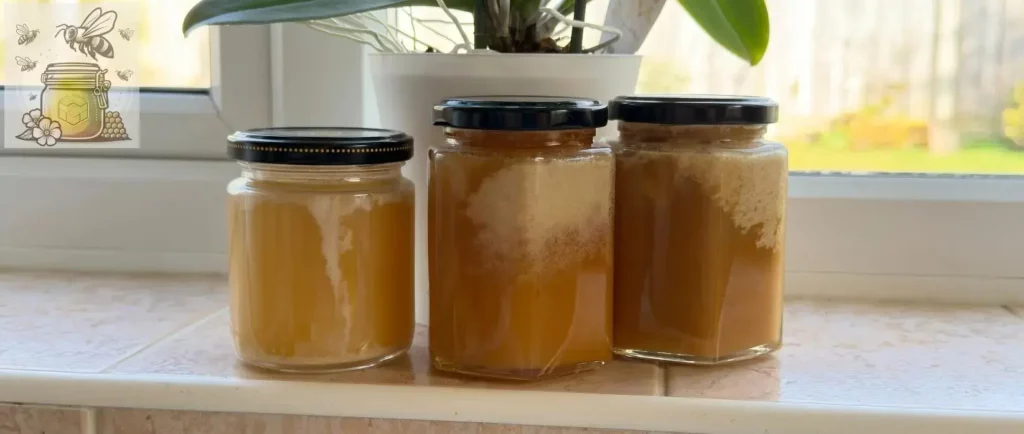
Many people become concerned when their honey changes appearance. It may develop white patches, look cloudy, form foam on the surface, or even separate into layers.
In most cases, these changes are completely normal — and often a sign that the honey is natural.
Why Does Honey Develop White Patterns or a White Layer?
White patterns, streaks, or a light “foamy” layer on honey are usually caused by crystallisation of glucose and the movement of liquid sugars within the honey.
During crystallisation:
- glucose forms solid crystals
- the remaining liquid (mainly fructose and water) stays between those crystals
This liquid is known as the intercrystalline liquid.
Over time:
- crystals continue to grow and compact
- moisture is redistributed
- lighter liquid components shift within the structure
As a result, you may see:
- white streaks or patterns
- pale, frosted areas
- a loose, light coloured layer on the surface
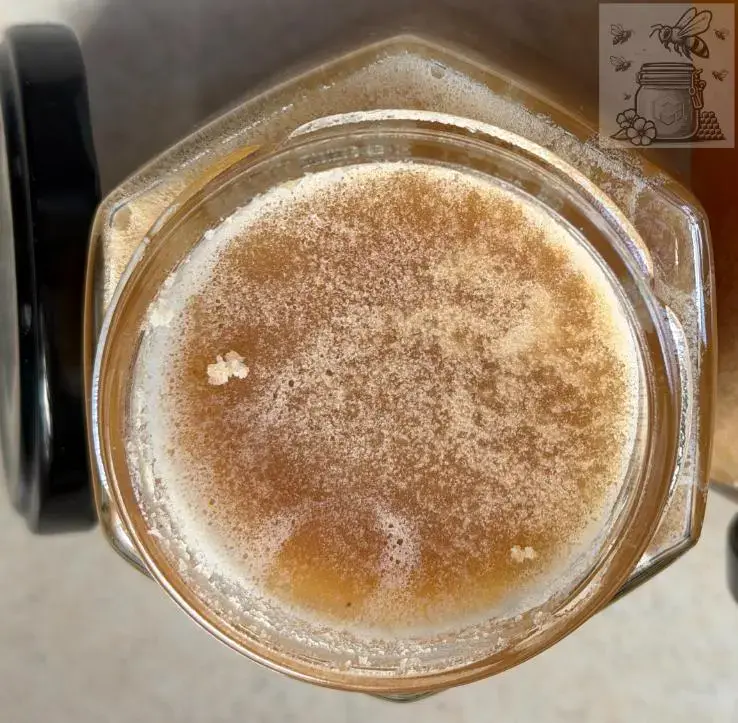
These are sometimes referred to as “honey bloom” or “white patterns”.
Important clarification
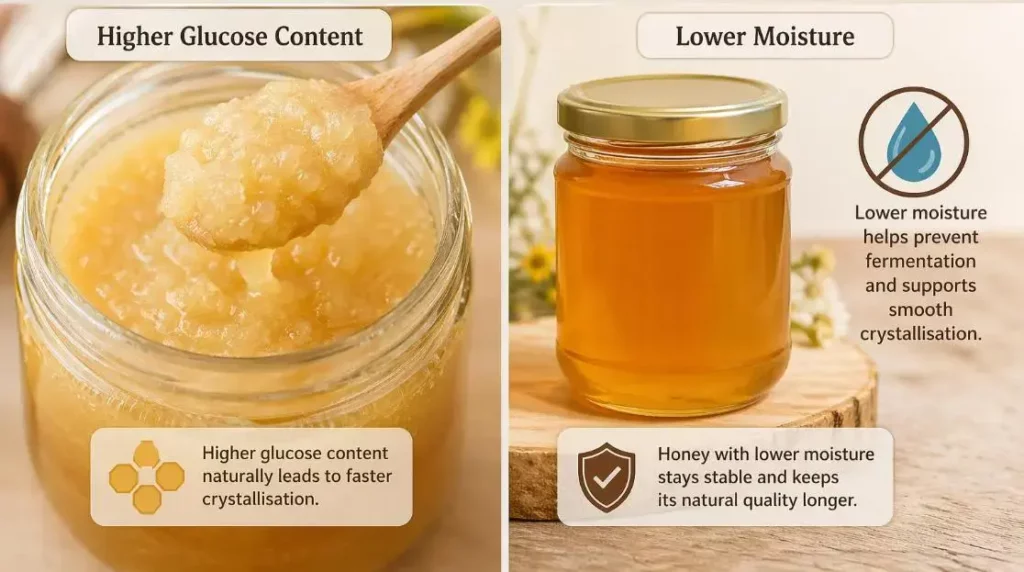
These white patterns are:
- a natural result of crystallisation,
- more common in honey with:
- higher glucose content
- lower moisture.
However:
They are not a reliable indicator of quality:
- good honey may show them
- good honey may not show them
- even lower-quality honey with high glucose can show similar patterns.
Why Does Honey Form Foam on the Surface?
A thin foam or “scum” layer on honey is usually caused by air bubbles rising to the surface, often combined with crystallisation.
This can happen:
- after extraction
- during pouring or mixing
- when honey is freshly jarred
In crystallising honey, this foam may also contain:
- tiny glucose crystals
- trapped air
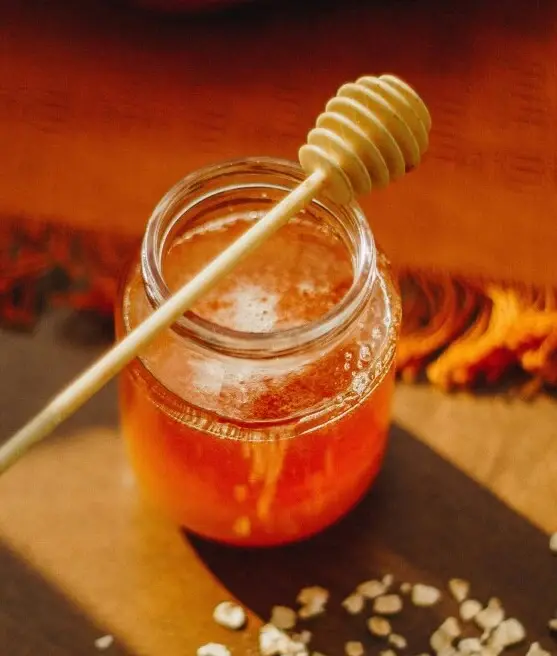
In most cases, this is completely harmless and only affects appearance.
Why Does Honey Form Crystals?
Crystals form because honey naturally contains glucose, which separates from the liquid over time.
As crystallisation progresses:
- honey becomes cloudy
- then thickens
- then sets
This is a completely natural transformation.
For a full explanation, see: The Truth About Crystallised Honey (Most People Get This Wrong).
Why Does Honey Separate Into Layers or Crystallise Unevenly?
Separation and uneven crystallisation are among the most confusing changes in honey.
Typically, this looks like:
- solid crystals settling at the bottom
- liquid honey remaining above
- or the opposite (solid top, liquid bottom)
What causes this?
Several natural factors can lead to this:
1. Storage temperature too high
- Honey stored above ~20°C may crystallise unevenly
2. Temperature fluctuations
- Repeated warming and cooling disrupts crystallisation
- Leads to layering instead of uniform setting
3. High fructose content
- Less glucose → fewer crystals form
- Honey remains partially liquid
4. Presence of other compounds
Some substances slow crystallisation, such as:
- maltose
- dextrins
- components from honeydew
5. Heating (sometimes)
- Previously heated honey may crystallise differently
- but this is only one possible cause, not a rule
Even good-quality, natural honey can separate.
This is often misunderstood, as many sources claim: “If honey separates, it must be fake”.
This is not always true. Raw honey can separate due to its composition and storage conditions.
Why Does Liquid Form on Top of Crystallised Honey?
Sometimes a thin liquid layer appears on top of set honey.
This happens because:
- glucose crystals compact and settle under their own weight
- lighter liquid (mainly fructose) is pushed upward.
This is another natural crystallisation effect, not spoilage.
However:
- it can increase the risk of fermentation if moisture is high,
- and may affect appearance.
A thin liquid layer can also appear at the bottom. In this case the most common reason is: during honey extraction different honeys were not mixed well enough, and so the lighter but quicker crystallising honey appears in the top.
Is White, Foamy, Layered, or Crystallised Honey Bad?
No — in most cases, it is completely safe to eat.
These changes do NOT mean:
- the honey is spoiled,
- the honey is fake,
- the honey has gone bad.
In fact, they often indicate minimal processing and natural composition.
When Should You Be Concerned?
Although most changes are harmless, there are a few exceptions.
Watch for:
- Sour or fermented smell
- Excessive bubbling with pressure
- Very high moisture honey fermenting
These may indicate fermentation, not crystallisation.
From My Own Experience
____________________________
In my own beekeeping practice, I’ve often seen honey develop white patches and cloudy areas two-three months after jarring — especially with faster-crystallising types like rapeseed honey.
At first glance, it can look unusual, even to someone familiar with honey. But over time, it becomes clear that these changes are simply part of how natural honey behaves.
I’ve also noticed that honey stored in stable conditions tends to develop more even, fine crystallisation, while fluctuating temperatures can lead to uneven textures and layered appearance. I’ve saved some honey from a few years ago in a birch-bark container, and currently it is in a layered state with liquid top layer, I stirred it to mix and it stayed even for quite a while. I keep it out of curiosity: I would like to see if its taste will noticeably change in future, and also if the birch-bark affects it in any way.
Can You Fix White, Foamy, Separated or Crystallised Honey?
Yes — in most cases you can:
- gently stir the honey,
- store it at a stable temperature,
- allow crystallisation to continue more evenly.
Or return it to liquid form following our simple guide How to Decrystallise Honey Safely (Without Damaging It).
Can You Prevent These Changes?
You can slow them, but not completely prevent them.
Check out our detailed article How to Keep Honey Liquid for Longer (Storage Tips That Work).
Quick Summary
- White patterns = crystallisation + tiny air pockets that scatter light, creating a pale, frosted appearance
- Foam = trapped air and tiny crystals
- Crystals = natural glucose separation
- Separation = uneven crystallisation
- Liquid layer = natural redistribution of sugars
These are normal changes, not spoilage.
FAQ About Honey Turning White or Foamy
Why does honey turn white on top?
This is usually caused by crystallisation and air bubbles forming near the surface.
Is foamy honey safe to eat?
Yes, in most cases foam is harmless and caused by trapped air.
Why does honey look cloudy?
Cloudiness is an early stage of crystallisation as glucose begins to form crystals.
Why does honey separate into layers?
Because glucose crystallises while fructose remains liquid, creating visible layers.
Does white honey mean it is fake?
No — appearance alone is not a reliable indicator of authenticity.