Honey is one of nature’s most fascinating foods because no two jars are exactly alike. From crystal-clear acacia honey to dark, rich buckwheat honey, every variety reflects a unique combination of flowers, landscape, climate and season.
Its texture can be smooth and pourable, thick and creamy, or naturally crystallised into a firm, spreadable honey. Likewise, its flavour may range from delicate floral sweetness to bold, earthy or slightly bitter notes. These natural differences are part of what makes exploring honey so rewarding.
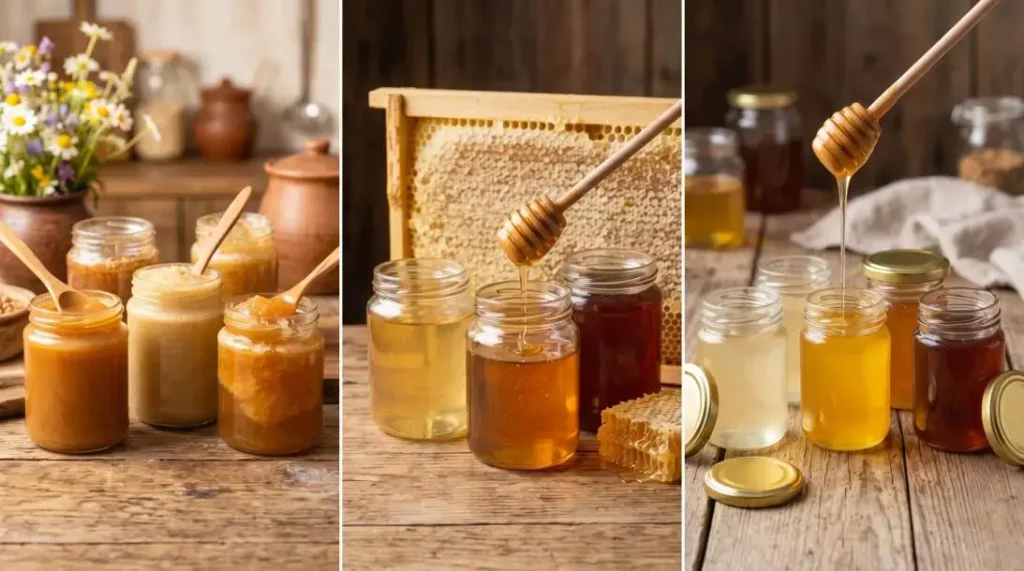
Understanding what influences honey’s texture, colour and flavour helps you appreciate why every variety is unique and why texture, colour, aroma and crystallisation are all natural expressions of the nectar collected by honey bees.
If you’re new to exploring honey, our complete Honey Guide provides an excellent introduction before diving deeper into texture, flavour, honey types and numerous honey varieties.
In this guide you will discover:
- how to recognise different honey textures,
- why honey varies in colour, texture and flavour,
- what influences the way honey tastes,
- why honey naturally crystallises,
- how to appreciate honey like a beekeeper.
The next time you pick up a jar of honey, you’ll be able to look beyond its appearance and recognise why it is light or dark, runny or creamy, mild or bold — and what makes every variety unique.
What Determines Honey Texture?
Honey texture is shaped by the natural balance of glucose and fructose in the nectar collected by bees, together with pollen content, temperature and the natural process of crystallisation. These factors determine whether a honey remains liquid, becomes creamy or gradually crystallises into a firmer texture over time.
Recognising Honey Texture
1. Comb honey
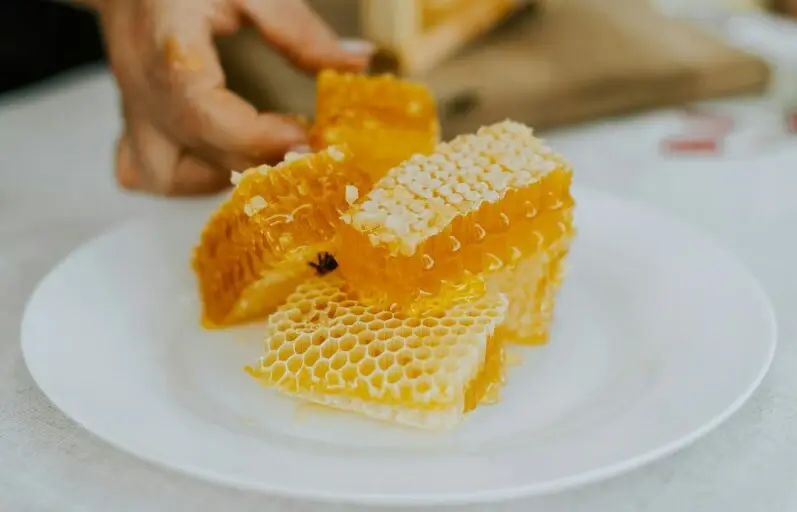
It is honey in its most natural state, still in the beeswax comb.
It’s less common but highly valued for its purity and unique eating experience.
❓Many Readers Ask
Can You Eat the Wax in Comb Honey?
Yes. Beeswax is edible, and many people enjoy eating comb honey exactly as it comes from the hive. The honey is swallowed as normal, while the wax can either be chewed like a natural chewing gum before being discarded, or swallowed in small amounts if preferred.
If you’re curious about how bees make wax, whether it’s digestible, and its many practical uses, explore our complete guide to Beeswax.
2. Liquid Honey
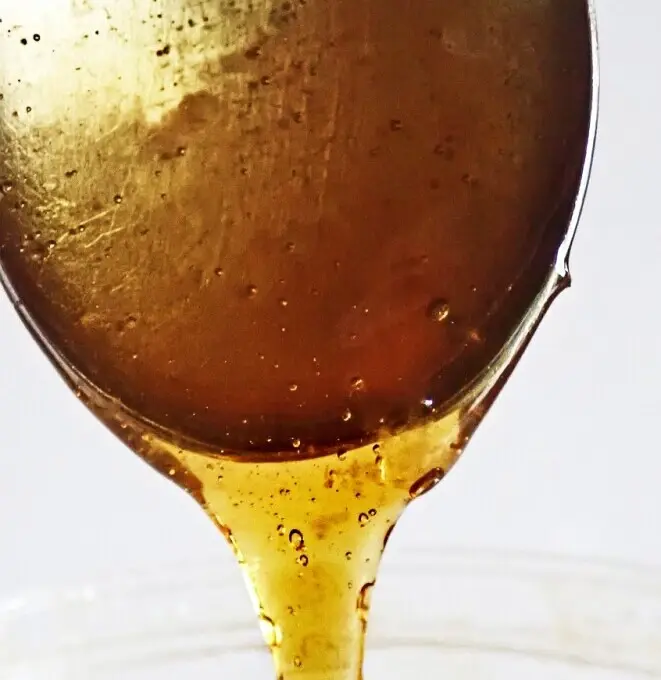
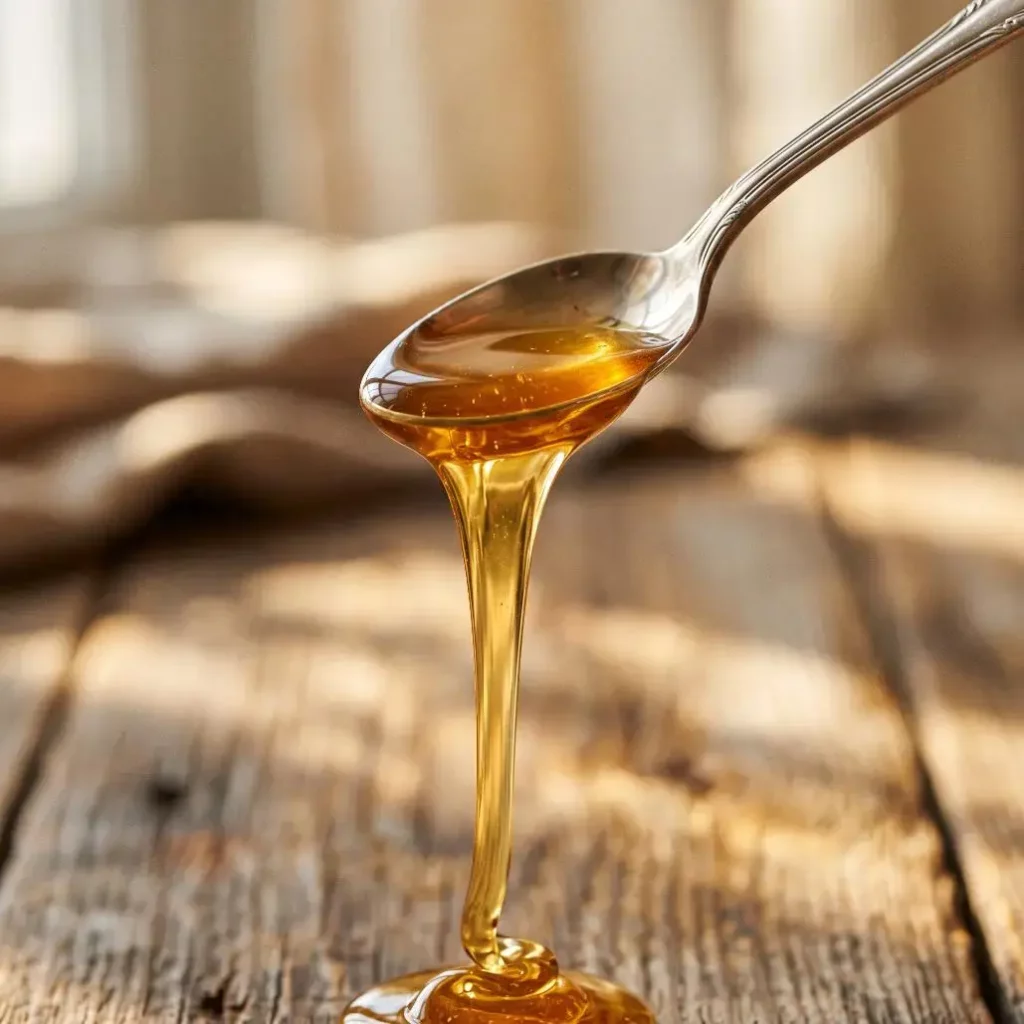
It has smooth, runny consistency. This is the most common form found in stores and is often used as a drizzle over food or mixed into beverages.
Formation
Honey remains in a liquid state when freshly extracted from the comb and properly strained. Its low water content (typically below 18%) keeps it fluid initially.
There are cases, however, when honey crystallises while still in the comb, for example, when collected from some plants in spring.
Factors Influencing Texture
- High-fructose honeys (e.g., acacia or tupelo) stay liquid longer because fructose resists crystallisation.
- Filtering: lightly filtered honey removes large particles like wax and other debris but keeps most of the beneficial components. The more honey is filtered, the longer it can stay in its liquid form but the more essential nutrients it loses.
- Storage temperature and the absence of natural crystallisation “seeds” like pollen or wax can also preserve its liquid state.
How It Changes
Over time, liquid honey will naturally crystallise, especially if stored in cooler environments.
3. Chunk honey
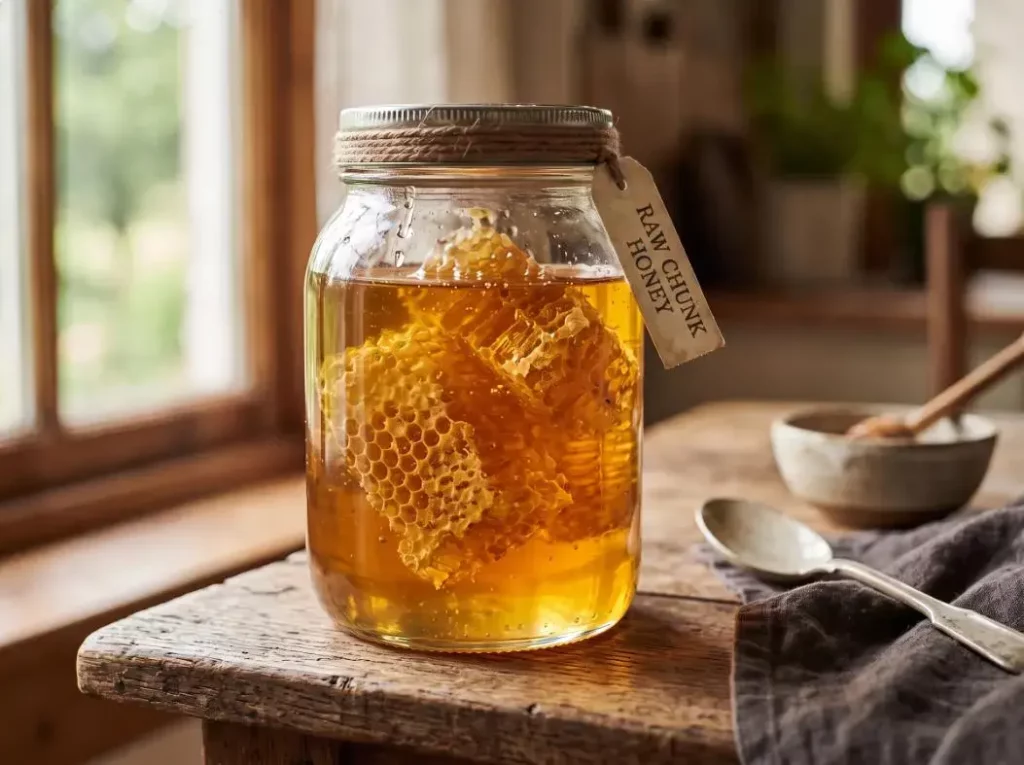
It is basically a combination of Comb honey + Liquid Honey.
Chunk honey includes pieces of comb honey submerged in liquid honey, offering a mix of textures.
4. Soft Set Honey
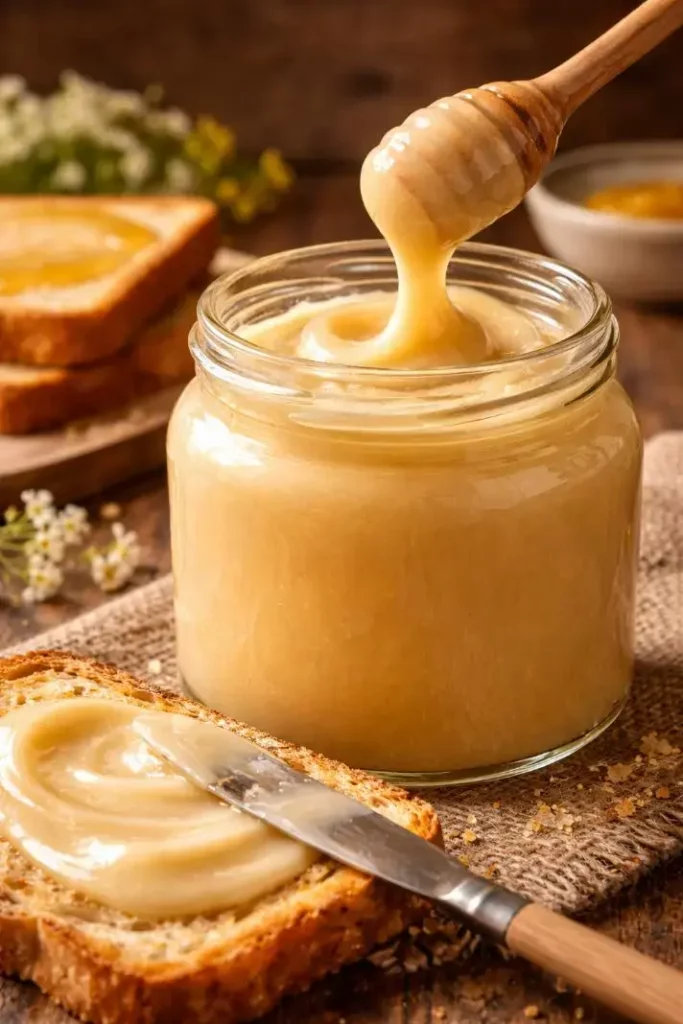
This honey is smooth and creamy, with a spreadable consistency similar to soft butter. It’s easy to use on toast or in recipes requiring a thick but pliable texture.
Formation
Soft set honey is created by controlling the crystallisation process. Honey is seeded with fine crystals (usually from previously crystallised honey) and stirred to ensure even crystal size, resulting in a creamy, uniform texture.
Why It’s Popular:
Soft set honey offers the convenience of a spreadable texture without the graininess of uncontrolled crystallisation.
❓Many Readers Ask
Is Soft Set Honey the Same as Creamed Honey?
Not always. Soft set describes the texture, while creamed honey usually refers to honey that has been deliberately controlled during crystallisation to produce a smooth, spreadable consistency. In everyday language, however, the two terms are often used interchangeably.
5. Hard Set Honey
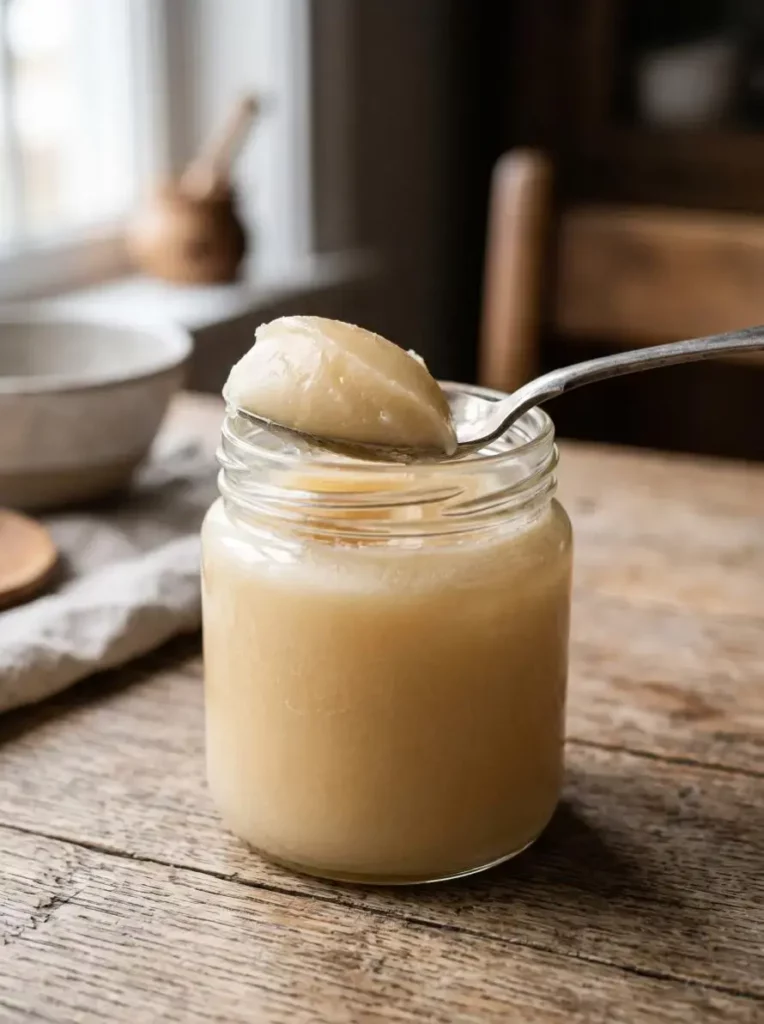
Dense and solid, hard set honey is firm and requires a spoon or knife to scoop out. It is often grainy in texture.
Formation:
Occurs when honey crystallises naturally over time, typically due to high glucose content (e.g., clover honey).
Why It Happens:
- Glucose forms crystals more readily than fructose.
- Cooler storage temperatures accelerate crystallisation.
If you prefer a runnier consistency, learn how to decrystallise honey safely without damaging its natural qualities.
Brief Advice On How to Restore
Gently warm the honey (e.g., in a warm water bath) to liquefy it again, though it will crystallise back some time later and repeated heating can degrade its nutrients.
6. Medium Set Honey
It has a semi-solid texture that is thicker than soft set but less rigid than hard set honey. It can still be spreadable but with more resistance.
- Formation:
Medium set honey results from partial crystallisation, where the crystals are larger but not fully developed. - Why It Forms:
- A mix of glucose and fructose content leads to intermediate crystallisation.
- Storage at mildly cool temperatures may encourage this texture.
- Uses:
Works well as a spread as it is less messy than liquid honey.
7. Creamed Honey
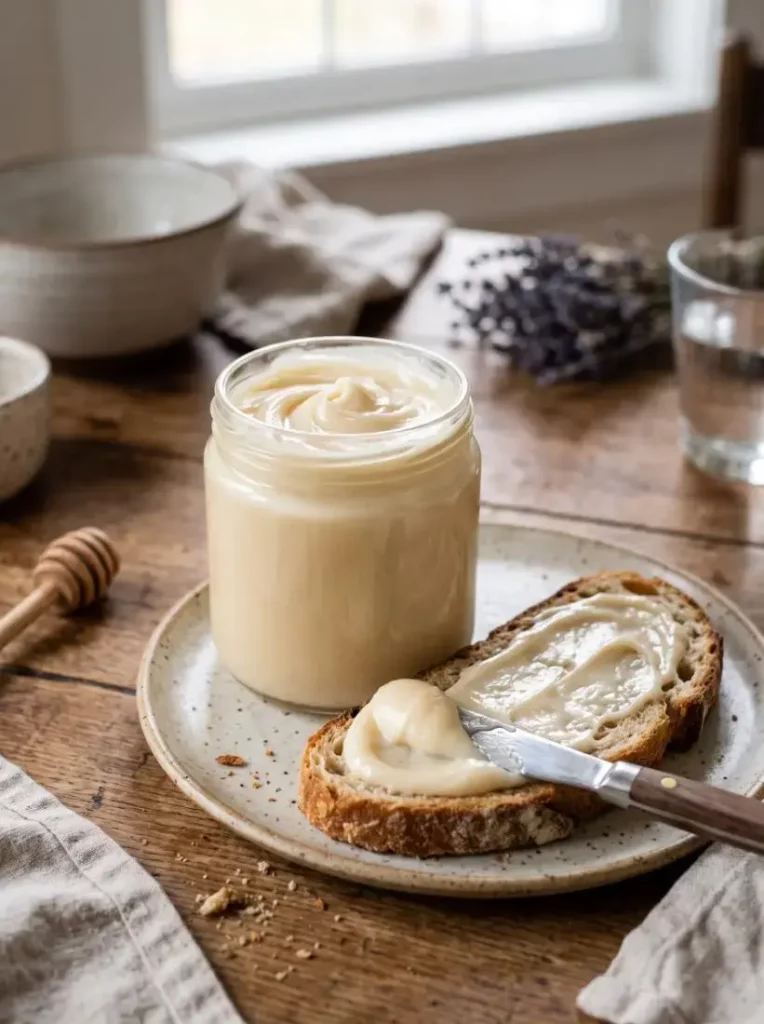
Ultra-smooth and velvety, creamed honey has a texture similar to whipped butter. It’s uniform and spreadable, free of noticeable crystals.
Formation:
Creamed honey is intentionally processed by seeding liquid honey with fine crystals and stirring it at controlled temperatures. This process ensures consistent texture and prevents further crystallisation.
Why It’s Special:
- Easy to use and more visually appealing.
- Retains natural nutrients and enzymes of raw honey.
Storage Impact:
Creamed honey holds its texture well and resists hardening, making it a long-lasting choice.
Why and How Honey Texture Changes
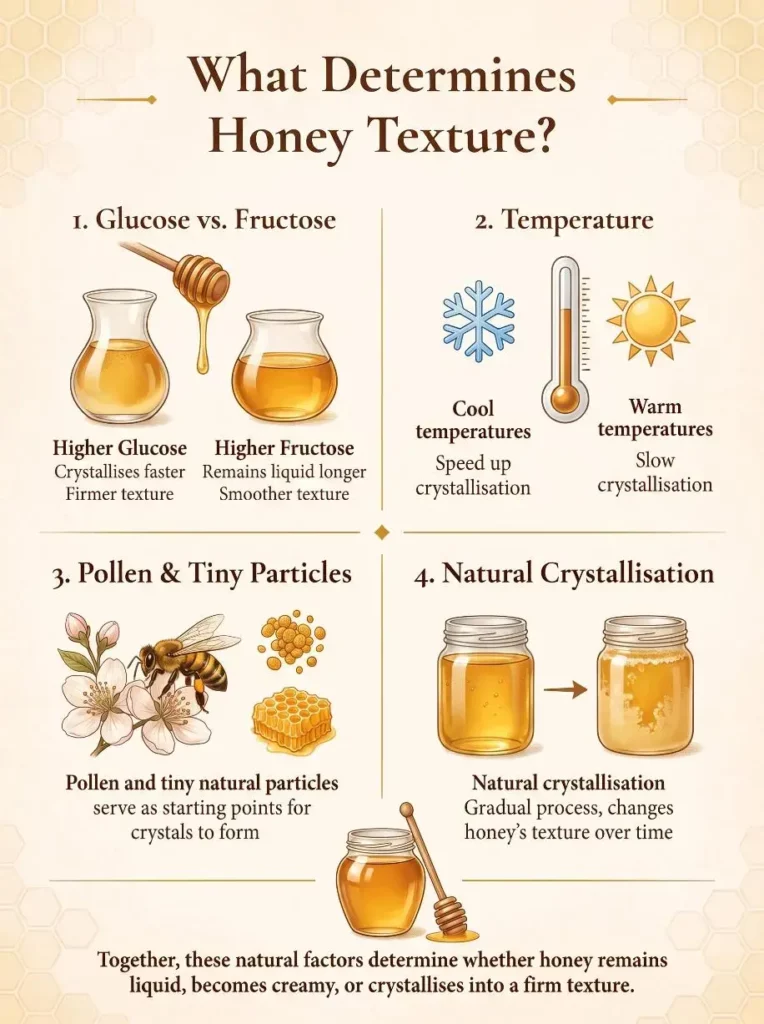
Honey is a dynamic natural product, and its texture can change over time due to a fascinating interplay of natural processes.
From its initial liquid state to thickening or crystallising into a soft or hard set, these changes are primarily influenced by the floral source, sugar composition, storage conditions, and even environmental factors like temperature.
The balance of glucose and fructose in honey, for example, determines how quickly it crystallises, while cooler temperatures can encourage the process.
Understanding why and how honey’s texture changes not only demystifies this natural transformation but also highlights the purity and authenticity of this remarkable food. Let us look closely at those factors.
Crystallisation:
- Honey is a supersaturated sugar solution. Over time, glucose separates from the water and forms crystals, changing the texture.
- Higher glucose content leads to faster crystallisation (e.g., clover honey), while higher fructose delays it (e.g., acacia honey).
If you’d like to understand this fascinating process in more detail, our complete guide explains why honey crystallises and what it means for quality.
Temperature & Storage (a big factor in keeping honey liquid):
- Cooler storage speeds up crystallisation, while warmer environments delay it.
- Extreme heat can liquefy crystallised honey but may degrade its enzymes and nutrients.
Pollen and Wax Content:
- Natural honey with more pollen and impurities has more “seeds” to initiate crystallisation, leading to faster texture chages.
Moisture Content:
- Honey with higher water content tends to crystallise more slowly, while low-moisture honeys crystallise faster and more densely.
All the above factors affect not only honey texture but its appearance, for example, causing honey frosting, foaming or layering.
Why Is Some Honey Thick and Some Runny?
The texture of honey depends largely on the ratio of glucose and fructose in the nectar collected by bees. Some honeys, such as Tupelo honey, remain liquid for remarkably long periods because of their naturally high fructose content, while honeys with more glucose crystallise more quickly, creating thicker or grainier textures.
Floral source therefore plays a major role in determining honey texture.
Why Every Honey Tastes Different?
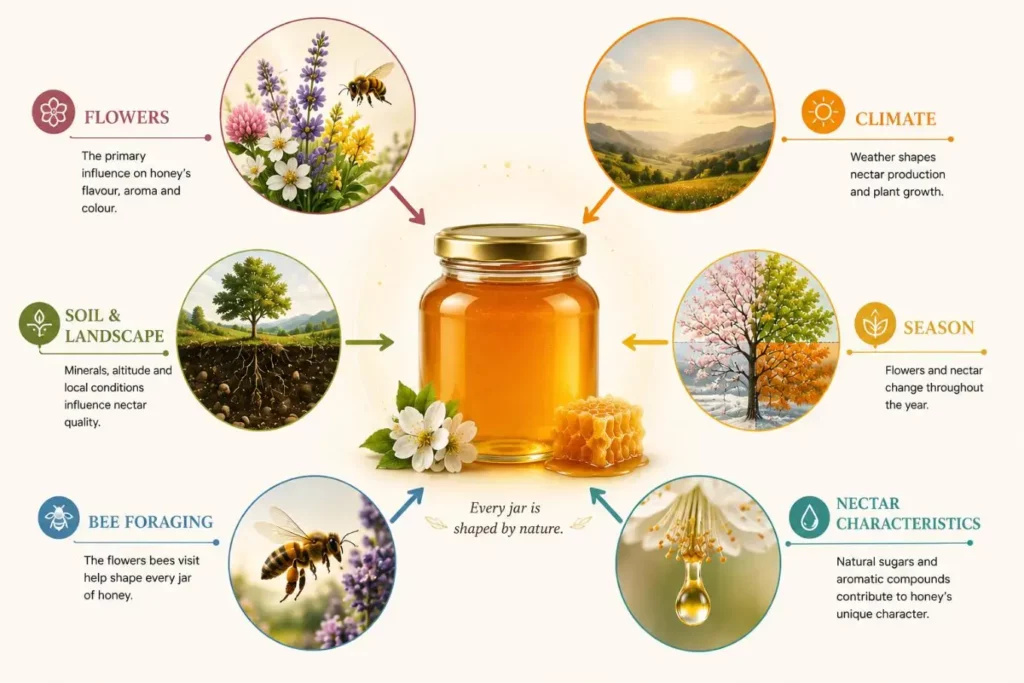
Every jar of honey reflects a unique combination of natural influences. While the flowers visited by honey bees have the greatest effect on flavour, climate, soil, seasonal conditions, bee activity and the nectar itself all contribute to the final character of the honey.
Floral Source — The Greatest Influence
The flowers visited by honey bees have the greatest influence on a honey’s flavour, aroma and colour. Delicate flowers such as acacia and orange blossom produce light, mild honeys, while chestnut, buckwheat and heather create much richer, more robust flavours. Even before tasting a honey, its floral source often provides the strongest clue to its character.
Learn more about how nectar sources influence flavour in our guide to Blossom Honey.
Climate
Weather plays an important role in nectar production. Warm, sunny conditions often encourage flowers to produce abundant nectar, while prolonged rain, drought or unusually cool temperatures can reduce nectar flow or subtly change its composition. As a result, the same honey variety may taste slightly different from one season to the next.
Soil & Landscape
The environment in which plants grow also contributes to a honey’s unique character. Soil minerals, altitude, surrounding vegetation and local ecosystems all influence plant health and nectar production. This is one reason why lavender honey from Provence differs from lavender honey produced elsewhere.
Season
The time of year affects both the flowers available to bees and the conditions in which nectar is produced. Early spring honeys are often lighter and more delicate, while late-summer honeys can develop deeper, fuller flavours as different plants come into bloom.
Bee Foraging
Honey bees rarely visit just one flower throughout the day. Their foraging patterns depend on which plants are flowering, weather conditions and the availability of nectar. These natural choices help shape the distinctive character of every harvest.
Nectar Characteristics
Every flowering plant produces nectar with its own natural balance of sugars, aromatic compounds and trace nutrients. Bees transform this nectar into honey, but the unique characteristics of the original nectar remain one of the reasons why every honey develops its own flavour, aroma and colour.
No single factor determines the flavour of a honey. Every jar is shaped by a unique combination of flowers, weather, landscape, season and the remarkable work of honey bees. Even when bees visit the same flowers, climate, altitude, local ecosystems and beekeeping practices can create distinctive regional expressions of honey. Together, these natural influences give rise to the extraordinary diversity that makes exploring honey such a rewarding experience.
Colour Spectrum of Honey
Honey is a visual marvel, with colours that range from pale, almost transparent gold to deep, rich amber and even dark molasses-like brown.
The colour of honey is more than an aesthetic feature — it often offers clues about floral origin, flavour intensity, and mineral content. For example, light-colored honeys like acacia or clover have mild, delicate flavours, while darker varieties such as buckwheat or heather boast robust, earthy notes and higher nutrient content.
Some monofloral honeys are instantly recognisable by their signature shades, while polyfloral honeys offer a blend of tones.
The colour of honey is more than just aesthetic — it’s a window into its origin, flavour, and nutritional richness.
Here are some examples:
Light Honey
- Mild, delicate flavour
- Examples: Acacia, Clover
Medium Honey
- Balanced sweetness
- Examples: Orange blossom, Alfalfa
Dark Honey
- Intense, robust flavour
- Examples: Buckwheat, Chestnut
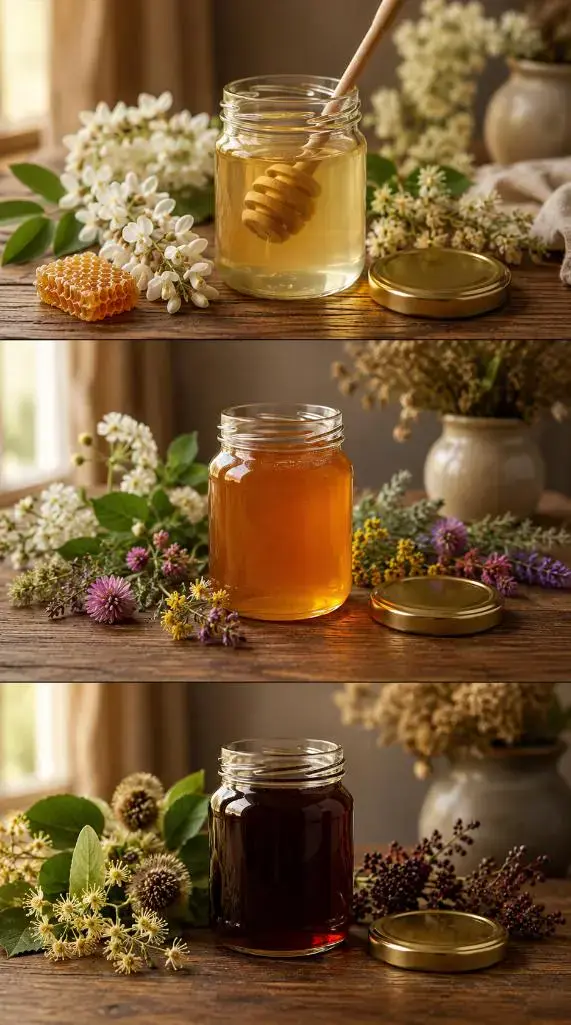
Although colour often provides clues about floral origin, it is not a reliable indicator of honey quality.
How to Appreciate Honey
Appreciating honey is about much more than sweetness. Like coffee, tea, olive oil or fine chocolate, every variety has its own character. By taking a moment to observe its colour, aroma, texture and flavour, you’ll begin to notice the subtle nuances that make each honey unique. Learning to appreciate these qualities turns every tasting into an opportunity to discover the extraordinary diversity of nature.
There is no need to be an expert to appreciate honey.
1. Observe the Colour
Before tasting, look at the honey.
Is it almost transparent?
Golden?
Amber?
Dark brown?
Colour provides the first clue to its floral source and natural composition, although it should never be used as the only indicator of quality.
2. Notice the Aroma
Gently smell the honey.
Some honeys are delicate and floral.
Others are herbal.
Woody.
Fruity.
Even slightly smoky.
Aroma often prepares you for the flavours to come.
3. Taste Slowly
Take a small spoonful and let it rest on your tongue for a moment before swallowing.
Notice:
first sweetness,
then
floral notes,
fruitiness,
spices,
bitterness,
lingering finish.
Different honeys reveal themselves gradually.
4. Feel the Texture
Is it
silky?
Creamy?
Velvety?
Firm?
Does it melt quickly?
Does it linger?
Texture contributes just as much to enjoyment as flavour.
5. Think About Its Story
Every jar represents a particular landscape, flowering season and the remarkable work of thousands of honey bees.
Knowing where a honey comes from often makes tasting it even more rewarding.
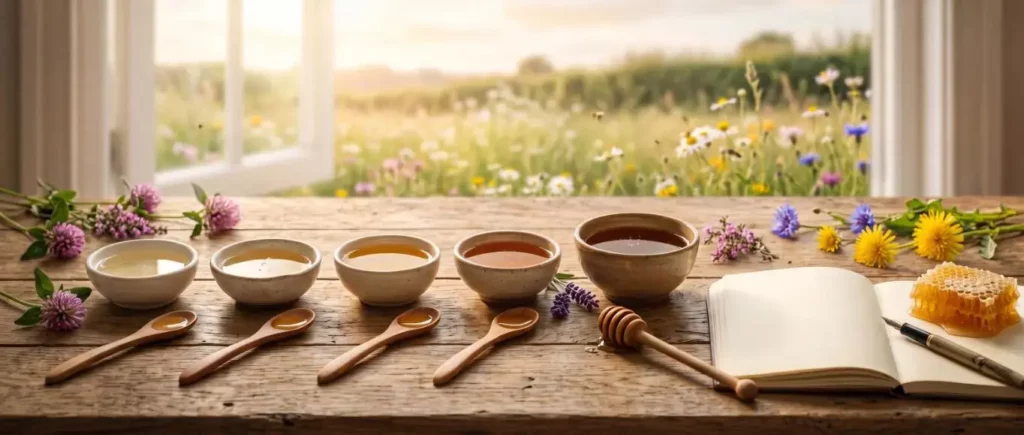
6. Compare Different Honeys
This is probably the most important practical advice.
Taste two or three honeys side by side — even subtle differences become surprisingly obvious.
There is no need to be an expert to appreciate honey.
Curiosity, a spoon and a willingness to compare different varieties are often all it takes to discover just how remarkable honey can be.
Appreciating honey isn’t about finding the “best” variety. It’s about discovering what makes each one unique. The more honeys you taste and compare, the more you’ll begin to recognise the remarkable influence of flowers, landscapes, seasons and local beekeeping traditions in every jar.
From My Shelf
________________________________
The more honeys I taste, the more I realise that slowing down reveals flavours I’d never notice in a hurried spoonful. Every jar has its own story, but only if I take the time to listen.
Quick Recommendations
- For maximum health value: raw, minimally processed honey
- For delicate flavour: light monofloral honeys such as acacia
- For robust flavour: dark honeys such as buckwheat, chestnut, or forest honey
- For versatility: medium-coloured liquid or soft set honey
For more about raw honey and its nutritional value, see our guide to Honey Benefits.
FAQ: Honey’s Texture and Taste
1. Why does honey crystallise over time?
Honey naturally crystallises because it is a supersaturated sugar solution. Glucose gradually separates from water and forms crystals. This is a natural process and does not mean the honey has spoiled.
2. Is crystallised honey still good to eat?
Yes. Crystallised honey is perfectly safe and retains its flavour and nutrients. Some people even prefer the thicker texture of crystallised honey.
3. How can crystallised honey be made liquid again?
Place the jar in a warm water bath (not boiling) and stir occasionally until the crystals dissolve. Avoid overheating, as high temperatures can damage honey’s natural enzymes.
4. Why do some honeys stay liquid longer than others?
The texture of honey depends largely on the balance of glucose and fructose. Honeys with higher fructose levels, such as acacia or tupelo honey, tend to remain liquid longer than honeys with more glucose.
5. What determines the texture of honey?
Honey texture is influenced by several factors, including floral source, sugar composition, storage temperature, moisture content, and the presence of natural particles such as pollen.
6. Does honey texture indicate quality?
Not necessarily. High-quality honey can crystallise quickly or remain liquid depending on its natural sugar composition. Texture alone is not a reliable indicator of quality. Learn how to choose good honey by looking beyond its texture and colour.
7. What is the difference between creamed honey and crystallised honey?
Creamed honey is produced by controlled crystallisation, which creates very fine crystals and a smooth, spreadable texture. Natural crystallisation may produce larger crystals and a grainier texture.
8. Why does honey sometimes become grainy?
Graininess occurs when larger glucose crystals form during crystallisation. This often happens when crystallisation occurs slowly or unevenly.
9. Why do different honeys taste different?
Honey flavour depends mainly on the flowers visited by bees. Different plants produce nectar with distinct sugar compositions and aromatic compounds, which influence the taste, aroma, and colour of honey.
10. Why is some honey darker than others?
Honey colour is influenced by the floral source, mineral content, and antioxidant compounds. Darker honeys, such as buckwheat or forest honey, often have stronger, more robust flavours.
11. What honey texture is best for spreading?
Soft-set or creamed honey is usually the easiest to spread because its fine crystals create a smooth, butter-like consistency.
12. How should honey be stored to preserve its texture?
Store honey in a sealed container at room temperature (around 18–22°C / 64–72°F). Refrigeration accelerates crystallisation and is generally not recommended.
13. Can crystallised honey be used in cooking or baking?
Yes. Crystallised honey melts during cooking and provides the same sweetness and flavour as liquid honey.
14. Why does raw honey often crystallise faster?
Raw honey contains natural pollen and microscopic wax particles that act as crystallisation seeds, encouraging glucose crystals to form more quickly.
15. Which honey has the smoothest texture?
Creamed honey usually has the smoothest texture because it is produced through controlled crystallisation that creates extremely fine crystals.