
Choosing your first beehive is one of the most important decisions you’ll make as a new beekeeper. Your hive affects how easily you can inspect your bees, how fast your colony grows, how well equipment fits together, and even the overall enjoyment of your first season. The right choice can make beekeeping feel natural and manageable. The wrong one can leave you frustrated and confused.
Beginners often feel a bit overwhelmed by the variety of options. After all, each hive presents different advantages and may suit some climates and management styles better than others.
This beginner’s guide explains the most common hive types, their pros and cons, cost considerations, and which options work best for new hobbyists. It will help you make an informed decision.
I. Why Your Hive Choice Matters
Your hive is your bees’ home, but it’s also your workspace. The right design will:
- support the colony’s natural behaviour
- make inspections simple
- allow easy expansion
- be widely compatible with equipment
- help you learn faster
Beginners don’t need complicated hives — they need a reliable, user-friendly setup with parts that are easy to find locally.
II. The Most Common Hive Types for Beginners
Here are the four hive styles you’ll encounter most often.
# 1) National Hive
(Most common in the UK)
The National hive is the standard for many UK hobbyists. It’s compact, easy to lift, and widely supported by local suppliers.
Pros
- Very popular in the UK (easy to source parts)
- Good for smaller beekeepers — lighter boxes
- Compatible with many suppliers and equipment
- Ideal for nuc transfers from UK breeders
Cons
- Brood box can feel small for strong colonies
- Beginners may need brood-and-a-half or deep brood boxes
- Not as globally standardised as Langstroth
Best for beginners?
Yes, especially if you want local support and UK-standard equipment.
# 2) Langstroth Hive
(The world standard; very beginner-friendly)
The Langstroth is the most widely used hive design globally. It comes in 2 options: 1) contains 10 frames, 2) contains 8 frames.
Pros
- Universally used in most countries
- Excellent compatibility and availability
- Simple, modular design
- Easy to expand and manage
- Good for honey production
Cons
- May feel “large” for some beginners
- Slightly longer and heavier boxes than National
- More common in commercial setups
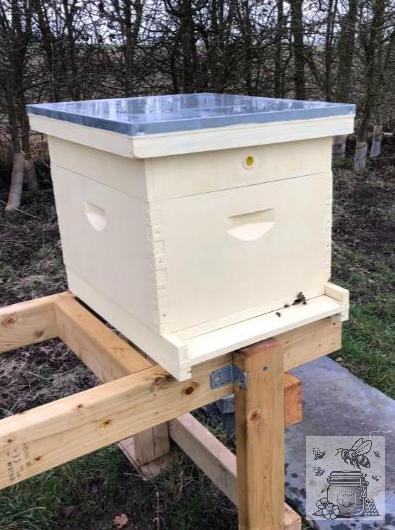
Best for beginners?
Yes, particularly if you want a long-term, expandable system with easily sourced parts. Choosing an 8-frame option will be lighter and easier to handle.
# 3) Warré Hive
(Naturalistic, vertical top-bar hive)
The Warré hive is designed to mimic a hollow tree and requires less intrusive management.
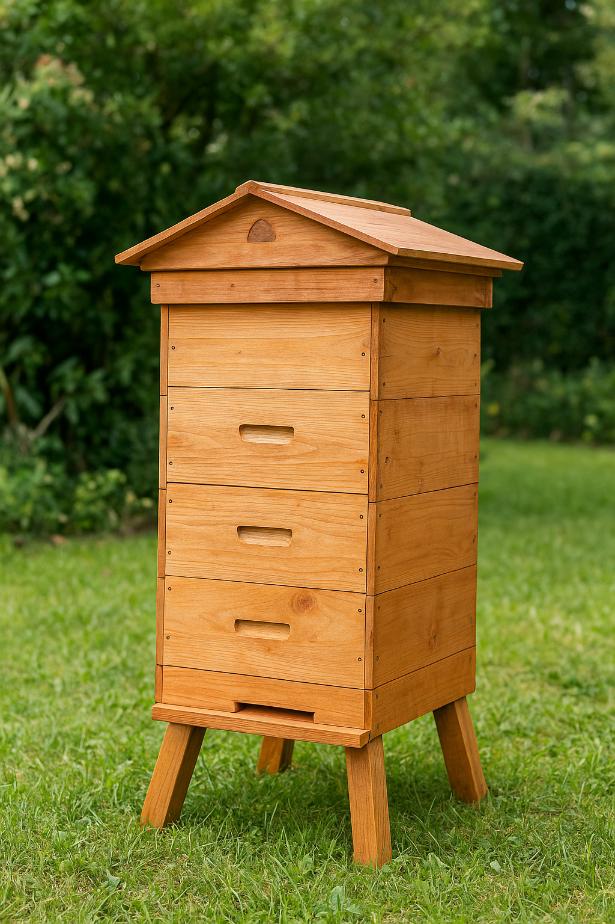
Pros
- More natural beekeeping style
- Minimal disturbance to bees
- Attractive, simple design
Cons
- Not ideal for early learning
- Harder to inspect
- Less beginner-friendly
- Limited local support and parts
Best for beginners?
Not usually. Better for beekeepers with experience or those wanting low-intervention beekeeping.
# 4) Top-Bar Hive
(Horizontal, natural comb approach)
Top-bar hives offer a non-traditional layout with bars instead of frames.
Pros
- Gentle on the bees
- Lightweight components
- Popular with natural beekeepers
Cons
- Fragile comb
- Not great for honey extraction
- Limited mentor support
- Harder to perform standard inspections
Best for beginners?
Not recommended unless you have a mentor who uses the same hive type.
Quick Comparison of Common Hive Types
To make the differences even clearer, here’s a side-by-side comparison of how the main hive types vary in size, weight, frame capacity, and feeding setup.
Because beekeeping equipment isn’t fully standardised across all suppliers — especially for natural systems like Warré and top-bar hives — the figures below show the most common dimensions and ranges that beginners are likely to encounter. This summary helps you see at a glance how each hive works in practice and which one might suit your handling style, available space, and long-term plans.
| Hive Type | Footprint (W × L) | Box Depth | Height When Fully Assembled* | Frames / Bars | Approx Weight (Full Box)** | Where Feed Goes |
| National | ~460 × 460 mm | Brood: ~225 mm Super: ~150 mm | Typical 2-supers setup: ~650–800 mm | 11 Hoffman frames per brood box | Brood: ~22–30 kg Super: ~12–18 kg | On crownboard (fondant), or liquid feeder inside |
| Langstroth | ~510 × 410 mm | Deep: ~240 mm Medium: ~168 mm | Typical 2-supers setup: ~700–900 mm | 2 variants: 8 or 10 frames per box | Deep: ~30–40 kg Medium: ~20–25 kg | On inner cover/crownboard; internal feeders common |
| Warré | ~300 × 300 mm | ~210–240 mm | 4–5 boxes = ~1.0–1.3 m tall | 8 top-bars per box (no frames) | Box (full comb/honey): ~20–23 kg | Above top bars under quilt box |
| Top-Bar | ~450 mm wide × 1200–1300 mm long | Depth ~450–500 mm (varies) | Fixed single-body hive ~500–600 mm tall with roof | 24–30 top bars (varies by length) | Entire hive: 25–45 kg depending on comb | Internal feeder or fondant placed above comb |
“Fully assembled” varies by beekeeper configuration.
** Weight when fully drawn out with bees + honey stores (naturally variable).
Why Hive Dimensions Matter for Beginners
Hive parts aren’t universally standard. Supers, brood boxes, and frames can differ in depth between hive types and even between suppliers.
I learned this the hard way while expanding my apiary: I bought supers that looked right but they turned out to be too shallow for my frames.
⚠️ Double-check dimensions before buying equipment to avoid costly mismatches.
III. Key Factors to Consider Before Choosing
1. Local availability of equipment
You want a hive type commonly used by local beekeepers, so mentors can easily help you.
2. Ease of inspections
Your first year is all about learning. Clear, accessible frames make everything easier.
3. Weight and handling
Different hives use different box sizes. A full honey super can be heavy — consider your comfort.
4. Expandability
Most beekeepers expand to two hives; choose a system that scales easily.
5. Climate suitability
Some hive types ventilate differently; standard British designs suit UK weather well.
IV. What Most Beginners Should Choose
For a typical UK hobbyist, the best beginner options are:
• National Hive
or
• Langstroth Hive
These offer:
- easy inspections
- consistent frame sizing
- straightforward honey harvesting
- lots of advice available
- compatibility with mentors, clubs, and suppliers
Both hives have decades of reliable use behind them, and beginners learn quickly with these systems.
V. Common Beginner Mistakes to Avoid
1. Choosing a hive no one locally uses
This makes it harder to get help or spare parts.
2. Buying a hive because it “looks pretty”
Always prioritise function over aesthetics.
3. Starting with top-bar or Warré
They can be wonderful for experienced beekeepers, but challenging for first-timers.
4. Mixing incompatible frame sizes
Standardisation keeps everything simpler — especially when expanding.
VI. If I Were Starting Again…
Most beekeepers eventually realise that consistency and simplicity are key. If beginning from scratch, many would choose:
- one hive type
- one brood box size
- one supplier they trust
This ensures everything integrates smoothly, avoids mismatched parts, and makes management far easier.
Final Thoughts
Your first hive sets the tone for your entire beekeeping experience. A beginner-friendly, widely supported hive — like a National or Langstroth — will give you the simplest start, the clearest learning path, and the best support from local beekeepers.
Once you’ve had a full season, you can experiment with other hive types if you wish. Until then, focus on a system that helps you build confidence and skill quickly.
For more beginner guidance, explore:
👉 Your First Steps in Beekeeping: The Complete Beginner’s Guide
👉 How Much Does Beekeeping Really Cost? A Practical Beginner’s Breakdown
👉 How to Get Your First Bees — Nucs, Packages, and Swarms