Welcome to your guide for harnessing the power of bee-products in DIY creations. Whether you’re a beekeeper looking to turn your hive harvest into healing salves, or someone curious about natural skincare and wellness, this page is your hub.
I’ve been keeping bees for more than five years, but my interest in the science behind bee products goes back over two decades — especially when it comes to propolis and honey. Over the years I’ve tested various DIY formulas, remedies, and skincare recipes, experimenting with what truly works. The guides and tutorials I share here come directly from that hands-on experience and long-term research.
Here, you’ll find:
- Insights into bioactive benefits of the major bee products (honey, propolis, royal jelly, pollen, beeswax) and links to more details.
- Safe, practical recipes and formulations.
- Links to in-depth DIY tutorials and advanced techniques.
- Quality-control, storage, and safety guidance.
The Healing Power of Bee Products
Bioactive Benefits
Bee products are not just sweet or waxy — many of them contain powerful bioactive compounds that make them prized in natural wellness. For instance:
- Propolis is rich in flavonoids and phenolic acids, known for antimicrobial and anti-inflammatory effects.
- Beeswax, while not “active” in the same way, acts as a protective base in salves and cosmetics.
- Honey brings antioxidants, natural enzymes, and wound-healing properties.
- Bee Pollen is packed with vitamins, minerals, amino acids — making it a nutritional powerhouse.
- Royal Jelly contains proteins (including major royal-jelly proteins), amino acids, and unique fatty acids like 10-HDA, contributing to immune support and skin regeneration.
These benefits are well documented in apitherapy traditions and modern studies.
Propolis: Your DIY Powerhouse
Propolis has earned its place as one of the most versatile and powerful tools in natural DIY wellness. Packed with flavonoids, resins, and aromatic compounds, it offers broad-spectrum antimicrobial, soothing, and protective properties — making it ideal for extracts, skin care, oral health, and hair care. This section brings all your propolis-based creations together in one easy-to-navigate place.
1. Propolis Extraction Methods
Extracts are the foundation of almost every propolis-based DIY recipe. The solvent you choose — water, alcohol, oil, or ghee — determines which active compounds you extract, the potency, shelf life, and the type of projects you can make.
Water-Based Propolis Extract (WPE)
A gentle, alcohol-free option ideal for people who prefer non-alcoholic preparations.
Best for: mouthwash, skin toners, children’s preparations, and water-soluble applications.
Key benefits:
- Extracts some of the water-soluble antioxidants
- Mild flavour and aroma
- Lower risk of skin irritation
Limitations: shorter shelf life and less potency than alcohol-based extracts.
Alcohol-Based Propolis Extract (Tincture / APE)
The most potent and long-lasting form of propolis extraction.

Best used for: salves, serums, creams, disinfecting sprays
Pros: strongest extraction of resins and flavonoids
Cons: not suitable for alcohol-sensitive users
Key benefits:
- High potency
- Long shelf life
- Excellent solvent for resins and flavonoids
Limitations: not suitable for individuals avoiding alcohol.
👉 Full tutorial: How to Make Water & Alcohol Propolis Extracts
2. Topical Creations
Propolis excels in topical uses because it creates a protective barrier and supports the skin’s natural repair processes. Below are your main propolis-based DIY formulations.
Propolis Salve
A multipurpose salve made from oil-based propolis extract and beeswax.
Why it’s useful:
- Helps hydrate dry, cracked skin
- Offers protective and soothing benefits
- Ideal for small areas needing extra care
👉 Full recipe: DIY Propolis Salve – Step-by-Step Guide
Skincare With Propolis
Propolis Serum
A lightweight blend designed for daily skin support.
Great for: redness, blemishes, uneven texture, dull skin
Typical ingredients: aloe vera gel, lightweight oils, propolis extract
👉 Full guide: How to Make a Propolis Skin Serum.
Creams & Mask for Mature Skin
Propolis works beautifully in hydrating and antioxidant-rich skincare for aging or stressed skin.
Benefits:
- Supports skin repair
- Improves texture and suppleness
- Enhances antioxidant protection
👉 Full tutorial: Propolis Creams & Mask for Mature Skin.
3. Hair Care With Propolis
A supportive blend for scalp comfort and healthy shine.
Quick example recipe:
- 1 tbsp aloe vera gel
- 5–10 drops propolis tincture (or ½ tsp water extract)
- 1 tsp jojoba or argan oil
Apply to the scalp before washing or as a targeted leave-in treatment.
👉 Full guide: Using Propolis for Hair & Scalp Health.
4. Oral & Internal Uses
Propolis also has traditional uses in oral care and internal wellness preparations. These require clear safety notes.
Propolis Mouthwash
A simple preparation made by diluting propolis tincture into warm water with optional herbal additions.
Benefits:
- Freshens breath
- Supports gum comfort
- Provides a mild antimicrobial effect
Safety notes:
- Avoid if allergic to bee products
- Alcohol tincture may not be suitable for everyone
- Avoid swallowing large amounts
👉 Full recipe: DIY Propolis Mouthwash
Propolis-Infused Ghee
A traditional preparation valued for its soothing qualities and versatility.
Why it’s popular:
- Fat-soluble propolis compounds infuse well into ghee
- Stable storage
- Can be used topically or in warm beverages
👉 Full guide: How to Make Propolis Ghee
Beeswax in DIY
What Makes Beeswax Unique?
Beeswax is secreted by worker bees of Apis mellifera through specialised abdominal glands. Fresh wax appears almost white; over time it deepens to yellow or amber as it absorbs pollen oils and propolis.
Unlike honey or propolis, beeswax is not bioactive in the antimicrobial sense. Its power lies in structure and protection.
It creates a breathable occlusive (sealing in moisture) barrier that:
- Prevents moisture loss
- Protects damaged skin
- Stabilises oil-based formulations
This makes it foundational in DIY skincare and herbal preparations.
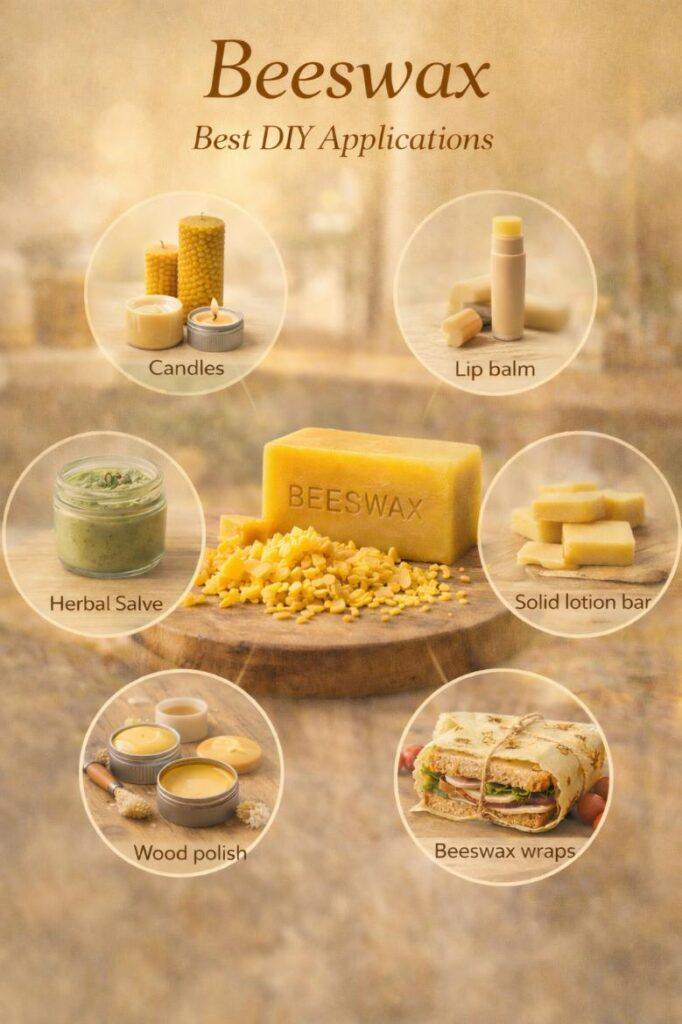
Best DIY Applications
Beeswax is ideal for oil-based, water-free formulations:
- Herbal salves (softer texture, less beeswax) and balms (firmer texture, more beeswax)
- Lip balms
- Solid lotion bars
- Beard balms
- Natural deodorant sticks
- Wood polish
- Candles
- Food wraps (waxed cloth)
It acts as both a thickener and stabiliser.
Beginner-Friendly Beeswax Projects
If you’re new to working with wax, start with my detailed guide on making a Calendula infused coconut oil & beeswax salve, where I explain texture ratios and infusion methods step by step. Also try:
- Basic lip balm (oil + beeswax + optional honey) (coming soon)
- Beeswax hand balm for winter (coming soon)
These require no emulsifiers and have long shelf life.
Advanced Formulation Concepts
Once comfortable, you can experiment with:
- Adjusting oil-to-wax ratios for texture control
- 1:4 (firm balm)
- 1:5 or 1:6 (softer salve)
- Combining beeswax with propolis oil infusions
- Creating multi-herb salve blends
- Layering beeswax with butters (shea, cocoa) for texture
Understanding ratios elevates your formulations from hobby-level to refined craft.
Quality & Storage
Choose:
- Clean, filtered beeswax from trusted beekeepers
- Avoid wax contaminated with agricultural residues
Beeswax is highly stable and stores well for years in cool, dry conditions.
Safety Notes
- Rare allergy risk
- Always patch test topical products
- Ensure wax is fully melted and evenly blended
Beeswax forms the structural backbone of many apitherapy creations — simple, reliable, and beautifully sustainable.
DIY with Honey
What Makes Honey Bioactive?
Honey is far more than a natural sweetener.
Raw honey contains:
- Natural enzymes (including glucose oxidase)
- Organic acids (low pH ~3.2–4.5)
- Hydrogen peroxide activity (in many varieties)
- Polyphenols and antioxidants
- Osmotic activity that inhibits microbial growth
These properties explain honey’s long-standing role in wound care, skincare, and traditional medicine.
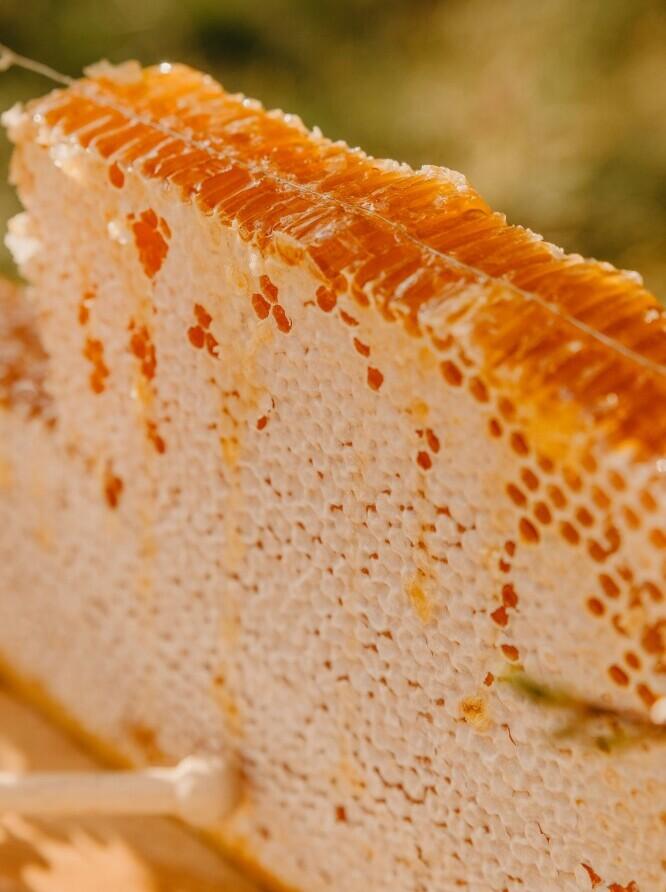
For a deeper look at how honey supports skin and healing, see my evidence-based guide to honey benefits.
Best DIY Applications
Honey is versatile and can be used both internally and topically in:
- Facial masks
- Lip treatments
- Oxymels (honey + vinegar herbal extract)
- Herbal syrups
- Cough preparations
- Sugar scrubs
- Hair masks
It pairs exceptionally well with pollen, propolis and royal jelly.
Beginner-Friendly Honey Recipes
- Raw honey face mask (single ingredient)
- Honey + yoghurt probiotic mask
- Honey + propolis throat syrup
- Honey and pollen morning tonic
These require no heating and preserve enzymatic activity.
Advanced Honey Applications
- Oxymel extractions (herbs infused in honey + apple cider vinegar)
- Fermented honey preparations (learn how to make Garlic Fermented in Honey in this article)
- Herbal electuaries (powdered herbs mixed into honey)
- Honey-based salve hybrids (requires careful water-free formulation)
These bridge traditional herbalism and modern DIY.
Quality & Storage
For apitherapy use:
- Choose raw, unpasteurised honey
- Avoid ultra-filtered commercial honey
- Store in sealed glass away from moisture
Properly stored honey can remain stable indefinitely.
Safety Notes
- Not suitable for infants under one year
- Diabetics should monitor intake
- Rare pollen-related allergies
Honey is often the safest and most accessible entry point into bee-product DIY.
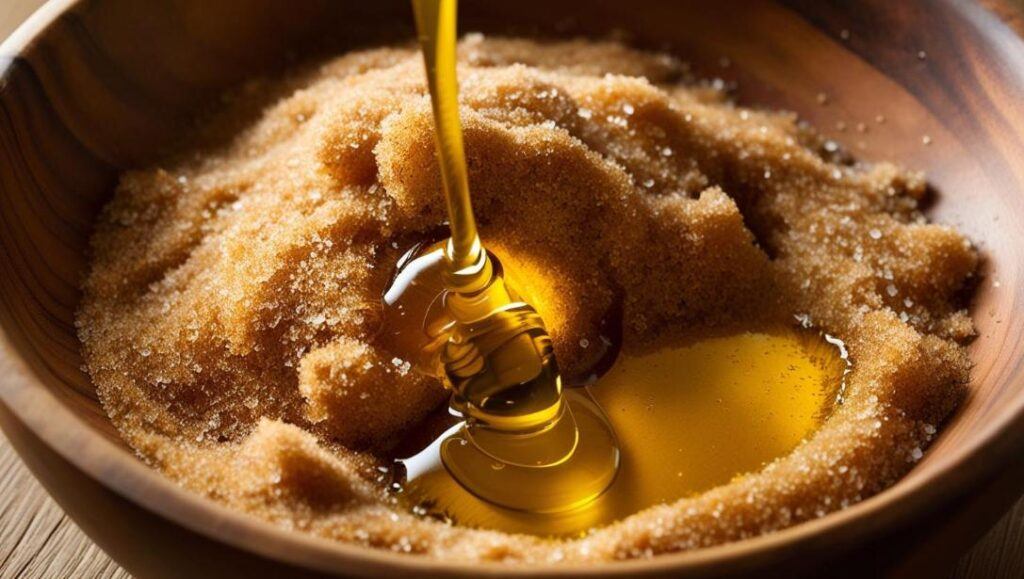
Creating your own honey sugar scrub is an easy way to start. Combine coarse sugar with honey and a dash of olive oil for a fantastic exfoliator. This simple mix sloughs away dead skin cells while leaving your skin feeling soft and revitalised. Plus, it’s a fraction of the cost of store-bought scrubs.
Facial masks using honey can be another great addition to your routine. Mix honey with some mashed avocado or a bit of yogurt, and you’ve got a nourishing mask that tackles dryness and calms irritation. Honey’s natural enzymes work wonders to gently clean and brighten the skin, making these masks a treat for anyone looking to enhance their skincare.
Beyond masks and scrubs, honey can be blended into homemade toners or even lip balms. Its versatility means it can seamlessly integrate with various other natural ingredients, allowing you to tailor your creations to your specific skincare needs.
Understanding the science behind honey’s beneficial properties can enhance your appreciation of its role in skincare. Its natural antioxidants, enzymes, and nutrients make it a powerful ally against many common skin issues. Also it is kind to both your skin and the environment.
Health Benefits of Royal Jelly in DIY Apitherapy
What Makes Royal Jelly Stand Out?
Royal jelly is a specialised secretion produced by young worker bees of Apis mellifera. It is the exclusive food of the queen bee throughout her life and is responsible for her remarkable development, fertility, and longevity.
Its composition is complex and biologically active.
Unlike honey or beeswax, royal jelly is highly unstable and sensitive to heat, light, and oxygen. Its potency lies in its freshness.
In apitherapy traditions and modern research, royal jelly is associated with immune modulation, skin regeneration, and metabolic support — though it must be handled carefully.
Realistic DIY Applications
Royal jelly is not as formulation-friendly as beeswax or honey. It cannot be heated, and it degrades quickly. For this reason, its DIY uses are limited but meaningful.
1. Royal Jelly + Honey Blend (Most Practical)
Mix fresh royal jelly into raw honey at approximately 1–2% concentration (for example, 1–2 g per 100 g honey).
This:
- Improves stability
- Makes dosing easier
- Extends shelf life (when refrigerated)
- Preserves enzymatic activity
This is the most traditional and practical preparation.
2. Royal Jelly + Honey + Bee Pollen Vitality Blend
A small amount of fresh royal jelly can be blended with:
- Raw honey
- Finely ground bee pollen
This creates a concentrated apitherapy tonic. Because pollen increases allergen risk, start with very small amounts.
3. Fresh Facial Masks (Short-Term Use Only)
Royal jelly can be added to:
- Raw honey masks
- Yoghurt-based masks
These should be prepared fresh and used immediately. Do not store water-containing mixtures without preservation.
Why Royal Jelly Is Not Ideal for Complex DIY Cosmetics
Royal jelly:
- Degrades with heat
- Breaks down in emulsified creams
- Requires refrigeration
- Has a short shelf life
- Can destabilise formulations
This is why most commercial royal jelly cosmetics use stabilised or freeze-dried versions.
Quality & Storage
If working with fresh royal jelly:
- Purchase from a trusted beekeeper
- Keep refrigerated immediately
- Store in dark glass
- Avoid repeated exposure to air
- Use within recommended timeframe
Freeze-dried royal jelly has longer stability but is less accessible for small-scale DIY use.
Safety & Contraindications (Important)
Royal jelly carries a higher sensitivity risk than honey or beeswax.
Avoid or use caution if:
- Allergic to bee products
- Severe pollen allergies
- Asthma history
- Pregnant or breastfeeding (consult professional guidance)
- Hormone-sensitive conditions
Always start with extremely small amounts.
Royal jelly is biologically potent. Treat it with the same respect you would give to a concentrated herbal extract.
Bee Pollen in DIY Apitherapy
What Makes Bee Pollen Unique?
Bee pollen consists of flower pollen collected by bees and mixed with nectar and enzymes.
It contains:
- Amino acids (including essential amino acids)
- B vitamins
- Trace minerals
- Polyphenols
- Natural enzymes
Its value lies primarily in nutritional density, rather than topical action.
One simple way to enjoy bee pollen is by adding it to smoothies. Blending bee pollen with fruits like bananas, berries, and a splash of almond milk creates a delicious, nutrient-rich drink. This not only boosts energy levels but also provides an immune system kick-start.
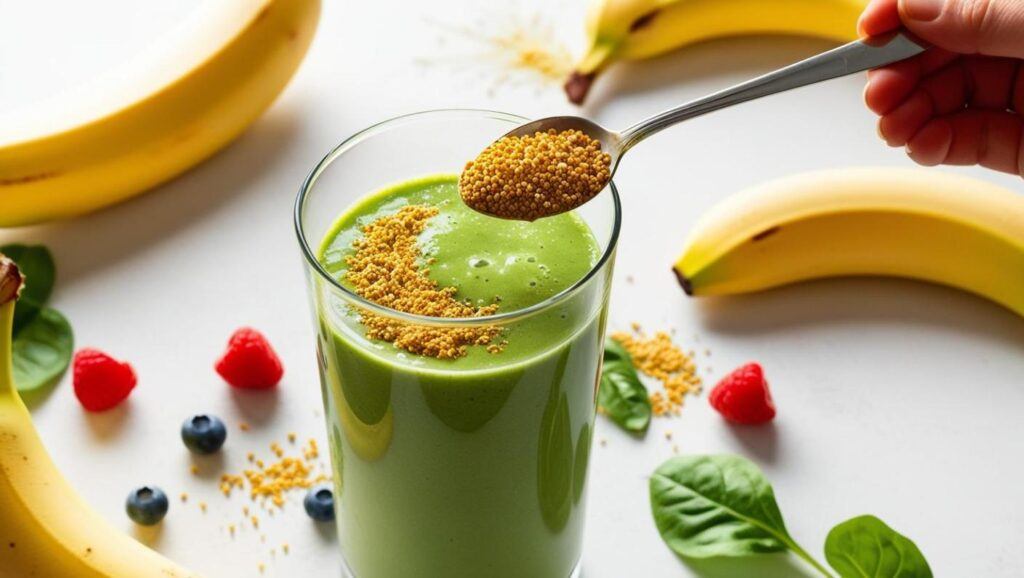
Bee pollen also perfect in homemade energy balls. Mix it with oats, nut butter, honey, and your choice of seeds or dried fruits for a portable, healthy snack. These bites are excellent for reaching for during an afternoon slump or before a workout.
Beginner-Friendly Uses
- ½ teaspoon added to morning yoghurt
- Honey + pollen immune paste (I often combine pollen with honey for a simple morning tonic — especially during colder months when immune resilience matters most.)
- Pollen blended into nut butter
Start with small amounts to assess tolerance.
Advanced Applications
- Ground pollen mixed into herbal electuaries
- Combined with royal jelly and honey for vitality blends
- Infused into glycerite extracts (experimental level)
Because pollen is moisture-sensitive, stability is key.
Quality & Storage
- Store in freezer or refrigerator
- Keep airtight
- Protect from moisture
Fresh pollen has the highest nutritional value.
Safety Notes
- Higher allergy risk than other bee products
- Avoid if severe pollen allergy
- Introduce gradually
It’s important to introduce bee pollen into your diet gradually, especially if it’s your first time using it. Some people may experience allergic reactions, so starting with a small amount helps you gauge your body’s response. If you know you have allergies to pollen, consulting your healthcare provider before use is wise.
Understanding the sourcing of bee pollen ensures you are getting a high-quality product. Opt for pollen that’s sustainably harvested and free from contaminants, supporting both ethical practices and better nutrient retention.
Bee pollen bridges the gap between nutrition and apitherapy, offering vitality-focused support rather than structural skincare use.
Final Thoughts: Bringing the Beehive Into Your Daily Life
From nourishing honey masks and soothing beeswax balms to immune-supporting propolis rinses, energising bee pollen blends, and revitalising royal jelly elixirs, the beehive offers a complete natural wellness toolkit. Each ingredient carries its own unique properties — and when used thoughtfully, they can become powerful additions to your daily routine.
The beauty of working with beehive products is their versatility. You can start simple — stir royal jelly into raw honey, craft a beeswax salve, or blend bee pollen into a smoothie — and gradually explore more advanced DIY formulations as your confidence grows.
As you experiment, remember:
- Choose high-quality, responsibly sourced bee products
- Start with small amounts to test sensitivity
- Store ingredients properly to preserve potency
- Respect the power of these concentrated natural substances
Whether you’re focused on skincare, oral care, immune support, or holistic wellness, the hive truly has something to offer.
Explore, experiment, and let nature’s smallest workers inspire your biggest wellness upgrades. 🐝