Deep in the wild forests of Western Australia grows one of the world’s most extraordinary trees — the Jarrah (Eucalyptus marginata). From its nectar, bees craft a rare and powerful honey known for its dark amber color, slow crystallisation, rich flavour, and exceptional antimicrobial properties. Revered in its homeland and increasingly sought after worldwide, Jarrah honey stands alongside Manuka as one of nature’s most potent natural healers.
What Makes Jarrah Honey So Special?
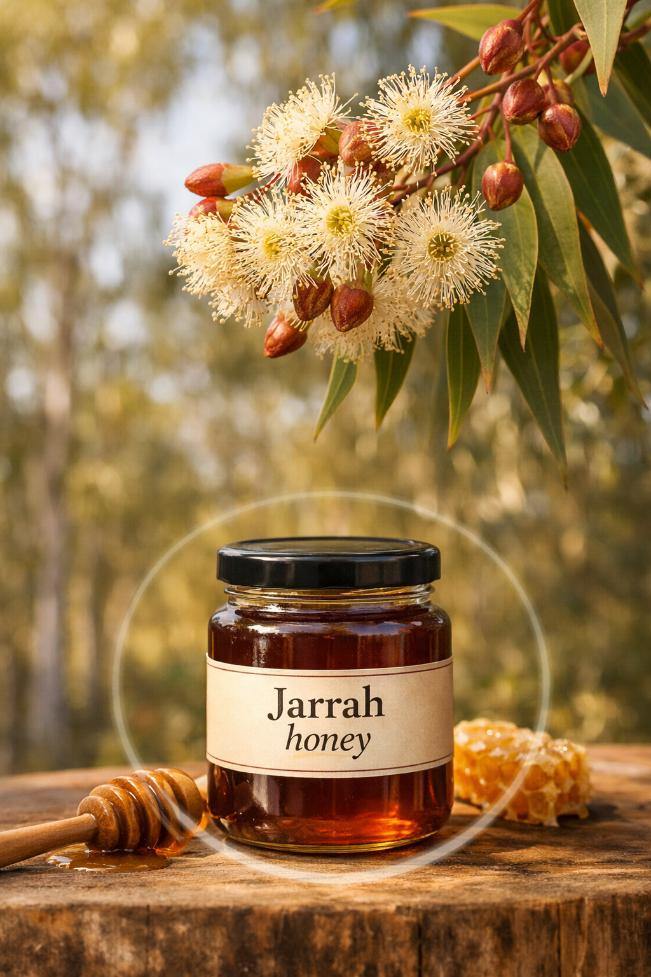
Jarrah honey is produced when bees forage the nectar of Eucalyptus marginata, a tree species found only in the south-west corner of Western Australia.
These ancient forests — some trees are over 1,000 years old — bloom only once every two years, making Jarrah honey exceptionally scarce.
Unlike most honeys, Jarrah has a naturally high level of hydrogen peroxide activity and extremely low glucose levels, which give it strong antibacterial power and a silky, non-crystallising texture. It’s sometimes called Australia’s healing honey for this reason.
Jarrah honey is one of the world’s most remarkable monofloral honeys — but it’s far from the only rare treasure nature produces.
From ancient forest nectars to high-altitude alpine varieties and honeys harvested from remote volcanic islands, some of the most extraordinary types remain virtually unknown outside their regions of origin.
👉 Explore our in-depth guide: Rare Honey Of The World: The Most Exclusive Varieties Explained and discover the planet’s most fascinating, limited-production honeys.
Flavour Profile and Appearance
Unlike the floral sweetness of clover or acacia honeys, Jarrah’s flavour is complex and full-bodied, appealing to those who enjoy bold, robust honeys.
Because of its low glucose content, it stays runny indefinitely — a rare and delightful trait for a natural honey.
- Colour: Deep amber to mahogany
- Aroma: Earthy, woody, caramel-like
- Taste: Rich and complex — think molasses, malt, and soft toffee
- Texture: Smooth and runny; never granulates
Its strong yet balanced taste makes it a favourite for honey connoisseurs who enjoy depth and character.
My Thoughts on Jarrah Honey
Having tasted Jarrah honey myself, I can understand why it has developed such a strong reputation among honey enthusiasts.
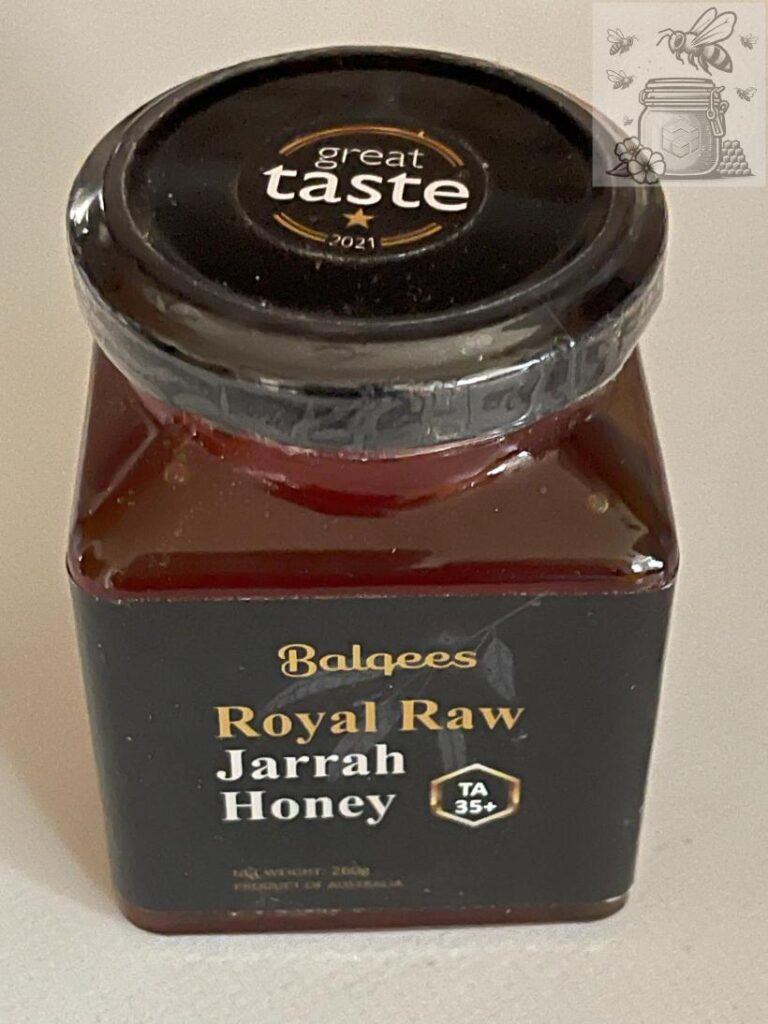
Its flavour is truly unique and exotic, with woody, slightly medicinal notes that give it depth and character.
Despite this complexity, the honey remains well-balanced, with a smooth richness and subtle caramel undertones that aren’t overpoweringly sweet.
Another thing that impressed me was the texture — it pours beautifully and stays liquid for an exceptionally long time compared to many other raw honeys.
If you have the opportunity to try authentic, lab-tested Jarrah honey, it’s certainly worth experiencing at least once. It stands apart not just for its high activity rating, but for its distinctive flavour profile and overall balance.
Health Benefits of Jarrah Honey
Scientific testing has shown that high-grade Jarrah honey (often labeled TA35+ or TA40+, meaning “Total Activity”) rivals or exceeds Manuka honey in antibacterial strength. Its health benefits include:
- Strong antibacterial and antifungal properties — effective against a wide range of bacteria, including Staphylococcus aureus and E. coli.
- Supports wound healing and skin health — promotes tissue repair and reduces infection when used topically.
- Soothes sore throats and coughs — natural antiseptic effect.
- Promotes gut health — supports beneficial gut flora.
- Rich in antioxidants — especially polyphenols that protect cells from oxidative stress.
- Low glycemic index (GI) — releases energy slowly, making it a better alternative for people watching blood sugar levels.
A Honey from Trees Older Than Time
One fascinating detail: Jarrah forests are among the oldest living ecosystems on Earth, dating back 250 million years.
Some individual trees still growing today may be more than 1,000 years old. Their dense, reddish wood is famously durable and was once used for shipbuilding and railway sleepers.
Today, beekeepers protect these forests not for timber, but for their precious nectar — keeping alive both an ancient landscape and a sustainable bee industry.
Little-Known Facts About Jarrah Honey
- Jarrah trees flower only once every two years, and sometimes even less if rainfall is poor — making production cycles unpredictable.
- Jarrah honey doesn’t crystallise due to its unusually low glucose and high fructose content — so it stays liquid naturally for years.
- It’s naturally dark because of antioxidant compounds, not because it’s aged or heated.
- High “TA” rating (Total Activity) is tested in laboratories — a scientific measure of antimicrobial strength, similar to UMF in Manuka.
- Jarrah nectar yields a low honey volume, so it’s considered a limited vintage honey.
- The honey’s pH is naturally low (acidic), which inhibits bacterial growth and contributes to its wound-healing properties.
- Aboriginal Australians have long used the Jarrah tree’s sap and wood extracts for traditional healing.
- No pesticides or antibiotics are used in Jarrah honey production, as it’s harvested from remote wild forests.
- Its antimicrobial power increases with age when stored properly — a rare feature among honeys.
- Some connoisseurs describe its flavour evolution over time as “shifting from treacle to velvet chocolate.”
- Jarrah honey is highly prized in Asia for both culinary and medicinal uses, often fetching luxury-tier prices. It’s nicknamed “The Champagne of Honeys” for its smooth texture and rarity.
- The Western Australian government restricts the export of untested Jarrah honey to protect authenticity and prevent mislabeling.
How to Use Jarrah Honey
Jarrah honey’s deep, complex flavour and high health value make it versatile, you can:
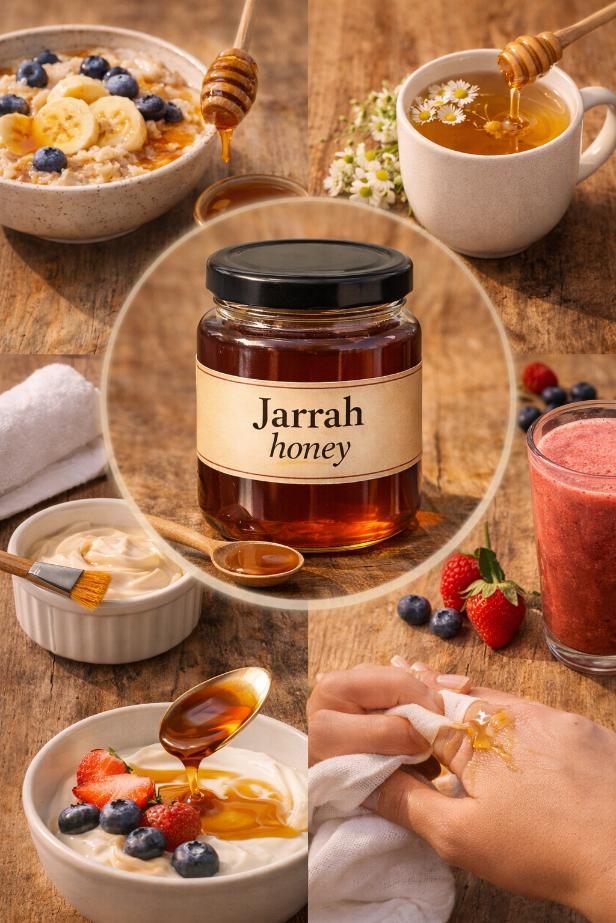
- Drizzle it over warm porridge, pancakes, or Greek yogurt.
- Stir it into herbal teas (after the water cools slightly to preserve enzymes).
- Blend it into smoothies for immune support.
- Apply a thin layer to minor cuts, burns, or blemishes (for topical healing).
- Use it in homemade face masks as a natural humectant and antibacterial.
- Enjoy a spoonful daily on its own for immune and digestive support.
Grades and Labeling: Understanding “TA” Rating System
Jarrah honey is typically labeled with a TA (Total Activity) rating such as TA20+, TA30+, TA35+, or TA40+. This number reflects the honey’s overall antibacterial activity as measured under laboratory conditions (including both peroxide and non-peroxide effects).
Here’s how those ranges generally compare:
- TA10+ – 20+ → Mild to moderate activity
Suitable for everyday use and general wellness. This range already exceeds the antibacterial strength of many standard table honeys. - TA25+ – 30+ → Strong activity
Often selected by consumers seeking higher natural antibacterial properties while still enjoying regular culinary use. - TA30+ – 35+ → High activity
Considered premium-grade Jarrah honey with significant antibacterial potency. - TA35+ – 40+ → Exceptionally high activity
Rare, carefully tested batches. These are typically chosen for specialized applications, including topical use, rather than everyday sweetening.
It’s important to understand that higher TA does not automatically mean “better” for every purpose — taste, harvest conditions, independent lab verification, and storage practices all influence overall quality.
Understanding Jarrah honey’s TA rating is just the beginning. Knowing how to properly interpret honey grading systems, lab certifications, and authenticity markers is what truly protects your investment and ensures you’re purchasing genuine, high-quality honey.
From TA ratings to laboratory testing standards, we explain everything clearly and practically in the article Best Honey Ratings & Quality Indicators Explained.
Sustainability and Conservation
Western Australian honey producers operate under strict biosecurity laws, ensuring:
- No pesticides or antibiotics in hives
- Protection of native bee species
- Sustainable nectar harvests from natural forests
- Traceable, lab-tested batches for export
By buying authentic Jarrah honey, consumers support forest conservation and local beekeeping communities.
Jarrah Honey FAQ
Is Jarrah honey better than Manuka honey?
Jarrah honey has equal or higher antibacterial power (depending on TA rating) and can contain more antioxidants. Its advantage is that it’s peroxide-based, so it’s gentler on tissues and ideal for long-term use.
Why is Jarrah honey so rare?
Jarrah trees flower only once every two years, sometimes less, and in very limited areas of Western Australia. Droughts can stop flowering altogether.
What does “TA” mean on the label?
“TA” stands for Total Activity, a measure of antimicrobial strength. A higher number means greater antibacterial power.
Why doesn’t Jarrah honey crystallise?
It has low glucose and high fructose content, which prevents sugar granules from forming — keeping it liquid naturally.
Can I use Jarrah honey on wounds?
Yes, medical-grade Jarrah honey (TA35+ or higher) is often used topically for cuts, burns, and acne. Always ensure it’s clean, raw, and laboratory-tested.
Does Jarrah honey help sore throats or coughs?
Yes, it soothes and disinfects the throat naturally due to its hydrogen peroxide content.
Is Jarrah honey vegan?
Technically, no honey is vegan, since it’s produced by bees — but it is cruelty-free when sourced from ethical, sustainable beekeepers.
How should I store Jarrah honey?
Keep it in a cool, dark place below 25°C. It doesn’t need refrigeration.
Can children eat Jarrah honey?
It’s safe for everyone over one year old. Never give honey (of any type) to infants under 12 months old.
Why is Jarrah honey more expensive than other honeys?
Because it’s rare, harvested in limited quantities, and lab-tested for purity and TA strength.
How can I verify genuine Jarrah honey?
Look for TA rating, “Product of Western Australia” labeling, and suppliers who publish independent lab certificates.
What foods pair best with Jarrah honey?
It complements cheeses (like aged cheddar or brie), roasted nuts, and coffee drinks beautifully.
Does Jarrah honey lose its benefits when heated?
Yes, high heat destroys enzymes and antimicrobial compounds, so it’s best added to warm (not hot) foods or drinks. Avoid boiling or baking with it.
What is the shelf life of Jarrah honey?
Properly stored, it lasts indefinitely. In fact, it often improves in potency and flavour over time.