Apilarnil is one of the lesser-known beehive products — often mentioned alongside royal jelly, yet rarely explained clearly.
Used traditionally in parts of Eastern Europe, apilarnil is made from drone bee brood and is promoted for vitality, hormonal balance, and overall wellbeing. But how much of this is supported by research? This guide breaks down:
- What Is Apilarnil?
- Apilarnil Benefits: Traditional Uses & Modern Claims
- Apilarnil Health Studies: What Does Research Say?
- Apilarnil vs Herbal Supplements
- Apilarnil Dosage Recommendations (Informational Only)
- Best Apilarnil Products: What to Look For
- Apilarnil Side Effects & Safety
- Apilarnil for Weight Loss: Myth or Reality?
- Ethical Considerations
- DIY: Mixing Apilarnil with Honey (For Curious Hobbyists)
- Apilarnil Reviews: Why They Vary
- Frequently Asked Questions (Apilarnil FAQs)
What Is Apilarnil?
Apilarnil is a homogenised extract made from drone (male) honey bee larvae harvested at a specific developmental stage — typically 7–9 days old.
Visually it is a milky substance resembling raw milk taken straight from the cow, that is why apilarnil is also known as “drone milk”. It solidifies when frozen (similarly to the state of hard set honey). When freeze-dried, it is in a state of powder. “Its colour varies from white and yellowish to pale grey… It is characterized by a sweet, with a slightly sour taste and distinctive smell similar to that of royal jelly”. (PMC)
The name comes from:
- Api (bee)
- Larva (larvae)
- NIL (Nicolae Ilieșiu, the Romanian beekeeper who popularised it in the 1980s)
Unlike royal jelly, which is secreted by nurse bees, apilarnil is derived directly from drone brood.
Apilarnil Ingredients
One common misconception concerns apilarnil ingredients.
Pure apilarnil contains no added ingredients.
It is simply homogenised drone larvae, like you can see in the photo – freshly made apilarnil.
However, consumers often encounter it in various forms:
- Fresh frozen homogenate
- Mixed with honey (a traditional preservation method)
- Freeze-dried powder capsules
- Blended tonic products
- Combined with propolis or pollen
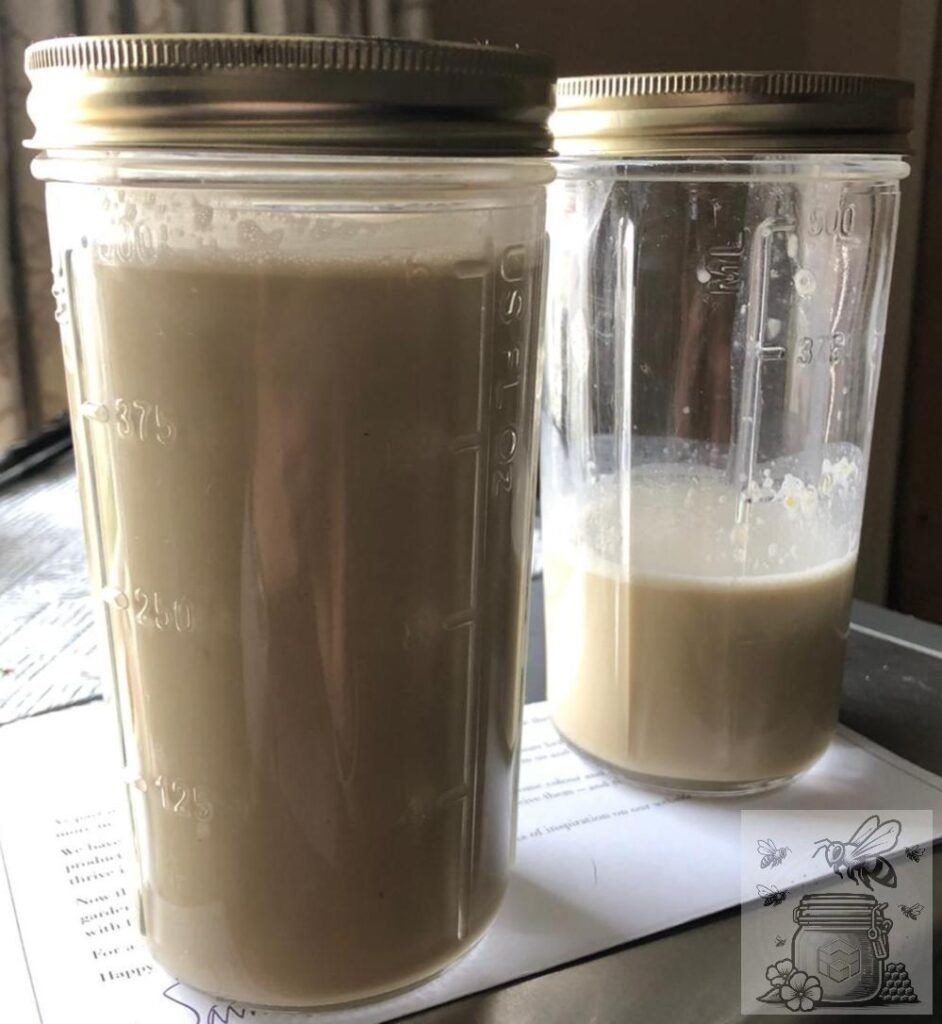
As a beekeeper, you can make it using the removed drone brood as part of Varroa management — some hobbyists (including me) experiment with mixing fresh homogenate into honey for preservation (see the DIY recipe further below).
Detailed Composition of Apilarnil
Studies show drone brood is a very nutritious substance with high content of nutrients, containing approximately:
- 50–70% water
- 10–20% protein
- 5–15% lipids
- Small amounts of carbohydrates
- Vitamins (A, D, E, B-complex)
- Minerals (zinc, magnesium, iron)
- Sterols (including precursors related to hormonal pathways)
- All essential amino acids
Composition depends on:
- Larval stage
- Colony nutrition
- Season
It is nutritionally dense — but not standardised.
Apilarnil Benefits: Traditional Uses & Modern Claims
Traditionally, apilarnil has been used for:
- Male vitality
- Hormonal support
- Energy and stamina
- General tonic effects
Nowadays, commonly claimed apilarnil benefits include:
- Increased energy
- Improved fertility markers
- Hormonal balance
- Immune support
- Improved recovery
Some promoters also discuss apilarnil for skin health, due to its protein, lipid, and micronutrient content. However, this use is far less documented compared to internal consumption.
Important Note
Most benefit claims originate from small regional studies, animal experiments and traditional use reports.
Apilarnil Health Studies: What Does Research Say?
Research on apilarnil is modest but growing. In general, it falls into 3 main areas: compositional analysis, biological activity (mostly in animal models), and limited human observations.
1. Chemical and Nutritional Composition is well established.
These findings are based on chromatographic and biochemical analyses and are not speculative. What varies is the exact concentration, which depends on larval age, season and colony nutrition.
2. Biological Activity has been primarily studied in animals experiments.
For example, experimental studies in rodents have examined:
- Effects on reproductive parameters
- Changes in testosterone levels
- Antioxidant enzyme activity
- Liver protection markers
Some results indicate measurable physiological changes under controlled conditions. However:
- These are animal models
- Sample sizes are often small
- Dosage translation to humans is uncertain
Animal studies help researchers understand potential biological effects, but results do not always translate directly to humans.
3. Human Evidence (Limited)
Human data are comparatively sparse and often:
- Small-scale
- Regionally published
- Not always standardised
There is currently insufficient large-scale, placebo-controlled clinical research to confirm many of the stronger health claims found online.
Evidence Level
🟢 Nutritional density: supported
🟡 Antioxidant effects: supported in animal models
🟡 Hormonal effects: observed in rodent studies; limited human trials
Further Reading
Bogdanov, S. (2017) Bee Product Science. Available at: http://www.bee-hexagon.net (Accessed: 13 February 2026).
Ilieșiu, N. (1983) ‘Apilarnil – A new apitherapeutic product’, Apimondia Proceedings, Bucharest.
Krell, R. (1996) Value-Added Products from Beekeeping. FAO Agricultural Services Bulletin No. 124. Rome: Food and Agriculture Organization.
Mărghitaș, L.A., Dezmirean, D. and Moise, A. (2009) ‘Physico-chemical and bioactive properties of drone brood’, Bulletin of University of Agricultural Sciences and Veterinary Medicine Cluj-Napoca, 66(1), pp. 206–211.
Isidorov, V.A. et al. (2009) ‘Gas chromatographic–mass spectrometric investigation of drone brood’, Journal of Chromatography B, 877(31), pp. 3776–3780.
Kim, J.Y. et al. (2020) ‘Nutritional and functional components of drone brood’, Food Science and Biotechnology, 29, pp. 1123–1132.
Conclusion: Promising but not conclusively established.
Apilarnil vs Herbal Supplements
When comparing apilarnil vs herbal supplements, the key difference is this:
- Herbal supplements derive from plant compounds.
- Apilarnil is an animal-derived hive product.
Unlike many herbal adaptogens (e.g., ginseng, ashwagandha), apilarnil is not widely standardised internationally.
Those comparing the two should consider:
- Evidence base
- Regulatory oversight
- Ethical considerations
- Allergen potential
Apilarnil Dosage Recommendations (Informational Only)
There is no universally standardised dosage.
In traditional practice, amounts vary depending on form:
- Fresh homogenate: very small measured quantities
- Honey blends: 1–2 teaspoons daily
- Capsules: manufacturer-specific dosing
⚠ Consulting an apitherapist/ healthcare professional before use is recommended.
⚠ No official medical dosage guidelines exist in most countries.
Because standardisation is inconsistent, quality varies significantly between products.
Best Apilarnil Products: What to Look For
When researching the best apilarnil products, consider:
- Source transparency
- Fresh vs freeze-dried form
- Storage conditions (must be refrigerated or frozen if fresh)
- No artificial additives
- Beekeeper traceability
Fresh apilarnil degrades quickly without proper preservation.
Apilarnil Side Effects & Safety
Possible side effects may include:
- Allergic reactions
- Digestive discomfort
- Sensitivity in those allergic to bee products
There is insufficient data regarding:
- Long-term use
- Use during pregnancy
- Use in children
Because it is derived from bee larvae, individuals with bee product allergies should exercise caution.
Apilarnil and Allergies
Anyone allergic to:
- Bee venom
- Royal jelly
- Pollen
- Propolis
May potentially react to apilarnil.
Patch testing and medical consultation are advisable before first use.
Apilarnil for Weight Loss: Myth or Reality?
You may see claims about apilarnil for weight loss.
Currently:
- There is no strong clinical evidence supporting weight loss claims.
- Any metabolic effects discussed are speculative.
So far claims about weight loss fall into the “insufficient evidence” category.
Ethical Considerations
Drone brood is often removed as part of Varroa mite management.
However, commercial harvesting for supplement production raises ethical questions for some beekeepers.
As it is often the case, transparency matters.
If you’re interested in practical hive management, see our guide to drone brood removal for Varroa control. (coming soon)
DIY: Mixing Apilarnil with Honey (For Curious Hobbyists)
Instead of Discarding Drone Brood…
During drone brood removal for Varroa control, many hobbyists simply discard the larvae.
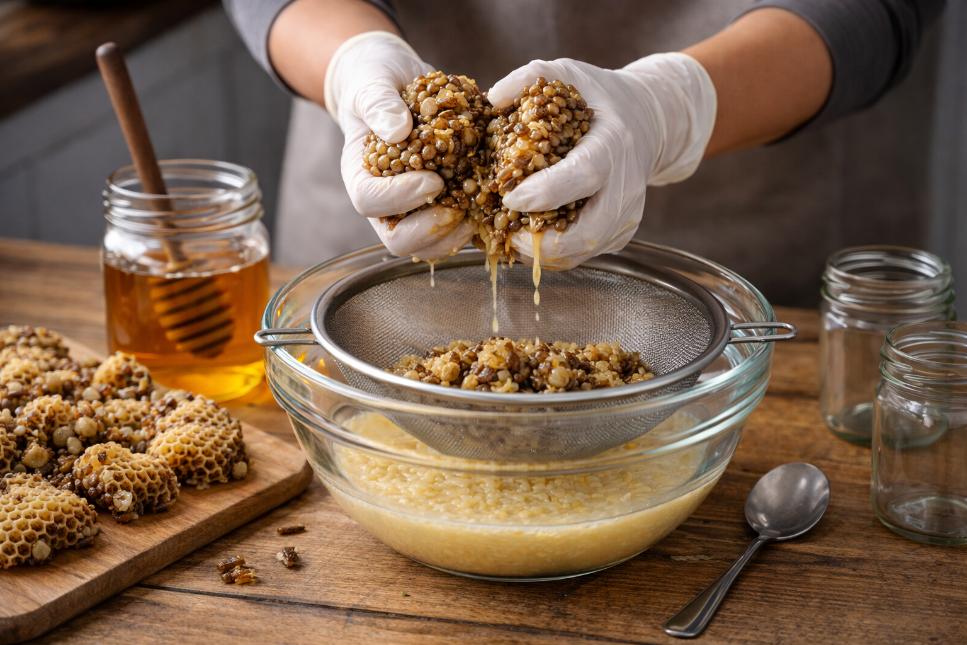
But historically, some beekeepers chose to process it into apilarnil instead.
If you are curious and wish to experiment responsibly, here is a traditional preservation method.
DIY Apilarnil + Honey Blend
⚠ Hygiene is critical. Work quickly and cleanly. Wear clean rubber gloves. Have a clean container to store the removed drone brood.
Step 1: Harvesting
- Select 7–11 day-old capped drone brood.
- Remove larvae carefully by cutting off the relevant part of the frame.
- Put it in the freezer as quickly as possible for a couple of hours.
Step 2: Homogenisation
You will need a mixing bowl, a sieve (or a nutmilk bag, or a piece of cheesecloth), a pair of clean rubber gloves (use them while squeezing larvae). Thaw the drone brood comb pieces so that you could squeeze them.
- While wearing rubber gloves, take a drone brood comb piece, that is big enough for you to handle.
- Squeeze the larvae carefully into the bowl over the sieve. Alternatively, put it into the nut bag or cheesecloth and squeeze it over the bowl.
- Repeat it with all the drone brood comb pieces.
- The liquid you will squeeze out will look off-white and resemble raw milk.
- Do not heat! (Apilarnil loses its nutritional and potential therapeutic value when exposed to heat.)
- Stir gently to homogenise it and immediately mix with honey.
Step 3: Mix with Raw Honey
Honey can be liquid or set: it does not matter, apilarnil mixes with any very well. Proportions vary in practice:
- 1 part fresh apilarnil : 5 parts honey (milder blend)
- 1 part apilarnil : 3 parts honey (stronger blend)
Because literature varies, start conservatively (1:5).
Step 4: Freeze Immediately
Freeze the fresh mixture in jars or airtight containers at temperatures between -5°C and -20°C. It will not freeze solid but will remain soft enough to scoot the required amount any time you want to consume it. For example, take 10 spoonfuls of the mixture, put it in a small jar with a lid, refrigerate, consume within 5 days.
Storage Rules (Very Important)
- Bulk mixture → Store strictly in freezer and use within 12 months.
- Small jar (weekly use) → Refrigerator.
- Refrigerated jar should be consumed within 5 days.
- Always use clean spoon.
Fresh apilarnil deteriorates rapidly at room temperature.
Nutritional Value in a Dessert Spoon
Let’s estimate conservatively.
A dessert spoon ≈ 10 ml ≈ roughly 8–10 grams (depending on density).
If pure fresh apilarnil contains approx.:
- 15% protein
- 10% fat
Then 10g may provide approximately:
- 1.5g protein
- 1g fat
- Trace vitamins & minerals
If mixed 1:5 with honey:
Only ~1.6g of that spoon would be apilarnil.
Meaning: protein contribution becomes modest. If you wish to get a higher protein level, then you could adjust apilarnil:honey ration and/or dosage.
⚠ These are approximations based on published composition ranges — not exact nutritional lab values.
There is no universally standardised nutrition label because composition varies.
Apilarnil Reviews: Why They Vary
Online apilarnil reviews range from highly positive to sceptical.
Reasons include:
- Variation in product quality
- Placebo effect
- Individual biological differences
- Lack of standardisation
Be cautious of reviews that promise dramatic hormonal changes or rapid results.
Frequently Asked Questions (Apilarnil FAQs)
Is apilarnil the same as royal jelly?
No. Royal jelly is secreted by nurse bees; apilarnil is homogenised drone larvae.
Does apilarnil boost testosterone?
Some small studies suggest possible influence, but evidence is not conclusive.
Can beekeepers make apilarnil at home?
Technically yes, using freshly harvested drone brood, but hygiene, preservation, and legal considerations apply.
Is apilarnil legal everywhere?
Regulations vary by country.
Is apilarnil safe?
Data is limited. Individuals with bee product allergies should be cautious.
Final Thoughts
Apilarnil occupies an unusual space in the world of beehive products — less known than honey or royal jelly, yet historically used in specific regions.
While preliminary research suggests interesting biological activity, high-quality clinical data remains limited. Readers should approach it with curiosity, caution, and informed judgement.
For a broader overview of hive-derived substances, see our Complete guide to beehive products.