
To decrystallise honey safely, place the jar in warm water below 40°C and allow it to gently return to liquid. Avoid microwaving or overheating, as high temperatures can damage flavour, aroma, and beneficial compounds.
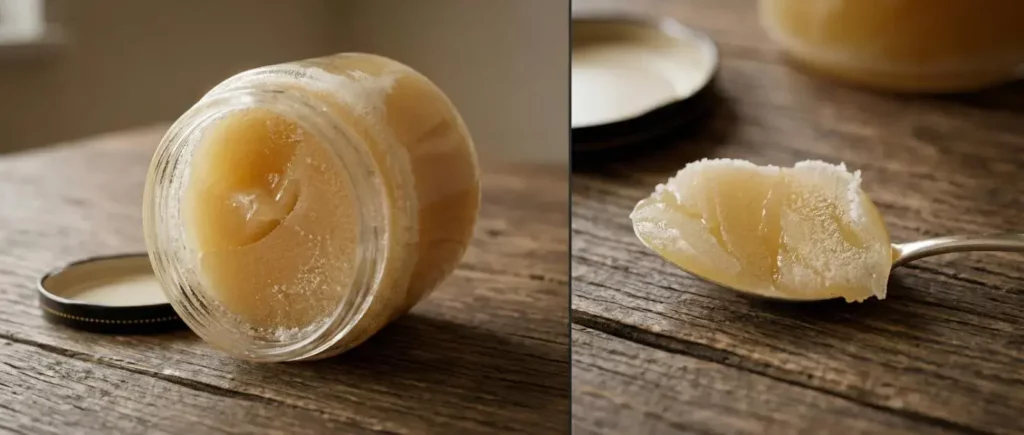
Crystallised honey is completely natural, but it can be inconvenient if you prefer a smooth, pourable texture. The good news is that you can return honey to liquid form — if you do it carefully.
This guide explains the safest method, what temperatures to use, and what to avoid so your honey keeps its quality.
Why Honey Crystallises (Quick Context)
Honey crystallises because it contains glucose, which naturally forms crystals over time — especially at cooler temperatures.
This process is normal and does not mean the honey has gone bad.
If you’d like a full explanation, see: The Truth About Crystallised Honey (Most People Get This Wrong).
Is It Safe to Decrystallise Honey?
Yes — decrystallising honey is safe if done gently.
However, excessive heat can damage honey, including:
- delicate aromas
- natural enzymes
- overall flavour
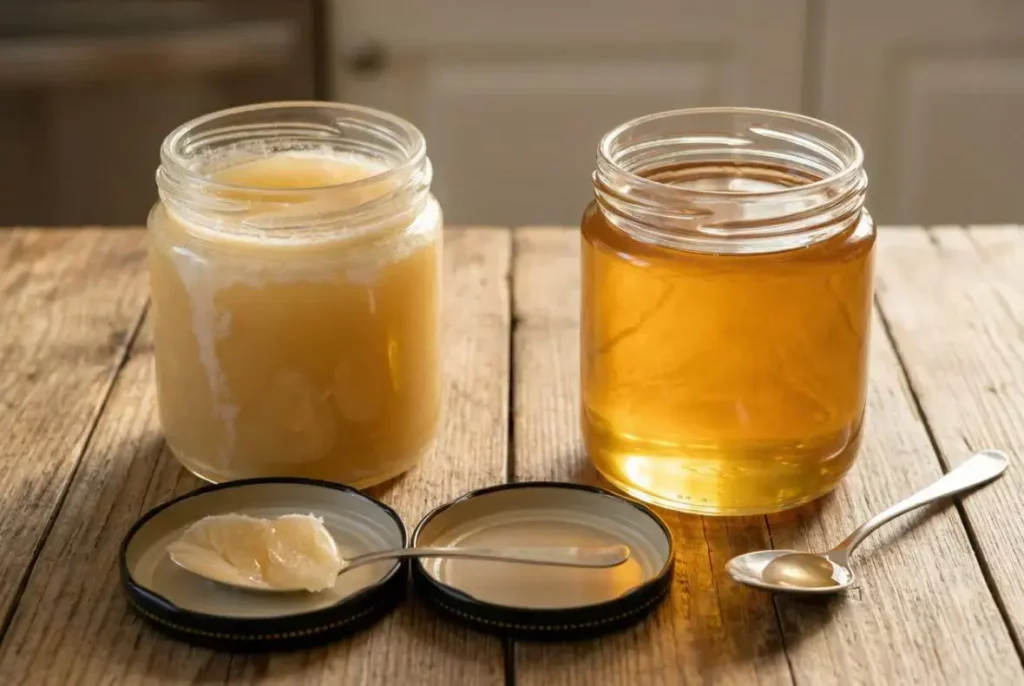
This is why the method you use matters.
The Best Method: Warm Water Bath (Step-by-Step)
This is the safest and most widely recommended method.
What You’ll Need
- A jar of crystallised honey
- A bowl or saucepan
- Warm water
- (Optional) a thermometer
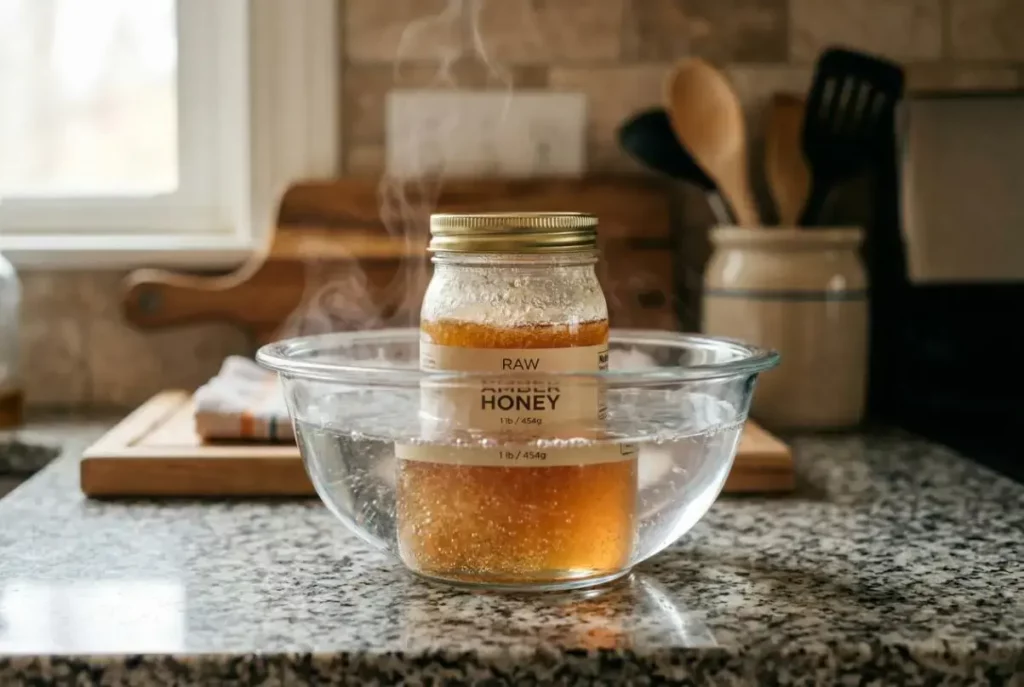
Step-by-Step Instructions
- Warm the water
Heat water until it is warm but not hot — ideally below 40°C. - Place the jar in the water
Make sure the lid is tightly closed to prevent water entering. - Let it sit gently
Allow the honey to warm gradually. - Stir occasionally
This helps crystals dissolve evenly. - Repeat if needed
Very firm honey may take more than one session.
What Temperature Is Safe?
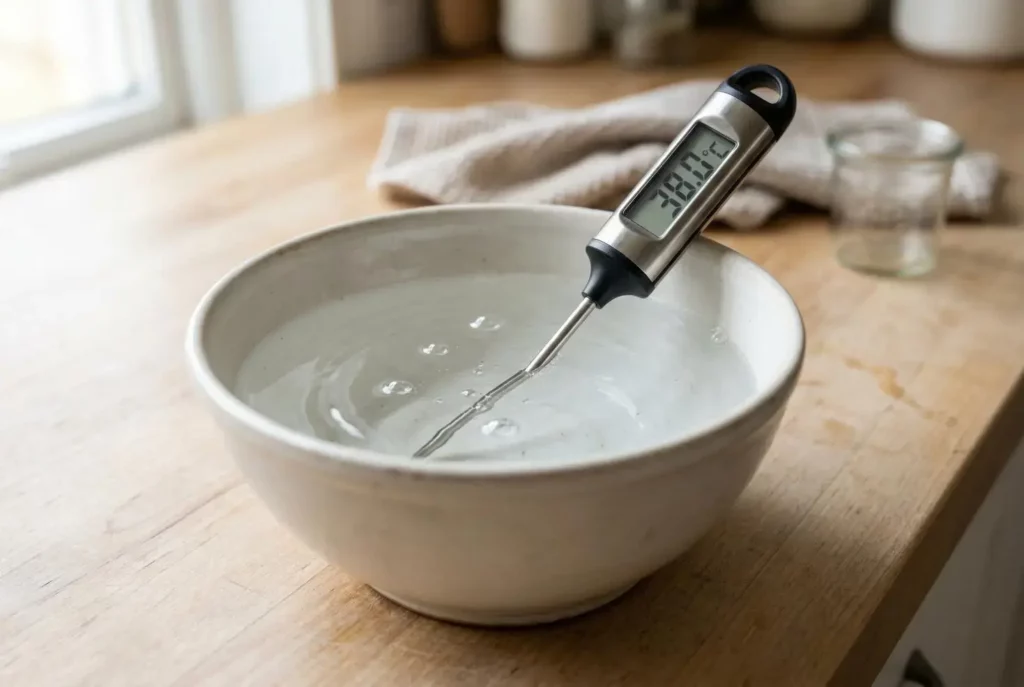
For best results:
- Ideal range: 35–38°C
- Maximum recommended: 40°C
Above this, honey may begin to lose some of its natural qualities.
Methods to Avoid
Some common shortcuts can do more harm than good:
❌ Microwaving — uneven heating and risk of overheating
❌ Boiling water — damages flavour and enzymes
❌ Direct heat (hob) — too harsh and uncontrolled
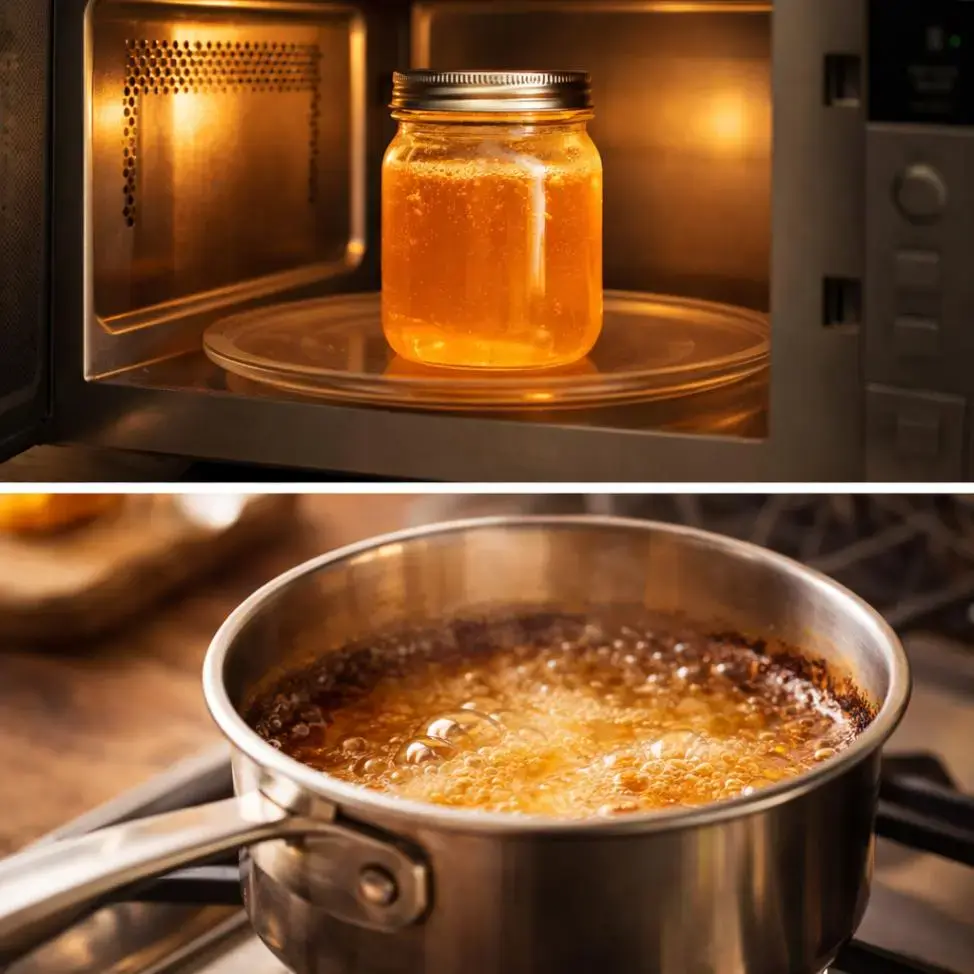
These methods may liquefy honey quickly, but they reduce its quality.
Does Decrystallised Honey Crystallise Again?
Yes — and often quite quickly.
Crystallisation is a natural property of honey, so once it has been returned to liquid form, it will usually begin to set again over time.
To slow this process, see: How to Keep Honey Liquid for Longer (Storage Tips That Work).
Tip: If you want to turn your set honey into liquid, do it in small batches, for example, divide a big jar of honey into smaller amounts, and decrystallise them one at a time. In this way you will enjoy the honey without losing its goodness, because according to research decrystallising honey repeatedly diminishes its properties.
From My Own Experience
____________________________
In my own beekeeping practice, I’ve found that rapeseed (oilseed rape) honey can crystallise extremely quickly — sometimes even in the comb before extraction.
When I gently warm it using a water bath, it returns to liquid form reliably — but it also tends to crystallise again faster than most other honeys.
This is a good reminder that crystallisation is not a flaw — it’s a natural characteristic of the honey itself.
When Should You Decrystallise Honey?
You don’t always need to.
Many people actually prefer crystallised honey because:
- it spreads easily
- it has a creamy texture
- it retains full flavour
Decrystallising is simply a matter of preference — not necessity.
Quick Summary
- Crystallised honey is natural and safe
- The best method is a gentle warm water bath
- Keep temperature below 40°C
- Avoid microwaving or overheating
- Honey will crystallise again over time
FAQ about Decrystallising Honey
How do you decrystallise honey quickly?
The safest method is still a warm water bath below 40°C. Faster methods often involve overheating, which can reduce honey quality.
Can you microwave honey to decrystallise it?
It is not recommended. Microwaving can heat honey unevenly and damage its flavour and natural compounds.
Does heating honey destroy its benefits?
Excessive heat can reduce some enzymes and aromas. Gentle warming below 40°C helps preserve quality.
Why does honey crystallise again after melting?
Because crystallisation is a natural process caused by glucose separating from the liquid. It will occur again depending on storage conditions.