Beeswax is one of the quiet heroes of natural skincare.
While honey and propolis often take centre stage, beeswax is the structural backbone of many natural beauty products. It protects, stabilises, and supports the skin barrier in a way few other natural ingredients can.
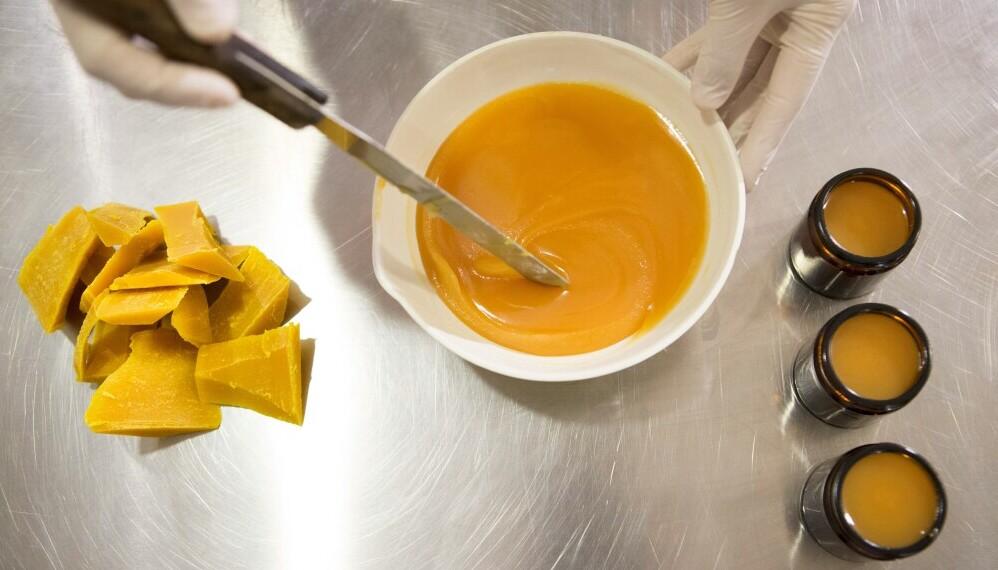
From lip balms and barrier creams to salves for dry hands, beeswax plays a foundational role in eco-conscious formulations — and when sourced responsibly, it supports sustainable beekeeping practices.
Understanding how to use it safely and effectively can really transform your skincare regimen.
If you’d like to explore beyond beeswax and discover the full range of hive-derived ingredients, take a look at our in-depth guide Complete Guide of Beehive Products — Uses and Benefits. It covers everything from beeswax and honey to propolis and royal jelly, including their skincare uses, wellness benefits, and practical tips for choosing high-quality products.
What Is Beeswax
Beeswax is produced by worker honey bees to construct honeycomb. Specialised wax glands on the abdomen secrete tiny wax scales, which bees chew and mould into hexagonal cells. For a closer look at how bees produce this remarkable substance, see our section What Is Beeswax & How Do Bees Make It, featuring a short video that shows the fascinating process from wax secretion to honeycomb construction.
Chemically, beeswax is composed of:
- Long-chain fatty acids
- Esters
- Hydrocarbons
- Natural alcohols
This unique composition gives beeswax its protective, water-resistant, yet breathable qualities.
Unlike heavy synthetic barrier ingredients, beeswax does not completely seal the skin. Instead, it forms a semi-permeable layer that reduces transepidermal water loss while still allowing the skin to function normally.
Why Beeswax Is Good for Skin
Rather than simply “moisturising,” beeswax works by supporting the skin barrier — your body’s natural defence system.
Here’s what that means in practical terms:
1. Barrier Reinforcement
Beeswax forms a lightweight protective film that shields skin from wind, cold air, and environmental stressors. This is why it’s often used in winter balms and hand creams.
2. Moisture Retention
It locks in hydration from underlying oils and humectants. On its own, beeswax is not hydrating — it works best when paired with oils or butters.
3. Stabilisation of Formulas
Beeswax thickens and emulsifies. Without it, many natural creams would separate or melt.
4. Gentle Skin Support
It is generally well tolerated and suitable for dry, sensitive, or compromised skin — though patch testing is still essential.
Beeswax vs Shea Butter for Skincare
These two ingredients are often used together, but they do very different jobs.
| Beeswax | Shea Butter |
| Creates protective barrier | Deeply nourishing and emollient |
| Thickens formulations | Softens and conditions |
| Locks in moisture | Adds moisture-rich lipids |
| Provides structure | Provides glide and richness |
In simple terms:
Shea butter feeds the skin. Beeswax protects it
The combination is what makes many balms so effective.
How to Use Beeswax in Skincare
Beeswax is rarely used alone. It is almost always blended.
Common Applications
- Lip balms
- Hand salves
- Cuticle balms
- Barrier creams
- Solid perfume bases
- Cleansing balms
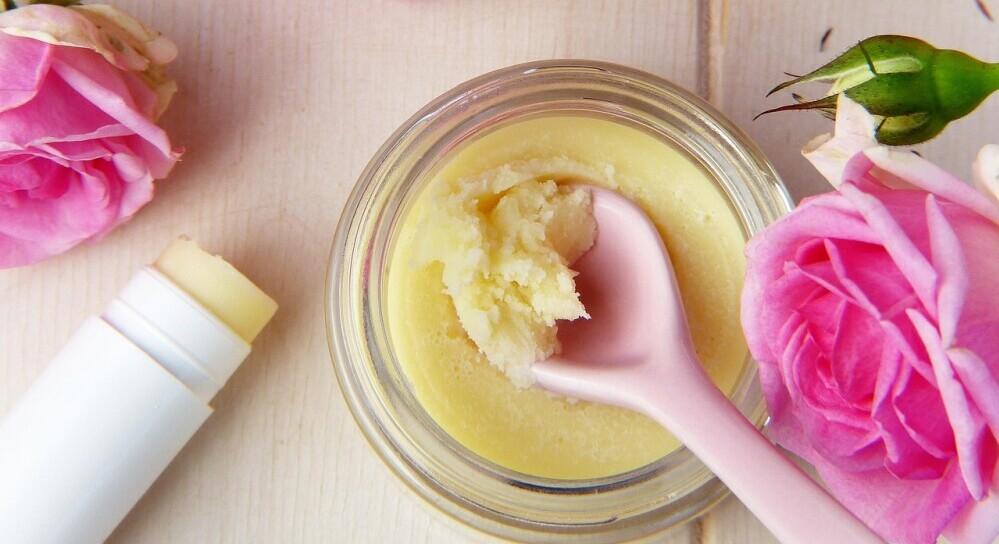
For dry or sensitive skin, beeswax-based balms are often more protective than water-based lotions.
Simple DIY Beeswax Lip Balm (Beginner-Friendly)
If you want to try just one recipe, choose this one — it’s safe, simple, and genuinely useful.
Ingredients
- 1 teaspoon beeswax pellets
- 1 teaspoon unrefined shea butter (or cocoa butter)
- 2 teaspoons sweet almond oil (or jojoba oil or unrefined coconut oil)
- Optional: 1–2 drops vitamin E and/or 1-2 drops of an essential oil (suitable options are: Peppermint or Spearmint or Lavender oil)
Method
- Melt beeswax gently in a bain-marie (double boiler).
- Add shea butter and oil. Stir until fully combined.
- Remove from heat.
- Otional: stir in vitamin E and/or one essential oil.
- Pour into lip balm tubes or tins.
- Allow to cool and set completely before sealing.
Shelf life: approximately 6–12 months if stored in a cool, dry place.
What About Beeswax for Hair Removal?
This is an important clarification.
Beeswax used in skincare is not the same as prepared waxing products for hair removal.
Hair removal wax:
- Is formulated differently
- Often contains resins or additional agents
- Is heated to higher temperatures
Raw cosmetic beeswax alone is not suitable for effective hair removal.
Safety Considerations
Beeswax is generally considered safe for topical use, but keep these points in mind:
- Always patch test new formulations
- Avoid overheating above 60°C to preserve properties
- Do not use if allergic to bee products
- Use cosmetic-grade filtered beeswax
Pregnant or breastfeeding women should consult a healthcare professional before using essential oil blends in DIY products.
Common Myths
1) Beeswax clogs pores
Reality: It is considered low-comedogenic and forms a breathable barrier.
2) Beeswax moisturises on its own
Reality: It locks in moisture but does not hydrate by itself.
3) Natural means non-allergenic
Reality: Even natural ingredients can trigger sensitivities.
Fun & Interesting Facts
- Beeswax has been used in skincare since Ancient Egypt.
- It contains small amounts of naturally occurring vitamin A.
- One honeycomb can contain thousands of perfectly engineered wax cells — built without tools.
FAQ
Is beeswax safe for sensitive skin?
Generally yes, but always patch test first.
Can I use beeswax daily?
Yes, especially in balms and lip care. It is well tolerated when properly formulated.
How does beeswax compare to shea butter?
Beeswax protects; shea butter nourishes. They complement each other.
Can I melt beeswax at home?
Yes, using a double boiler method. Avoid direct heat.
How long do DIY beeswax products last?
Typically 6–12 months, depending on oils used and storage conditions.
Does beeswax have anti-aging properties?
Indirectly. By supporting the skin barrier, it helps maintain hydration and reduce dryness-related fine lines.
Can beeswax be combined with essential oils?
Yes, but essential oils must be used in safe dermal dilution ranges.
Is beeswax effective against pollution?
It forms a protective layer that may help shield skin from environmental stressors.
Can I use beeswax products during pregnancy?
Beeswax itself is considered safe, but essential oils in DIY blends require caution.
References:
Want to dive deeper into the research? The studies below explore beeswax’s composition, skin benefits, and role in natural cosmetic formulations.
- Ali, S., Khan, R.A., & Khan, H. (2020) Beeswax: Composition and applications in cosmetic formulations. Journal of Cosmetic Science, 71(4), pp. 205–216.
Bogdanov, S. (2016) Beeswax: Composition, properties and cosmetic uses. Bee World, 92(1), pp. 27–40. - Kurek-Górecka, A., Górecki, M., & Rzepecka-Stojko, A. (2013) Biological properties of beeswax in skincare. Evidence-Based Complementary and Alternative Medicine, 2013, Article ID 690523.
- Mishra, A., Sharma, S., & Kumar, P. (2021) Natural skin care products using beeswax: A review. International Journal of Cosmetic Science, 43(6), pp. 573–583.