Among all beehive products, royal jelly stands apart — not because it is stored, fermented, or harvested in abundance, but because of what it does. Royal jelly is the sole reason a queen bee exists. Despite sharing identical genetics with worker bees, a larva fed exclusively on royal jelly develops into a fertile queen with fully formed ovaries, a vastly extended lifespan, and a completely different role within the colony.
This creamy, perishable substance is produced by nurse bees specifically for nurturing queens and young larvae, making it one of the hive’s most biologically powerful foods. Understanding royal jelly offers a rare glimpse into how nutrition can regulate development, longevity, and function — not only in bees, but potentially beyond the hive.
What Is Royal Jelly?
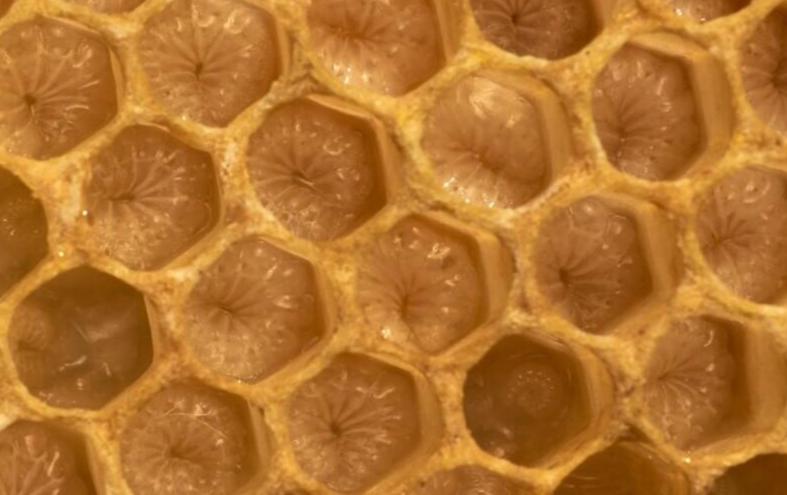
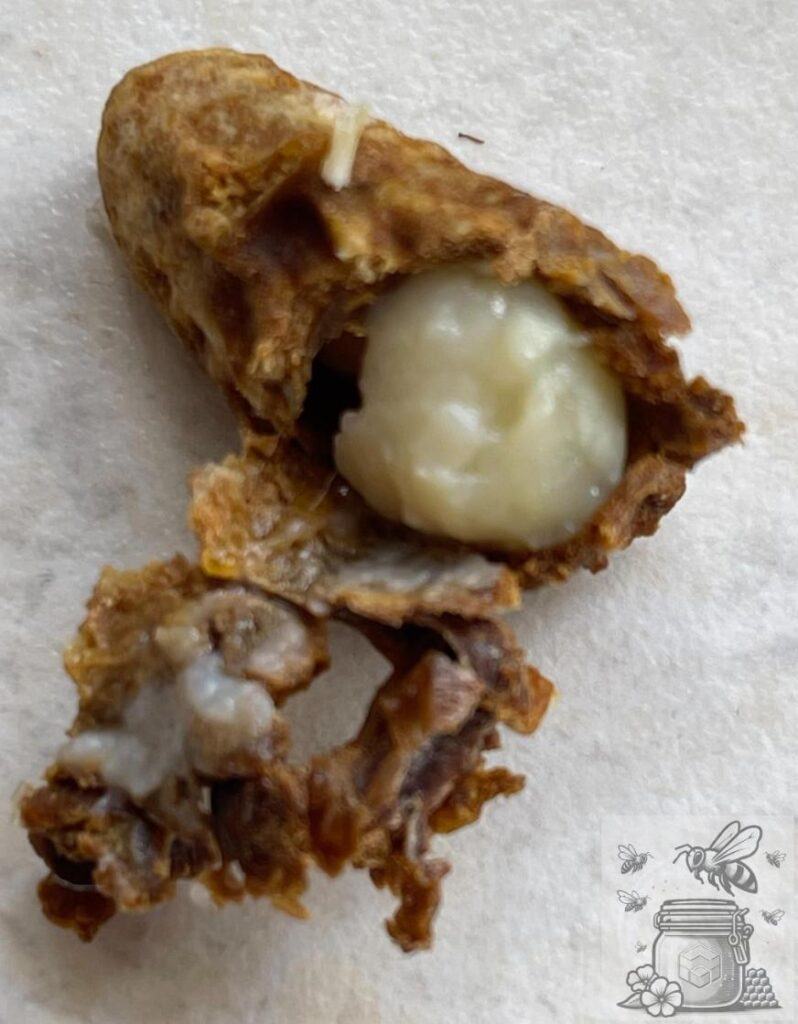
Royal jelly is a milky-white, slightly acidic secretion produced by the hypopharyngeal and mandibular glands of young worker bees (nurse bees).
It is fed to all larvae during their first few days of life, but only queen larvae continue receiving it throughout development and adulthood.
Unlike honey, bee pollen or bee bread (which undergoes microbial fermentation) royal jelly is:
- Not stored long-term
- Not fermented
- Not plant-derived
It is a freshly produced, biologically active secretion designed for immediate consumption.
How Royal Jelly Creates a Queen Bee
One of the most fascinating facts in biology is that queen and worker bees share the same DNA. Their dramatic differences arise almost entirely from diet.
Royal jelly:
- Activates genes related to ovary development
- Suppresses worker-specific gene expression
- Alters hormonal signalling
- Extends lifespan (queens may live 3–5 years vs weeks for workers)
This process is now understood as epigenetic regulation, where royal jelly influences which genes are turned on or off without changing DNA itself. Research has shown that compounds in royal jelly inhibit DNA methylation, a key mechanism in gene expression control.
In short: royal jelly does not just nourish — it instructs.
Royal Jelly Through History: From Ancient Observation to Modern Science
Long before laboratories and microscopes, humans sensed that royal jelly was no ordinary substance. One of the earliest recorded observations comes from Aristotle (4th century BCE), who noted that certain larvae within the hive were fed a richer, distinct food and developed into queens — larger, fertile, and far longer-lived than their worker sisters. Although the substance was unnamed, the idea was clear: diet alone could shape destiny.
Across ancient civilisations, royal jelly gradually acquired an almost mythical status. In traditional Chinese medicine, it was described as a vitality-enhancing tonic, associated with longevity, reproductive strength, and resilience. Because of its scarcity and the effort required to obtain it, royal jelly was often reserved for emperors and nobility, reinforcing its association with power and endurance.
In ancient Egypt, bees were sacred symbols of rebirth and divine order. While honey was widely used for medicine and preservation, rarer hive substances — including royal jelly — were believed to carry restorative, life-sustaining properties. Hive products featured prominently in ritual healing and spiritual practices, blurring the line between nourishment and medicine.
Centuries later, royal jelly re-emerged in 20th-century Europe, particularly in France and Germany, where it gained popularity as a rejuvenating tonic. It was promoted for fatigue, recovery, and vitality, especially during the post-war years when interest in natural fortifiers surged. This renewed fascination set the stage for modern scientific inquiry.
Today, research has confirmed what ancient observers only suspected: queens and worker bees share identical DNA, yet royal jelly triggers profound epigenetic changes that influence growth, fertility, immune function, and lifespan.
What was once a mystery of the hive is now recognised as one of nature’s most remarkable examples of nutrition directing biology.
Nutritional & Bioactive Composition of Royal Jelly
When talking about nutrition, royal jelly offers an impressive variety. Packed with essential nutrients like proteins, vitamins, and fats, it’s like a multivitamin straight from nature.
Its composition is unlike any other bee product: royal jelly contains 9–18% protein (of its fresh weight) dominated by Major Royal Jelly Proteins (MRJPs) like royalactin, with a wide array of amino acids, including eight essential ones that our body needs but can’t produce on its own.
| Major Royal Jelly Proteins (MRJPs) | – Account for over 80% of its protein content – Play roles in growth, immunity, and development |
| 10-HDA (10-Hydroxy-2-Decenoic Acid) | – A fatty acid unique to royal jelly – Used as a marker of authenticity and quality – Studied for antimicrobial and anti-inflammatory properties |
| Vitamins | – Especially rich in B-complex vitamins: B5 (pantothenic acid), B6 (pyridoxine), and biotin – Minimal fat-soluble vitamins |
| Minerals & Trace Elements | – Potassium, calcium, magnesium, zinc |
| Enzymes & Peptides | – Contribute to antimicrobial activity – Highly sensitive to heat and oxidation |
Royal Jelly and Human Use: What Research Suggests
Scientific interest in royal jelly has focused on several areas:
Energy & Fatigue
Some studies suggest royal jelly may support energy metabolism due to its B-vitamin content and amino acids.
Inflammation
Some studies suggest that royal jelly may reduce inflammation, which is a common factor in many chronic illnesses. By calming inflamed tissues, it may help in managing conditions like arthritis or other inflammatory diseases.
Skin Health & Ageing
Royal jelly has shown:
- antioxidant activity,
- support for collagen production (in vitro), which helps to reduce wrinkles and improve skin elasticity, giving a more youthful appearance.
It is used in cosmetic formulations for skin vitality.
Immune Modulation
Research indicates possible immune-supporting effects, though mechanisms are not fully understood. Unique compounds of royal jelly may enhance the body’s natural defenses, potentially leading to better resistance against infections and illnesses.
Cognitive & Neurological Interest
Preliminary animal studies suggest neuroprotective potential: improved cognitive function and reduced stress levels, possibly thanks to its fatty acids and antioxidants. However, human evidence remains limited.
Important: while research is promising, royal jelly should be viewed as a functional food, not a medicine.
How Royal Jelly Is Harvested
Royal jelly harvesting is labour-intensive and yields small quantities:
- Queen cells are grafted with young larvae
- Nurse bees flood the cells with royal jelly
- Jelly is harvested after ~72 hours
- Cells are destroyed in the process
This explains:
- Its high cost
- Ethical considerations
- Limited availability
Unlike honey harvesting, royal jelly production requires specialised beekeeping practices.
Sustainability and Ethical Considerations in Royal Jelly Production
As interest in royal jelly grows, so too do concerns about its impact on bee colonies and the wider environment. Unlike honey, royal jelly is produced in small quantities and requires repeated intervention in the hive. If pursued intensively, this can place unnecessary stress on colonies, particularly when queen cell production is pushed beyond what is biologically reasonable.
Ethical royal jelly production depends on balance — harvesting in a way that respects the colony’s natural rhythms and prioritises long-term hive health over short-term yield. Responsible beekeepers limit the frequency and scale of royal jelly extraction, ensuring that nurse bees, brood development, and colony stability are not compromised.
For consumers, understanding how royal jelly is sourced is an important step towards more mindful use. Look for producers who are transparent about their harvesting methods and who clearly state that bee welfare comes first. Smaller-scale or local operations often adopt gentler practices, allowing colonies adequate recovery time between harvests and maintaining strong, healthy queens.
Ethical sourcing also extends beyond the hive itself. Producers committed to sustainability typically avoid aggressive feeding regimes, minimise chemical treatments, and support biodiversity around their apiaries. While formal certifications are still limited in this niche, indicators such as clear traceability, cold-chain handling*, and honest disclosure of harvesting frequency can help guide informed choices.
*Cold-chain handling
refers to keeping a temperature-sensitive product consistently chilled from the moment it is harvested until it reaches the consumer, without breaks that could cause degradation.
In simple terms: it means never letting the product warm up beyond safe limits at any stage.
Unlike honey or bee bread, royal jelly does not have natural preservation mechanisms. If the cold chain is broken — even briefly — royal jelly can lose bioactivity and spoil rapidly.
Choosing ethically produced royal jelly is not only about personal health — it is a way of supporting beekeeping practices that respect bees as living organisms rather than production units. A thoughtful approach to consumption helps ensure that royal jelly remains a viable, sustainable hive product for future generations, without placing undue strain on already vulnerable pollinator populations.
Preservation & Stability: Why Royal Jelly Is Challenging
Royal jelly is extremely unstable:
- Degrades rapidly at room temperature
- Sensitive to light, oxygen, and heat
- Loses bioactivity above ~40 °C
Common Preservation Methods
- Refrigeration or freezing (fresh royal jelly)
- Freeze-drying (lyophilised royal jelly)
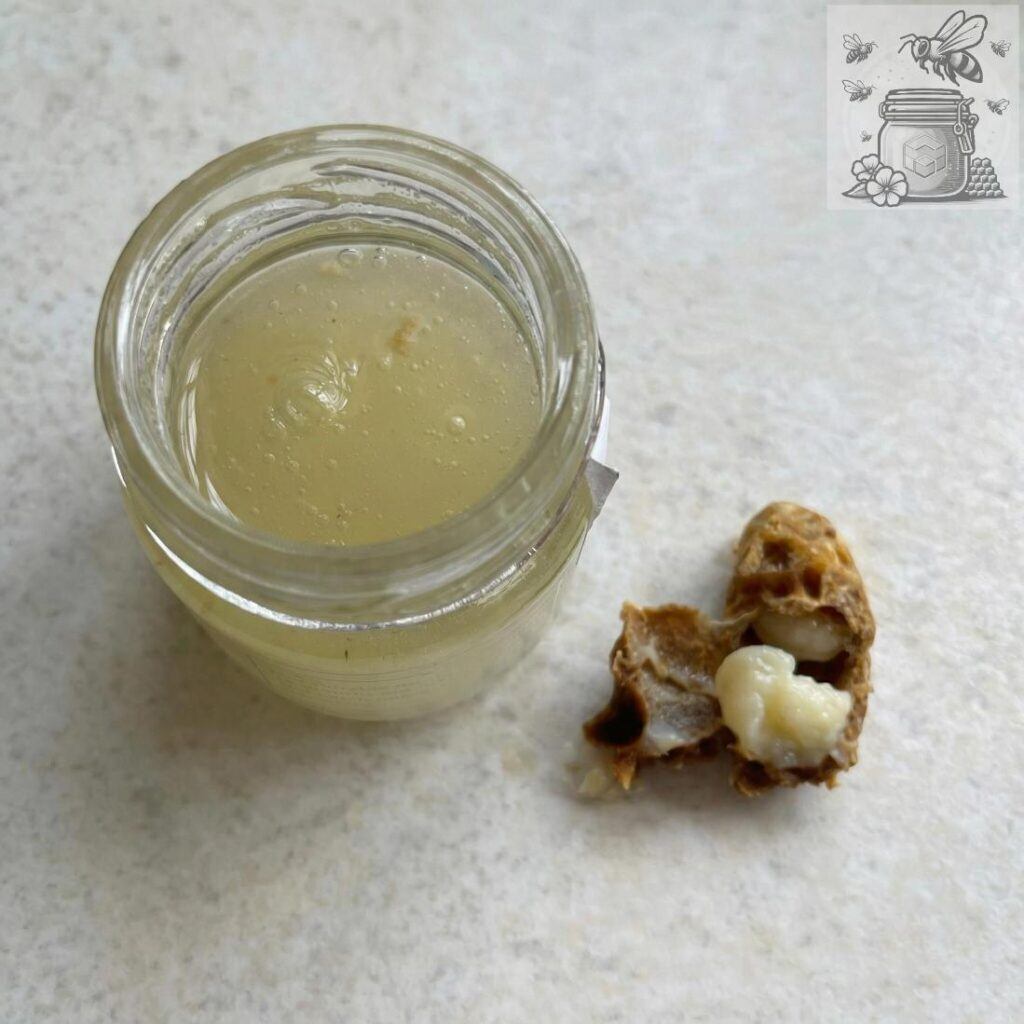
- Mixing with raw honey (traditional method, partial preservation): this is how I personally do it – by adding approximately royal jelly from one queen cell to 100 g of honey.
Recommended Royal Jelly–Honey Mixing Ratios
Standard & Most Widely Used Ratio
1 : 100 (royal jelly : honey)
→ 1 g fresh royal jelly per 100 g raw honey (≈ 1%)
More Concentrated Therapeutic Ratio
1 : 50 (2%)
Used best in cycles, not continuously:
- Short-term vitality support
- Convalescence or fatigue
- Seasonal immune support
High-Potency / Clinical Use
1 : 20 (5%)
- Rare outside clinical or supervised settings
- Strong flavour and biological activity
- Not recommended for beginners
- Greater allergy risk
Safety, Dosage & Contraindications
Allergy Risk (Important)
Royal jelly is one of the most allergenic bee products.
Avoid or use extreme caution if you have:
- asthma
- known pollen or bee product allergies
General Guidance
- Start with very small amounts
- Discontinue at any sign of reaction
- Not recommended for infants
- Pregnant or breastfeeding women should consult a professional
Additional Note: unfortunately adulteration of royal jelly is common, so it is important to know the source.
Myths & Cultural Beliefs
Myth: Royal jelly dramatically extends human lifespan.
✅ Reality: while queens live longer, human evidence does not support lifespan extension claims.
Myth: More royal jelly means better results.
✅ Reality: bioactivity matters more than quantity, and excessive intake increases allergy risk.
Little-Known Fact: Royal jelly has been used traditionally in small ceremonial doses, not daily megadoses.
FAQs
– Is royal jelly the same as bee milk?
“Bee milk” is an informal term sometimes used for royal jelly, but it is not milk and contains no lactose.
– Can royal jelly be taken daily?
Some people do, but cycles and breaks are often recommended.
– Is fresh or freeze-dried better?
Fresh retains full bioactivity but requires cold storage; freeze-dried is more stable but varies in quality.
– Can royal jelly be mixed with honey?
Yes — this is a traditional method and may improve palatability and preservation.
References & Further Reading
- Kucharski et al., Science (2008)
- Buttstedt et al., Journal of Proteome Research (2014)
- Townsend et al., J. Agric. Food Chem. (2012)
- Guo et al., Nutrients (MDPI) (2020)
- Ramadan & Al-Ghamdi, Journal of Functional Foods (2012)
- Leung et al., JACI (1997)
- Stocker et al., Food Chemistry (2005)
Final Thoughts
Royal jelly represents one of nature’s most striking examples of how nutrition shapes life itself. Within the hive, it is the substance that creates queens, governs development, and sustains reproductive vitality. For humans, it remains a fascinating and carefully studied bee product — powerful, fragile, and deserving of respect rather than exaggeration.
Royal jelly is just one part of the intricate system of substances produced by honey bees. To understand how it fits alongside honey, bee bread, pollen, propolis, and wax, explore our complete guide to beehive products and their uses, where the full story of the hive unfolds.