Bee venom is one of the most complex and controversial substances produced by honey bees. Known for its defensive role within the hive, it has also been used for centuries in traditional medicine — and today is being explored in modern research, wellness therapies and skincare.
Unlike honey or beeswax, bee venom demands careful handling and informed use. Understanding how it is produced, collected, and studied helps separate genuine therapeutic potential from exaggerated claims — and ensures ethical, responsible use.
What Is Bee Venom?
Bee venom (apitoxin) is a clear, odourless liquid produced by worker honey bees (Apis mellifera). It is stored in the venom sac and delivered through the sting as a defence mechanism.
Chemically, bee venom is a complex mixture of biologically active compounds, including:
- Melittin – the primary active peptide (≈40–60%), strongly anti-inflammatory and antimicrobial
- Phospholipase A₂ – enzyme involved in immune modulation
- Apamin – neuroactive peptide
- Hyaluronidase – increases tissue permeability
- Biogenic amines (histamine, dopamine)
These compounds explain why bee venom can trigger both therapeutic responses and severe allergic reactions, depending on dose and individual sensitivity.
A Brief History of Bee Venom Use
The medicinal use of bee venom dates back thousands of years:
- Ancient Egypt used bee products, including venom, for joint pain
- Traditional Chinese Medicine employed live bee stings for inflammatory conditions
- Hippocrates reportedly used bee stings for arthritis and swelling
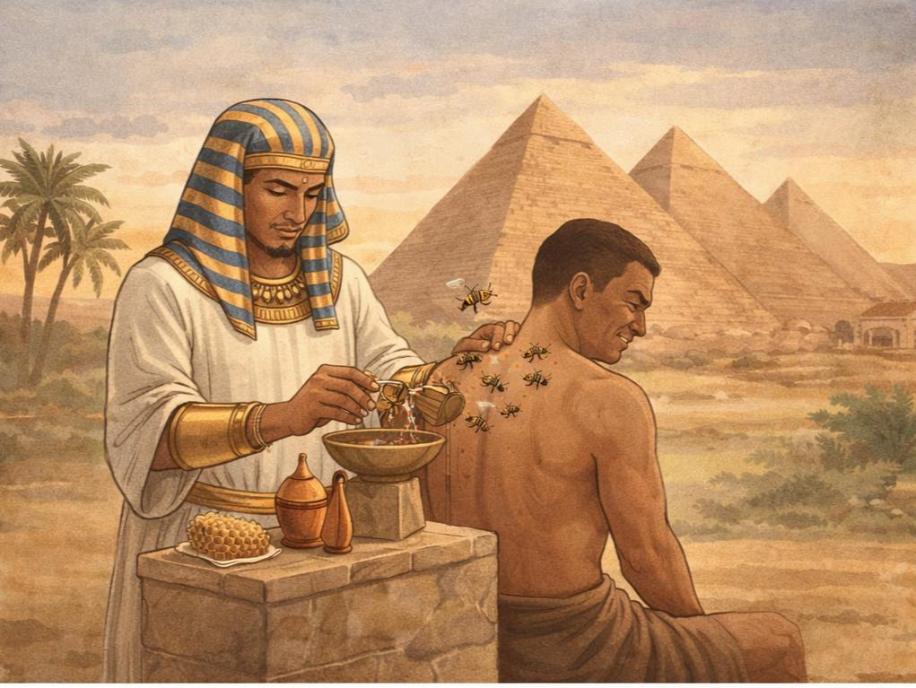
This practice, now known as apitherapy, laid the foundation for modern investigation into bee venom therapy for pain and inflammation.
How Do Bees Produce Bee Venom?
Only female worker bees produce venom. It develops alongside their stinger and venom sac as part of the colony’s defence system.
Importantly:
- Venom production does not require the bee to sting
- Bees naturally replenish venom stores
- Venom composition remains remarkably consistent across colonies
Within the hive, bee venom plays a very different role from gentler substances like propolis, which acts as the colony’s antimicrobial immune barrier, or beeswax, which forms the physical structure and protective seal of the hive. Where propolis prevents and beeswax protects, bee venom triggers a rapid defensive response — a pattern reflected in how these substances have been used in traditional wellness practices.
How Is Bee Venom Collected by Humans?
Modern collection methods are designed to avoid killing bees, unlike traditional live-sting practices.
Ethical collection method:
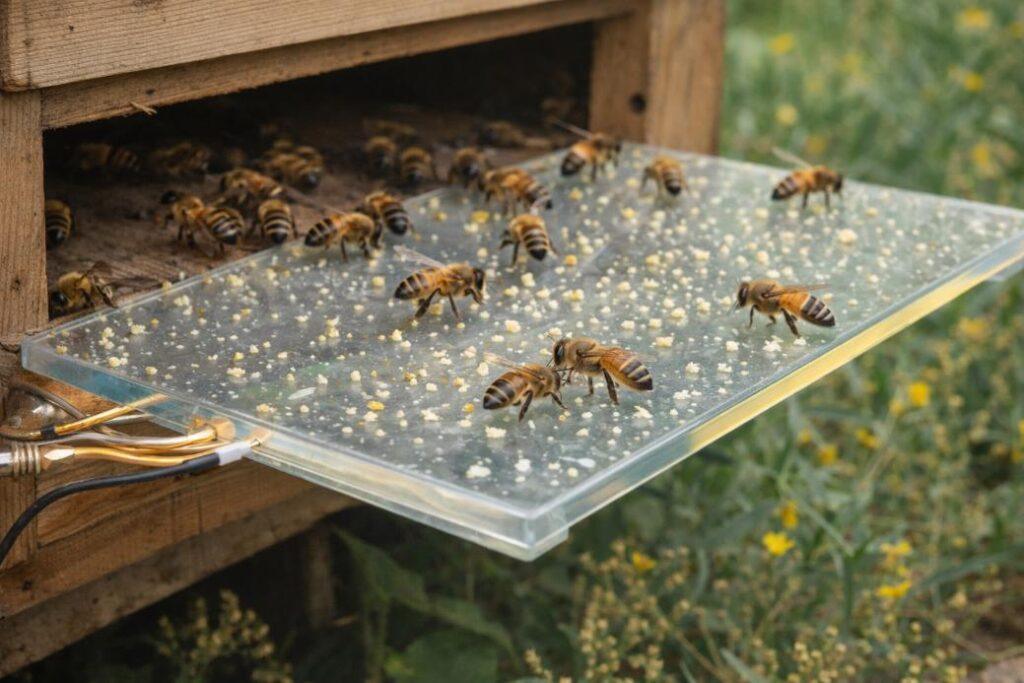
A glass plate with mild electrical stimulation is placed at the hive entrance.
Bees release venom onto the surface without losing their stinger.
Venom dries and is later collected as a powder.
When done correctly, this process is considered non-lethal and sustainable, though it must be used sparingly and responsibly.
Is Bee Venom Sustainable?
When ethically collected it is not harmful for bee because:
- Bees are not killed
- Colonies show minimal stress
- Collection frequency is limited
However, excessive harvesting or poor technique can:
- Stress colonies
- Reduce foraging efficiency
- Compromise hive health
This is why ethical sourcing and transparency matter, especially for commercial bee venom supplements.
Bee Venom Health Benefits (What Research Suggests)
Research suggests bee venom may:
- Modulate inflammatory pathways
- Support immune regulation rather than stimulation
- Reduce pain signalling
- Exhibit antimicrobial activity
Laboratory and animal studies show promise, but human clinical evidence remains limited and condition-specific.
Bee venom is not a cure-all — it is a biologically active substance with narrow therapeutic windows.
Bee Venom for Inflammation and Arthritis
Melittin has been shown to suppress inflammatory mediators such as NF-κB and COX-2 in experimental models. This explains interest in bee venom for:
- Rheumatoid arthritis
- Osteoarthritis
- Chronic joint pain
Some clinical trials suggest pain relief comparable to NSAIDs — without long-term drug toxicity, though allergy risk remains the limiting factor.
👉 Because this is a complex and often misunderstood area, we’ve explored it in detail in a separate article: Can Bee Venom Help Arthritis? A Practical, Evidence-Based Guide.
Bee Venom Therapy for Pain and Athletic Recovery
In controlled therapeutic settings, diluted bee venom injections or topical formulations are sometimes used to:
- Reduce muscle inflammation
- Speed post-exercise recovery
- Improve mobility in chronic pain sufferers
This remains a specialist therapy and should only be undertaken under medical supervision.
Bee Venom for Skin Rejuvenation
In cosmetics, bee venom is used in very low concentrations. It works by:
- Stimulating microcirculation
- Encouraging collagen production
- Creating a mild “firming” response
Unlike medical use, cosmetic formulations do not penetrate deeply and are generally considered safer — though patch testing is essential.
👉 If you want to understand how bee venom is used in modern skincare, what it can (and can’t) do, and who should avoid it, read How to Use Bee Venom in Skincare: Benefits, Myths & Best Practices.
Bee Venom Treatment Options (Overview)
Common forms include:
- Medical injections (clinical settings only)
- Topical creams and serums
- Homeopathic preparations
- Capsules and powders (least bioavailable)
Not all formats are equally effective — or safe.
Best Bee Venom Supplements: What to Look For
Quality indicators:
- Clear venom concentration (µg, not “extract blend”)
- Allergy warnings clearly stated
- Independent lab testing
- Ethical sourcing disclosure
Avoid products that:
- Make disease-curing claims
- Do not mention allergy risk
- Hide venom dose
Bee Venom Allergy and Safety Considerations
Bee venom can cause:
- Mild local reactions
- Severe anaphylaxis (life-threatening)
Safety rules:
- Never self-inject
- Always patch test topical products
- Anyone with known bee allergy must avoid use
Venom immunotherapy exists for allergy treatment — but this uses controlled medical venom, not wellness products.
Little-Known Facts About Bee Venom
- A bee dies only if it stings mammals — not insects
- Venom composition changes slightly with bee age
- One gram of venom can require thousands of bees
- Bee venom is one of the most studied natural toxins in medicine
FAQ: Bee Venom
Is bee venom the same as a bee sting?
No. A sting delivers venom plus mechanical injury; therapeutic venom is controlled and purified.
Can bee venom help the immune system?
It may help regulate immune responses, but it does not “boost” immunity in a general sense.
Does bee venom boost the immune system or suppress it?
Bee venom appears to modulate immune activity rather than simply stimulate it. This balancing effect is why it is studied in inflammatory and autoimmune contexts — but careful use is essential.
Is bee venom safe for daily use?
Bee venom is not intended for daily use in most cases. It is typically used in cycles or topical applications. Frequency depends on the form (cream, extract, cosmetic) and individual sensitivity.
Can bee venom be used without live bee stings?
Yes. Most modern bee venom products use collected venom (via glass plates or electrical stimulation) rather than live stings. This allows controlled dosing and avoids killing bees.
Can bee venom help arthritis or joint pain?
Research suggests bee venom may help reduce inflammation and pain signalling, which explains its traditional use in joint conditions. However, results vary and it may not replace medical treatment.
Can bee venom be used in cosmetics safely?
Yes — when properly formulated. Cosmetic products use very low concentrations, often marketed for skin rejuvenation due to mild micro-stimulation effects.
Who should never use bee venom?
Pregnant or breastfeeding women, people with known bee or wasp allergies, severe asthma, autoimmune conditions (without medical guidance).
Academic References
- Son DJ et al., Melittin inhibits inflammatory gene expression, Journal of Immunology, 2007
- Wehbe R et al., Bee venom: overview of main compounds and bioactivities, MDPI Toxins, 2019
- Park HJ et al., Bee venom acupuncture for arthritis, PubMed, clinical reviews
- Oršolić N., Bee venom in cancer and inflammation research, MDPI Molecules
🔍 About Traditional Use, Research & Safety
Beehive products have a long history of traditional use and are increasingly studied in modern research. However, natural substances can be biologically active and may affect individuals differently.
The information shared here is for educational purposes and reflects both traditional knowledge and current scientific understanding. It is not intended to diagnose, treat, or replace professional medical advice.
Anyone with allergies — particularly to bee products — or underlying health conditions should exercise caution and consult a qualified healthcare professional before use.