Tucked away inside the honeycomb, often overlooked even by those familiar with honey and bee pollen, lies one of the hive’s most remarkable foods: bee bread.
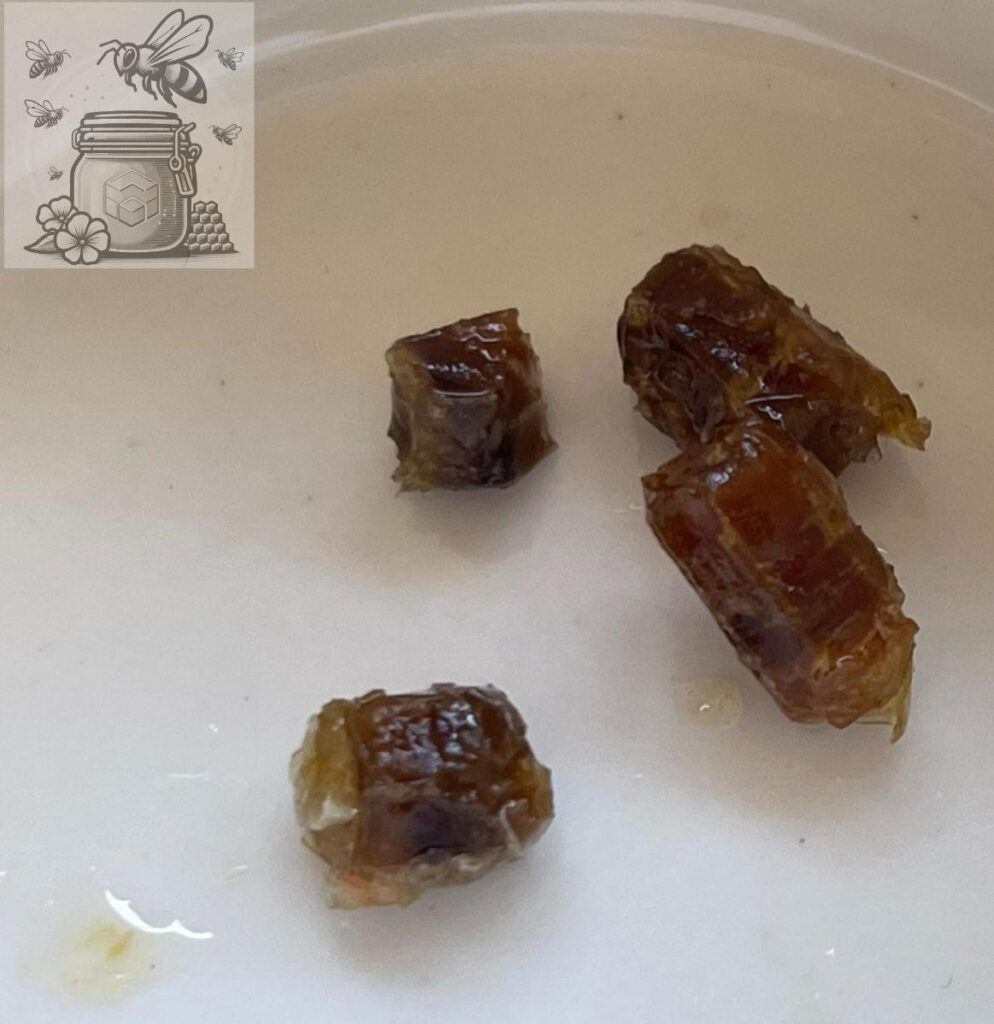
Created by bees through a natural process of fermentation, it is not simply stored pollen, but a living, nutrient-dense substance designed to sustain the colony through periods of intense brood rearing and scarcity.
Rich in enzymes, beneficial microbes, and bioavailable nutrients, this forgotten hive food has long played a central role in bee health — and is now gaining renewed attention for its unique properties and potential benefits for humans.
Understanding bee bread offers a deeper glimpse into the hive’s intelligence, where nothing is wasted and every resource is transformed with purpose.
How Bees Make Bee Bread
Bee bread is a product of ingenious natural fermentation. Here’s the full process:
Pollen Collection
Bees collect pollen from flowers and store it in their corbiculae (“pollen baskets”) on their hind legs.
Mixing With Nectar and Enzymes
Once in the hive, the pollen is mixed with nectar, honey, and bee saliva — which contains enzymes that initiate fermentation.
Fermentation in the Hive
Bee bread ferments naturally through lactic acid fermentation, creating a slightly acidic environment. This preserves the pollen, enhances digestibility, and increases nutrient bioavailability.
Storage in Comb Cells
Bees pack the fermented pollen tightly into comb cells and seal it with a thin layer of honey, forming small “capsules” of bee bread.
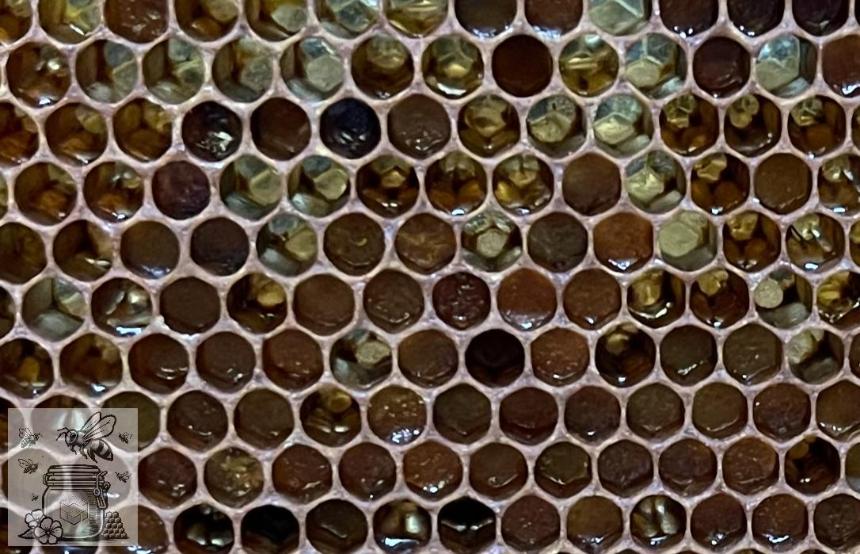
Fun Fact: The hive microbiome — a combination of bee-associated bacteria and yeasts — plays a critical role in fermentation, giving bee bread a unique and stable composition that differs from raw pollen.
Nutritional Profile of Bee Bread
Bee bread is more than just fermented pollen; fermentation transforms its composition and boosts its health potential:
- Proteins & Amino Acids: Like pollen, bee bread contains all essential amino acids, but the fermentation process makes them more digestible.
- Vitamins: Rich in B-complex vitamins, vitamin C, and small amounts of fat-soluble vitamins.
- Minerals: High in potassium, calcium, magnesium, and trace elements.
- Antioxidants: Polyphenols and flavonoids are preserved and sometimes enhanced during fermentation.
- Probiotics: Fermentation introduces beneficial bacteria that may support gut health.
Unique Angle: Unlike pollen, the microbial activity in bee bread may also produce short-chain fatty acids and bioactive peptides that contribute to its health-promoting properties — a feature rarely found in raw pollen.
Health Benefits of Bee Bread
Scientific research suggests bee bread may support:
- Digestive Health: The probiotics and prebiotic fibers can improve gut microbiota balance.
- Energy & Immunity: Nutrient density supports overall wellness and recovery.
- Antioxidant Defense: Polyphenols help combat oxidative stress.
- Skincare: Topical or oral use may provide antioxidant and nourishing effects for the skin.
Note: Research is still emerging, and human clinical studies are limited. Bee bread should be considered a supplementary food rather than a medical treatment.
Bee Bread vs Bee Pollen
While both come from the same hive materials, they differ in processing, bioavailability, and flavour:
| Feature | Bee Pollen | Bee Bread |
| Origin | Collected pollen, raw | Fermented pollen stored in hive |
| Digestion | Moderate bioavailability | Higher bioavailability due to fermentation |
| Microbes | Minimal | Naturally fermented with lactic acid bacteria |
| Shelf Life | Short if raw | Longer due to fermentation and acidity |
| Taste | Sweet, floral | Mildly sour, earthy, nutty |
For a deeper look at pollen itself, see our bee pollen article.
How to Use Bee Bread
Bee bread is incredibly versatile and can be enjoyed in a variety of ways:
Culinary Uses: Sprinkle it over smoothies, mix into yoghurt, granola, or even salad dressings. Its mild, slightly tangy flavour blends well with sweet or neutral foods.
Personal experience:
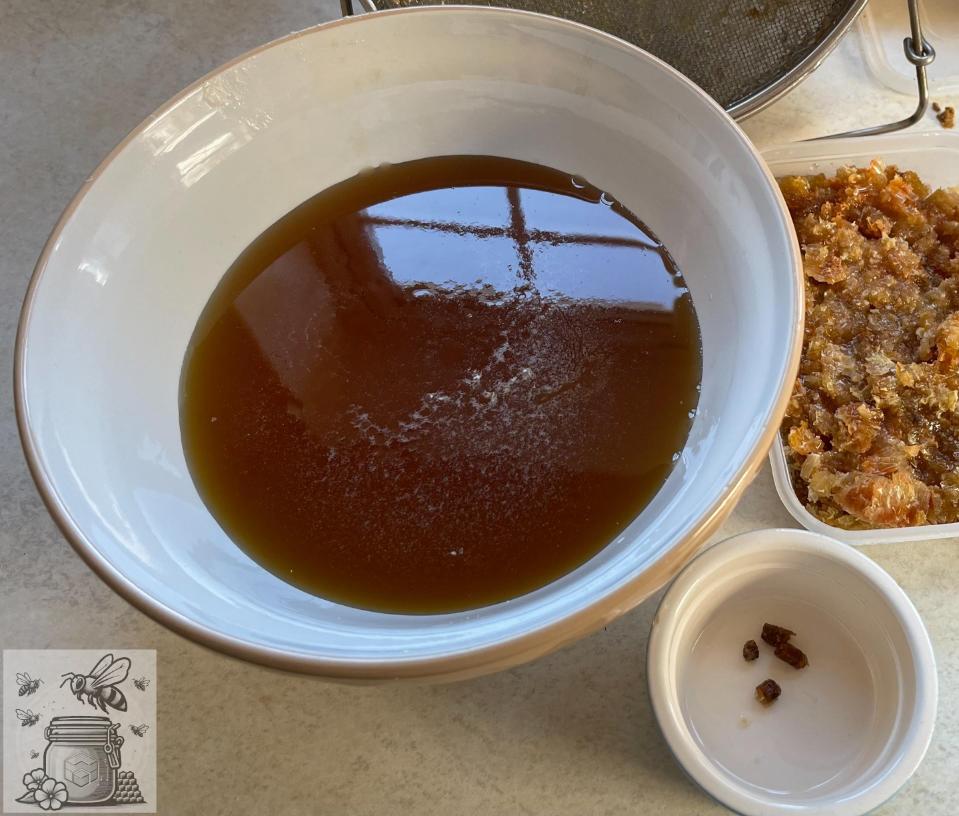
When I harvest honey, I often notice tiny bee bread granules tucked into the comb cells.
I carefully pick them out and mix them directly with my honey for my own use.
I find this combination not only delicious but also energising, making it perfect to consume during the first half of the day when I need a natural boost.
It’s a simple way to enjoy the hive’s nutrients while connecting with the bees’ work.
Dosage: Start with a small amount — usually 5–10 grams per day for adults — to see how your body responds.
Skincare: Bee bread can also be incorporated into homemade face masks or scrubs to take advantage of its antioxidant and nourishing properties.
Tip: Avoid heating bee bread above 40 °C / 104 °F to preserve its nutrients and probiotics.
Preservation & Storage
Bee bread is more stable than raw pollen due to its acidity and tight sealing by bees, but once harvested:
- Refrigeration: recommended for long-term storage (up to 6 months).
- Freezing: can extend shelf life up to a year.
- Low-Temperature Processing: some manufacturers (e.g., Tentorium and others with similar low-temperature processing methods) use gentle drying and protective coating methods to maintain bioactivity without refrigeration.
Unique Angle: unlike pollen, the natural fermentation in bee bread gives it built-in microbial stability, which is one reason it has been historically prized as a stored food for bee colonies.
Safety Guidelines
- Allergies: anyone allergic to pollen should be cautious; reactions can be severe.
- Children & Pregnant Women: small quantities recommended or consult a healthcare professional.
- Signs of Spoilage: off odor, visible mold, or unusual taste.
Myths & Little-Known Facts
- Myth: Bee bread is just “fermented pollen” with no extra value.
✅ Reality: Fermentation increases digestibility, bioavailability, and introduces beneficial microbes. - Little-Known Fact: Some research suggests bee bread contains short-chain fatty acids and bioactive peptides produced during fermentation, which may not be present in pollen.
- Fun Fact: In some traditional practices, bee bread has been stored by humans in clay pots for years as a survival food — a testament to its natural preservation.
FAQs
How is bee bread different from bee pollen?
Bee bread is fermented pollen stored in the hive, which enhances digestibility and nutrient availability compared to raw pollen.
Can bee bread cause allergies?
Yes, especially in people sensitive to pollen or bee products. Start with small amounts.
How should bee bread be stored at home?
Keep it refrigerated or freeze for long-term storage; avoid heat and moisture.
Can bee bread be used in smoothies or skincare?
Yes — similarly to bee pollen it blends well in food and can be incorporated into homemade topical applications.
Final Thoughts
Bee bread is just one example of how honey bees transform simple natural materials into substances of remarkable complexity and value.
From honey and propolis to royal jelly and wax, each beehive product serves a distinct purpose within the colony — and offers unique uses beyond the hive.
Understanding bee bread often sparks curiosity about other substances produced inside the hive. You may find it helpful to visit our Complete guide to beehive products and their uses, where we explore the full spectrum of what honey bees have to offer.