Yes, fake or adulterated honey can crystallise. Crystallisation alone is not a reliable way to determine whether honey is real or fake. Both genuine honey and some imitations can behave in similar ways.
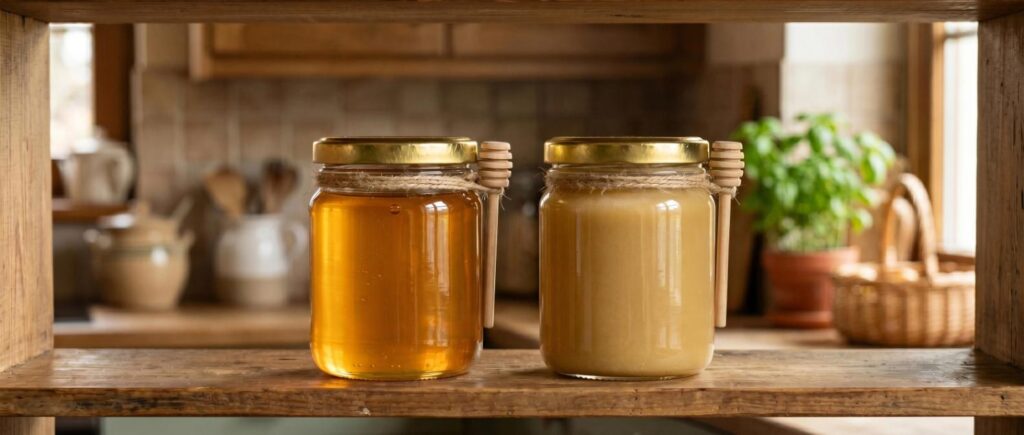
Many people believe that crystallisation is a clear sign of real honey — and that liquid honey must be fake.
This is one of the most widespread myths about honey.
In reality, crystallisation tells you very little about authenticity on its own.
Why People Think Crystallisation Means “Real Honey”
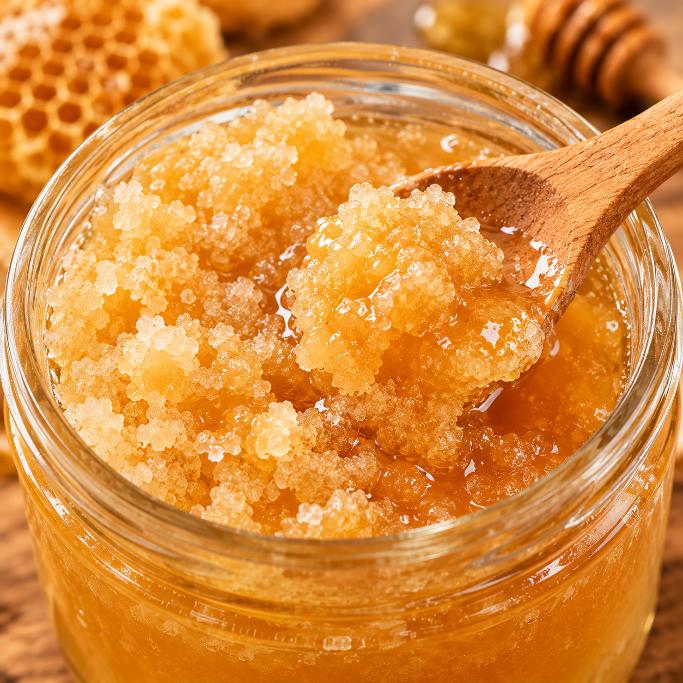
This belief comes from a simple idea:
- real honey contains natural sugars,
- those sugars crystallise over time.
Therefore: “If honey crystallises, it must be real”.
While this sounds logical, it is not reliable in practice.
Why Real Honey Crystallises
Real honey crystallises because it contains glucose, which is less soluble than fructose.
Over time:
- glucose forms crystals,
- honey becomes cloudy,
- then thickens or sets.
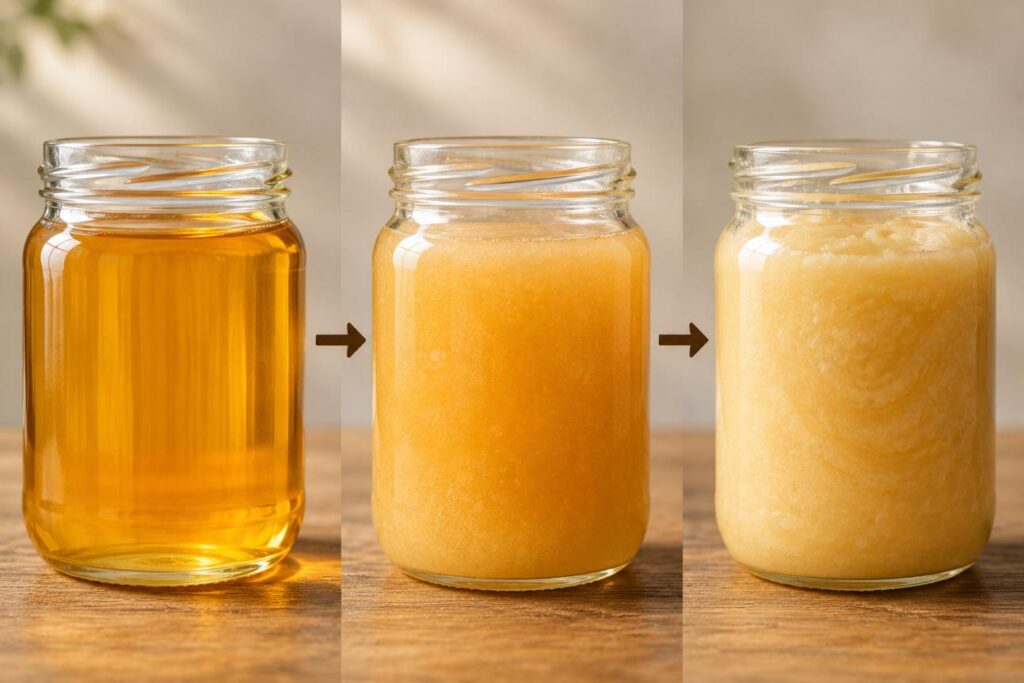
This is a completely natural process.
For a full explanation, see: The Truth About Crystallised Honey.
Can Fake Honey Crystallise Too?
Yes — and this is where the myth breaks down.
Many types of imitation or adulterated honey contain similar sugars, especially glucose and fructose.
For example:
Glucose–Fructose Syrups
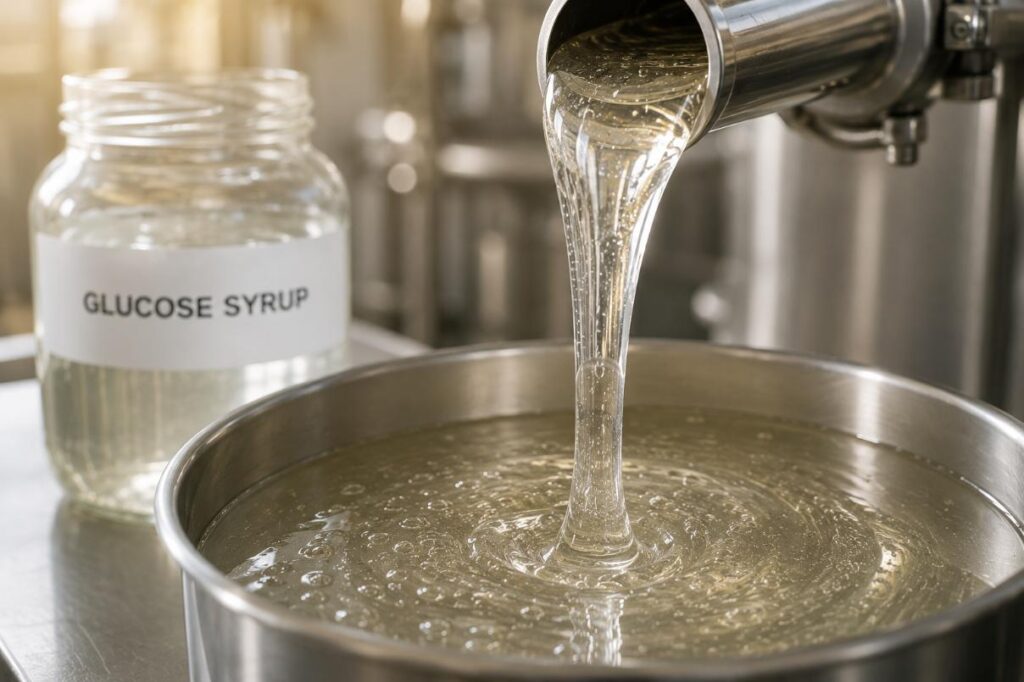
These are:
- widely used in food production,
- designed to mimic natural sugar composition,
- can crystallise under similar conditions.
This is not surprising, as their composition can be very close to real honey.
Why are glucose-fructose syrups used?
Because they are significantly cheaper than real honey and can mimic some of honey’s natural properties.
These syrups are often made from corn, rice, wheat, or sugar beet and may be blended with small amounts of real honey to:
- increase volume cheaply,
- reduce production costs,
- imitate honey’s sweetness and texture,
- maintain a liquid appearance for longer (depending on formulation).
Some syrups can also be adjusted to resemble honey’s natural sugar profile, which is why appearance alone — including crystallisation — is not a reliable test.
“Sugar-Fed” Honey
This refers to honey produced when bees are fed sugar syrup.
This term can be misunderstood, so it’s important to clarify what it means.
Beekeepers commonly feed bees sugar syrup for legitimate reasons, such as:
- helping colonies survive winter,
- supporting weak colonies,
- preventing starvation during nectar shortages.
This is a normal and widely used beekeeping practice.
The issue arises only when bees are heavily fed sugar syrup during nectar flows or shortly before honey harvest, and that syrup ends up being stored in comb and sold as floral honey.
In those cases:
- it can still crystallise,
- it may resemble natural honey,
- but its composition may be less representative of true nectar-derived honey.
The problem is not responsible feeding — it’s misleading marketing or poor hive management.
Some Fake Honey May Not Crystallise
Certain adulterants behave differently.
For example:
- starch-based syrups (rich in dextrins),
- high levels of crystallisation-inhibiting compounds.
These may slow or prevent crystallisation altogether.
What This Means (Very Important)
- Crystallisation does NOT prove that honey is real.
- Liquid honey staying liquid for long does NOT prove that honey is fake.
Both statements are misleading.
Why Crystallisation Is Unreliable as a Test
Crystallisation depends on many factors:
- glucose to fructose ratio,
- moisture content,
- storage temperature,
- presence of particles,
- processing or heating.
These variables affect both real honey and some imitations.
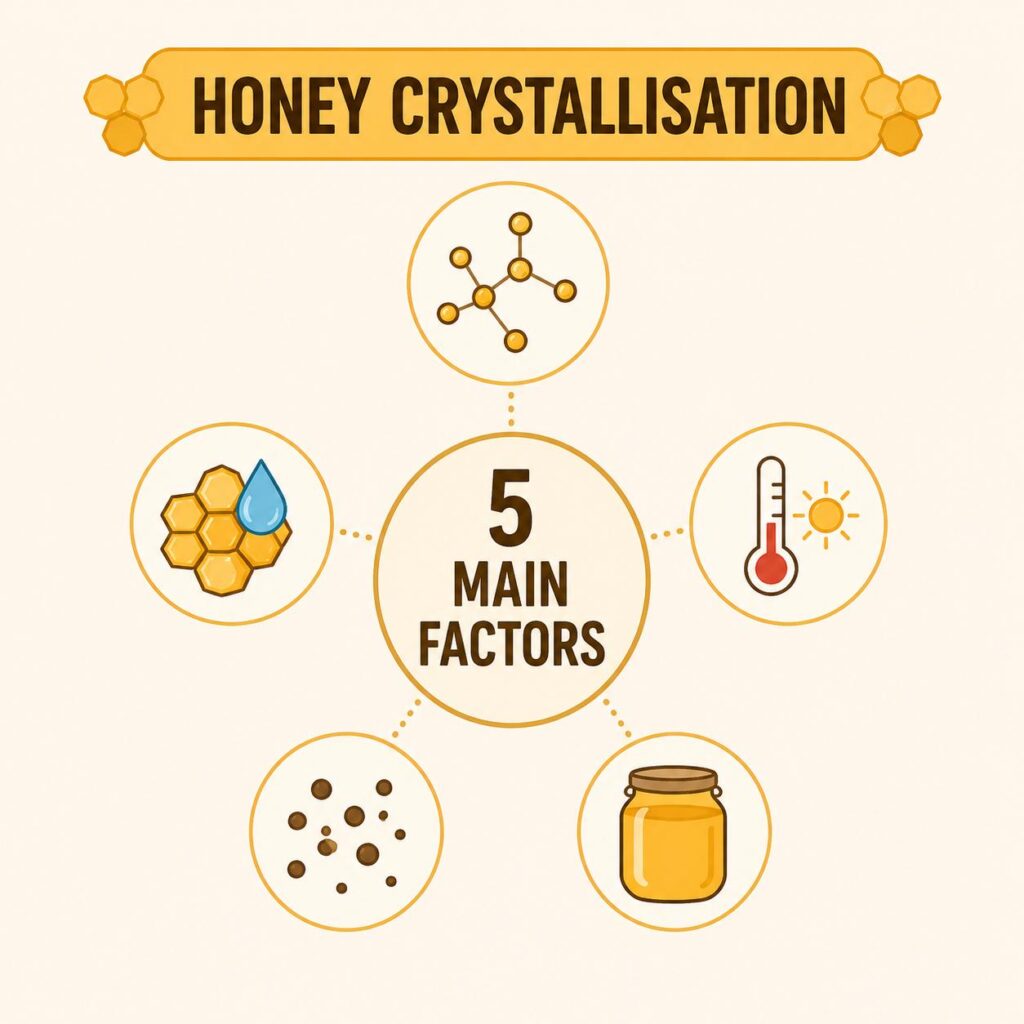
That’s why two jars of genuine honey can behave completely differently — and why some fake products can look convincing.
Common Myths About Fake Honey
❌ “Real honey must crystallise in winter”.
False — some honeys stay liquid for many months.
❌ “If honey stays liquid long, it has been heated or is fake”.
Not necessarily — many natural honeys remain liquid for a few months.
❌ “Crystallised honey is always pure”.
False — some adulterated honey also crystallises.
So How Can You Tell If Honey Is Real?
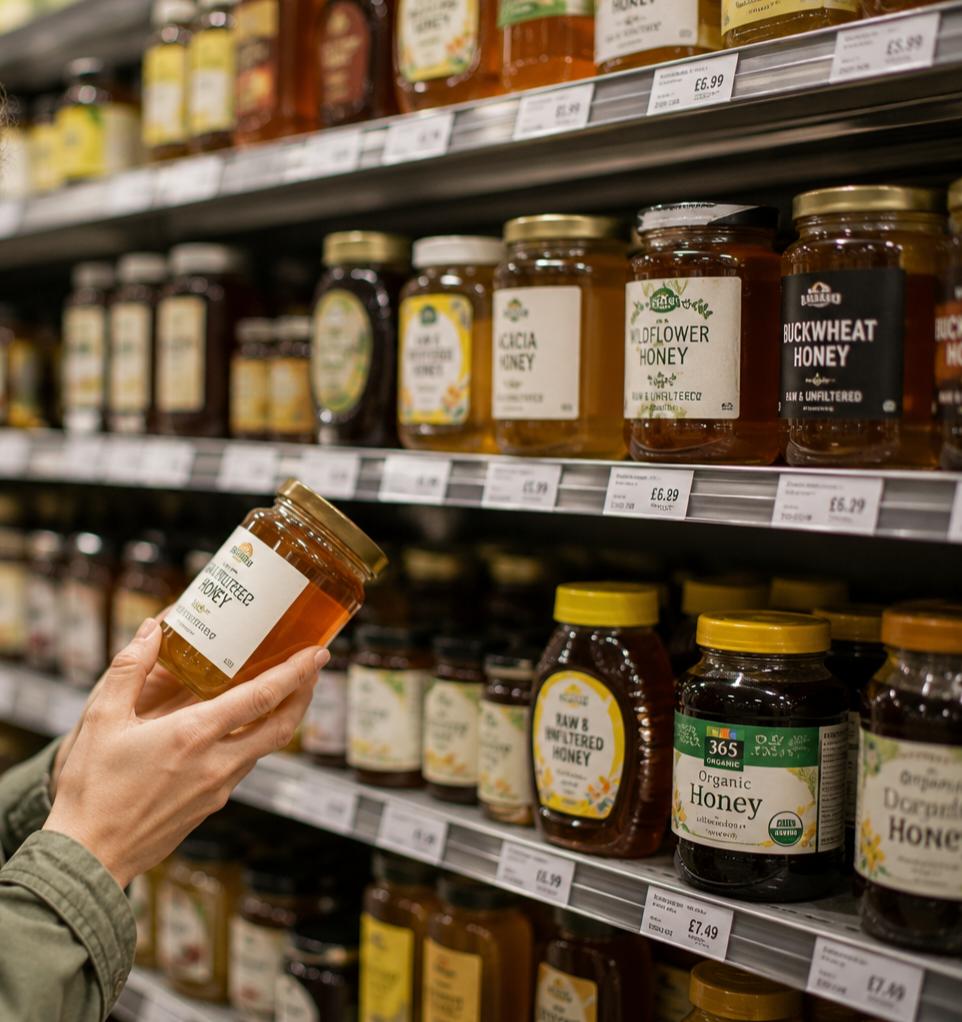
Instead of relying on crystallisation, look at:
- source and traceability,
- label information,
- producer reputation,
- certifications (where relevant).
Check out our detailed advice on Choosing a Good Quality Honey.
🐝 From My Own Experience
In my own beekeeping experience, I’ve seen how unpredictable crystallisation can be — even within the same batch of honey.
Some jars set quickly, others stay liquid much longer, depending on subtle differences in composition and storage.
That’s why relying on crystallisation as a “test” simply doesn’t work. Honey is far more complex than that.
Why the Myth Persists
This myth continues because:
- crystallisation is visible and easy to notice,
- people want a simple rule to identify “real” honey,
- misinformation spreads easily online.
But in reality, honey doesn’t follow simple rules.
What Crystallisation Can Tell You
While it is not a proof of authenticity, crystallisation may suggest that honey is:
- less processed,
- not heavily filtered,
- not overheated.
But even this is not guaranteed.
Quick Summary
- Fake honey can crystallise.
- Real honey may stay liquid long.
- Crystallisation depends on many factors.
- It is not a reliable authenticity test.
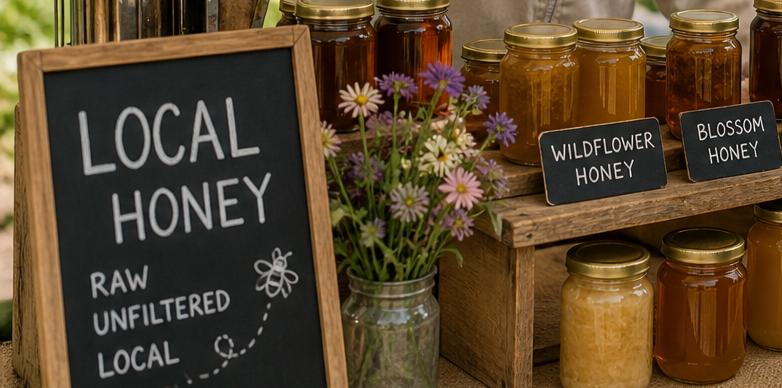
The best way to judge honey is by source and quality indicators, not appearance alone.
FAQ About Fake Honey and Crystallisation
Does fake honey crystallise?
Yes, many types of fake or adulterated honey can crystallise depending on their sugar composition.
Can real honey stay liquid forever?
Some types can remain liquid for a very long time, especially those high in fructose, good examples are tupelo honey, acacia honey, pitcairn island honey.
Is crystallised honey always pure?
No — crystallisation alone does not prove purity or quality.
Why does some fake honey not crystallise?
Because certain additives (like dextrins or syrups) can slow or prevent crystallisation.
What is the best way to check honey quality?
Look at source, traceability, and quality indicators rather than relying on visual appearance.