
Tupelo honey is often described as one of the most distinctive honeys in the world — not because of an intense flavour or dark colour, but because of something far more unusual.
It stays liquid.
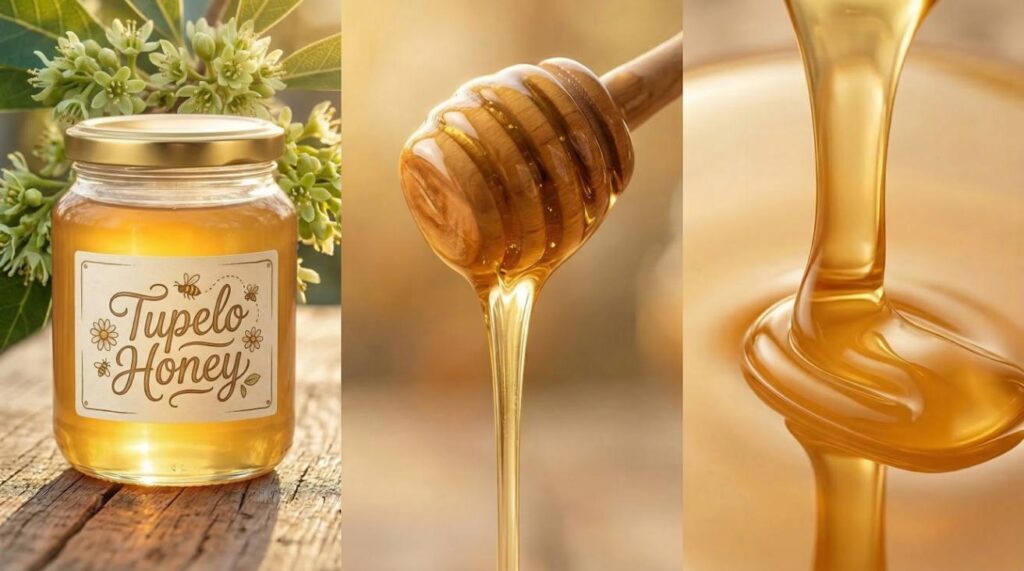
While most honeys slowly thicken and crystallise over time, tupelo honey can remain smooth and pourable for months, even years. This single characteristic has made it a curiosity among honey enthusiasts and a benchmark for understanding how honey behaves.
But behind this unique texture lies a very specific landscape, a narrow window of opportunity, and a style of beekeeping that is unlike almost anywhere else.
If you’re new to honey and want to understand how different varieties are classified, see our complete guide to honey.
What Is Tupelo Honey and Where Does It Come From?
Tupelo honey is a monofloral honey produced in the southeastern United States, mainly in Florida and Georgia. It comes from the nectar of tupelo trees growing in swampy river basins. Because these trees bloom for a short time, the honey is closely tied to a specific place and season.
Tupelo honey is most closely associated with:
- the Florida Panhandle
- southern Georgia
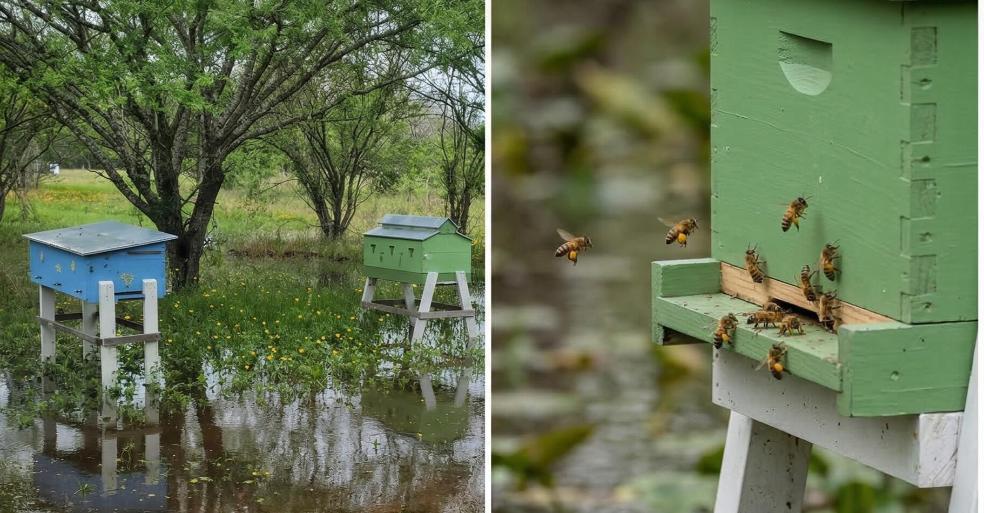
These regions are home to river basins and swamp ecosystems where tupelo trees grow naturally.
The flowering period is short and concentrated, and during this time bees collect nectar almost exclusively from these blossoms, producing a honey that reflects this very specific environment.
Unlike many well-known honeys that are produced across different countries, tupelo honey is tightly tied to its place of origin.
Tupelo honey has been known in the United States for generations, but for a long time it remained a regional speciality. It was valued locally along the Southern river systems where tupelo trees grow, often sold close to where it was produced rather than widely distributed. In that sense, it is a honey that stayed local for decades before gradually becoming recognised beyond its place of origin.
Why Tupelo Honey Is So Rare
Tupelo honey is rare because it depends on a brief flowering period and specific swamp environments. Beekeepers must place hives in the right location at the right time and harvest quickly before other nectar sources appear. This narrow window makes pure tupelo honey difficult to produce consistently.
Tupelo honey depends on a combination of conditions that are difficult to replicate.
The trees bloom for only a few weeks, and during that time:
- weather must be stable
- water levels must be suitable
- bees must have access to the right forage
Beekeepers often move hives into remote floodplain areas, sometimes by boat, positioning them in locations where tupelo trees dominate the landscape.
There is little room for error.
If the timing is off, or if other flowers begin blooming, the honey will no longer be considered pure tupelo.
Because of this, tupelo honey has earned a reputation as something of a beekeeper’s honey — one that reflects careful judgement and experience rather than large-scale production.
The Unique Property: Why Tupelo Honey Does Not Crystallise
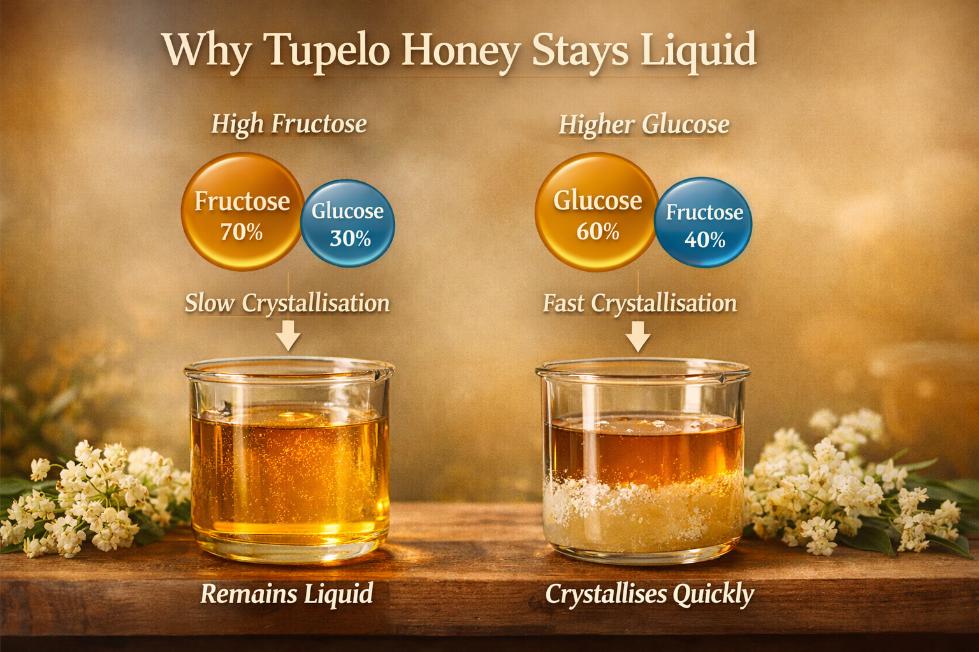
Tupelo honey resists crystallisation due to its high fructose content compared to glucose. This sugar balance slows the formation of crystals, allowing the honey to remain liquid much longer than most varieties. While it can eventually crystallise, it does so far more slowly than typical honeys.
What sets tupelo honey apart most clearly is its resistance to crystallisation.
Honey naturally contains two main sugars:
- glucose
- fructose
In most honeys, glucose gradually separates and forms crystals, causing the honey to thicken.
Tupelo honey is different.
It has a higher proportion of fructose, which slows down this process significantly. As a result, it remains liquid far longer than typical honeys.
This does not mean it will never crystallise, but compared to varieties like clover or wildflower honey, the difference is striking.
This characteristic has made tupelo honey a useful reference point when explaining how sugar composition influences honey texture.
What Are the Taste, Colour and Texture of Tupelo Honey?
Tupelo honey is light golden in colour with a smooth, liquid texture. Its flavour is mild, slightly floral, and gently fruity, without bitterness. Because it stays pourable, it is often used for drizzling over food or adding to drinks where a clean, delicate sweetness is preferred.
Tupelo honey is usually light golden to amber in colour, with a clear, almost luminous appearance.
| Flavour | Mild, clean, gently floral |
| Undertones | Light fruity notes, soft and balanced |
| Bitterness | None — lacks the sharpness of darker honeys |
| Texture | Smooth, silky, consistently liquid |
| Mouthfeel | Light, flowing, non-grainy |
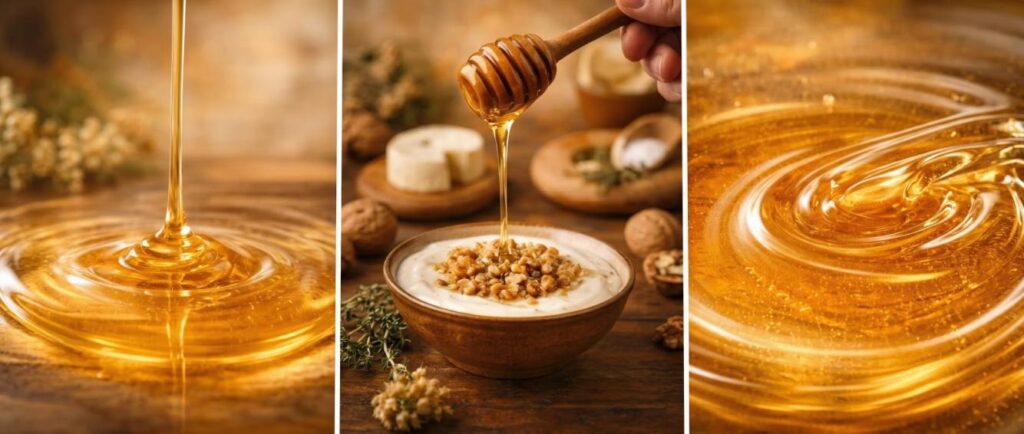
| Best Uses | Yoghurt, soft cheeses, tea, delicate dishes |
There is often a subtle fruity note, but without the intensity or bitterness found in darker honeys.
It is a honey that tends to complement rather than dominate.
Although I have not yet had the opportunity to taste tupelo honey myself, its consistently liquid texture is often described as one of its defining qualities. Compared to many honeys that gradually thicken or set, this smooth, almost unchanged state AND the unique way it is harvested AND the difficulty to find an authentic product, for me personally, all that makes it particularly intriguing and worth looking for.
For a contrasting example of a rich, highly prized variety, explore our article on sidr honey.
How to Identify Real Tupelo Honey
Real tupelo honey is usually light in colour, mild in flavour, and remains liquid over time. It is produced in Florida and Georgia and is often sold at a premium price. Because it is sometimes blended, checking the origin and producer details is important when choosing authentic tupelo honey.
There are a few practical indicators to look for.
Authentic tupelo honey:
- stays liquid over time
- has a light colour and delicate aroma
- is sourced from Florida or Georgia
However, the idea that it “never crystallises” is often overstated.
Even genuine tupelo honey may eventually form crystals under certain conditions — just much more slowly than most honeys.
Finding authentic tupelo honey can be more difficult than expected, especially outside the United States. Because it is sometimes blended or loosely labelled, it is worth looking for producers who clearly state the origin and harvesting region. Reputable suppliers to explore include:
- Savannah Bee Company (Georgia, USA)
- Smiley Honey (Florida, USA)
- Local Florida or Georgia beekeepers specialising in tupelo harvests
When possible, buying directly from producers or trusted specialists offers more confidence in authenticity.
To understand what defines purity and how to recognise authentic honey, see our guide to honey quality.
Why Tupelo Honey Is Valued
Tupelo honey is valued for its rarity, smooth texture, and ability to stay liquid. Its mild flavour makes it versatile for everyday use, while its limited production and specific origin give it a reputation as a speciality honey. It is often appreciated for balance rather than intensity.
Tupelo honey is valued for a combination of factors rather than a single defining feature.
It offers:
- a rare and location-specific origin
- a distinctive texture
- a mild, versatile flavour
Unlike some luxury honeys that are prized for intensity, tupelo honey is appreciated for its balance and usability.
It sits comfortably between everyday honey and premium speciality varieties.
For those interested in exploring honeys shaped by unique environments and natural constraints, tupelo honey is a brilliant example.
A Quiet Reputation Among Beekeepers
Tupelo honey is often seen as a beekeeper’s honey because producing it requires precise timing and careful placement of hives. The short bloom period and challenging swamp environment mean that success depends on experience, making it respected within beekeeping communities.
Unlike some famous honeys surrounded by mythology, tupelo honey carries a quieter kind of recognition.
Among beekeepers, it is often seen as a test of timing and judgement.
The combination of:
- short bloom
- specific habitat
- careful harvesting
means that producing a truly pure batch is not straightforward.
In that sense, tupelo honey reflects not only the landscape it comes from, but also the skill required to work within it.
FAQ About Tupelo Honey
Does tupelo honey really never crystallise?
It resists crystallisation due to its high fructose content, but it may eventually crystallise under certain conditions.
Why is tupelo honey so expensive?
Its limited bloom period, specific growing environment, and careful harvesting process make it difficult to produce in large quantities.
What does tupelo honey taste like?
It has a mild, clean flavour with light floral and slightly fruity notes.
You Might Also Like To Find Out More About
- Rare & Luxury Honeys – explore the world’s most distinctive honey varieties
- Honey Texture & Taste – understand how honey’s structure influences flavour and use
- Types of Honey – a guide to how honey is classified and why it varies