Honey is one of the most diverse natural foods produced by bees. Its colour, flavour, and aroma can vary greatly depending on the plants visited by bees and the landscapes in which they forage. To understand this remarkable diversity, it is helpful to look at the types of honey.
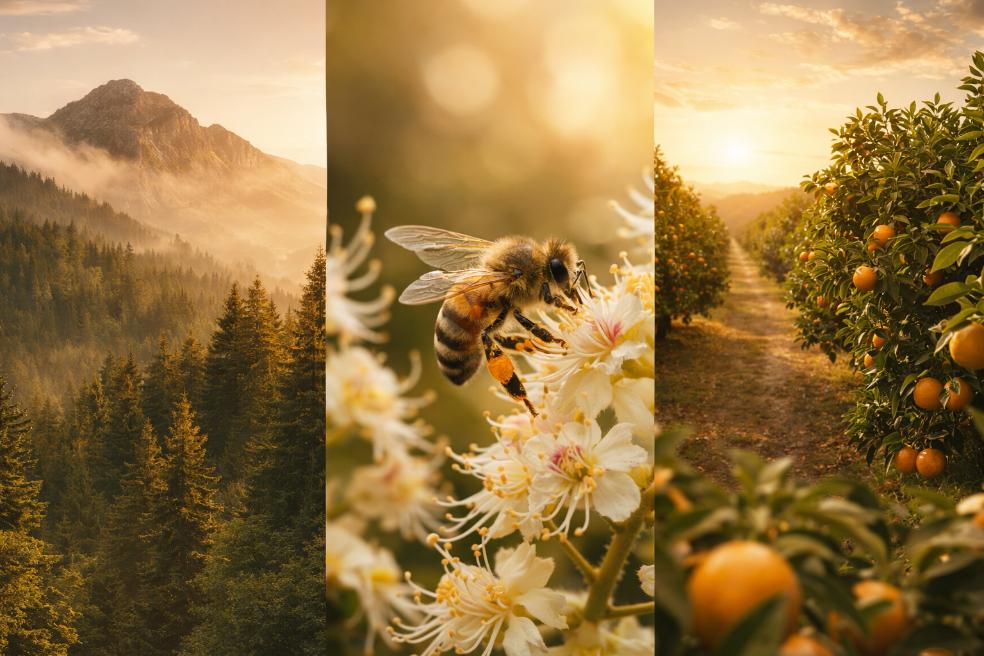
Honey can be classified in several ways, but the most fundamental distinction is based on the source of the sugars collected by bees. In this classification, honey belongs to one of two main types: blossom honey, produced from floral nectar, and honeydew honey, produced from the sugary secretions of insects feeding on plant sap.
Within these types there are many individual honey varieties, often named after the dominant plant species or the region where the honey is produced.
What You Will Learn
In this guide you will discover:
• the two fundamental types of honey
• how blossom honey differs from honeydew honey
• how monofloral and multifloral honeys develop
• why geography and plant species influence honey varieties
Start Here
If you’re exploring different kinds of honey, these guides explain how honey varieties develop and what influences their flavour and characteristics.
| Guide | What you’ll learn |
| Honey: A Complete Guide to Types, Taste and Uses | Overview of honey and its many characteristics |
| Blossom Honey | Nectar honeys produced from flowering plants |
| Honeydew Honey | Forest honeys produced from insect honeydew |
| Honey Texture and Taste | How floral sources shape flavour and colour |
| Honey Crystallisation | Why some honeys crystallise faster than others |
What Are The Two Main Types of Honey?
Most honey belongs to one of two main types depending on the origin of the sugars collected by bees.
| Honey Type | Source | Typical Characteristics |
|---|---|---|
| Blossom (Nectar) Honey | Flower nectar | Floral aroma, wide range of colours and flavours |
| Honeydew Honey | Secretions from sap-feeding insects on trees | Darker colour, richer mineral content |
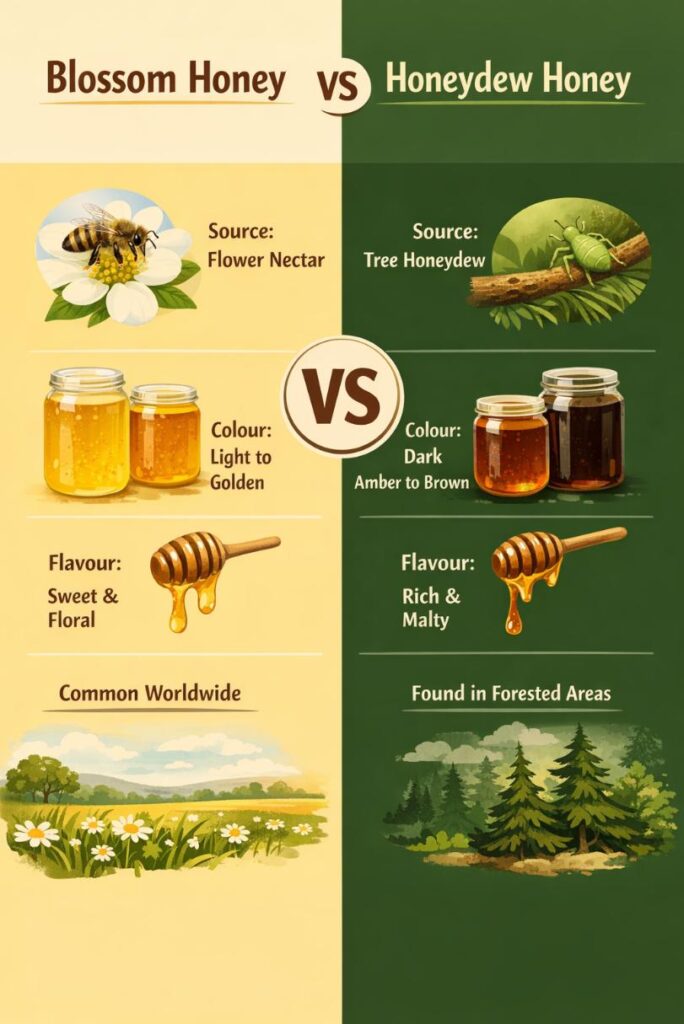
Both types are natural products of bee foraging behaviour and environmental conditions.
While blossom honey originates directly from floral nectar, honeydew honey reflects complex interactions between trees, insects, and bees.
What Is Blossom Honey (Nectar Honey)?
Blossom honey, also known as nectar honey, is produced when bees collect nectar from flowers. This is the most common type of honey and includes many of the varieties familiar to consumers around the world.
The nectar collected from flowers is transformed by bees through enzymatic processes and evaporation inside the hive, resulting in honey with distinctive flavours and aromas influenced by the plant source.
Blossom honeys show tremendous diversity because different flowering plants produce nectar with unique compositions of sugars and aromatic compounds. This botanical diversity is what gives many blossom honeys their distinctive flavours and aromas.
Blossom honeys can be further divided into two categories.
Monofloral Honey
Monofloral honey is produced when the nectar of one plant species dominates the honey’s composition. These honeys are usually named after the plant that provides the primary nectar source.
Examples include:
- Chestnut honey
- Acacia honey
- Lavender honey
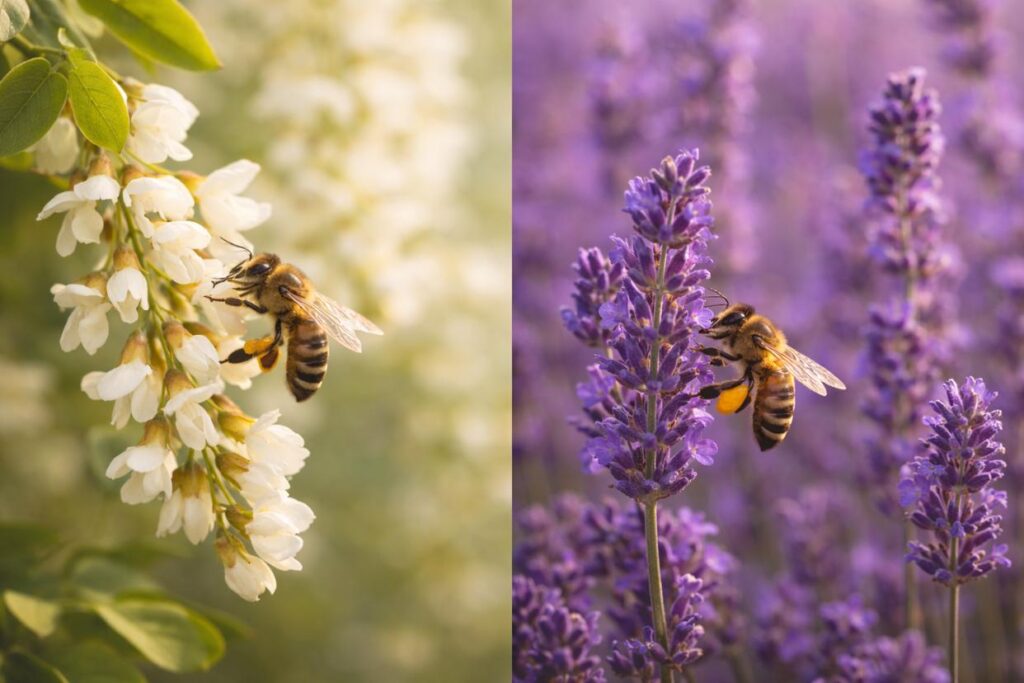
Each monofloral honey develops a characteristic flavour profile shaped by the nectar chemistry of the plant.
Polyfloral (Multifloral) Honey
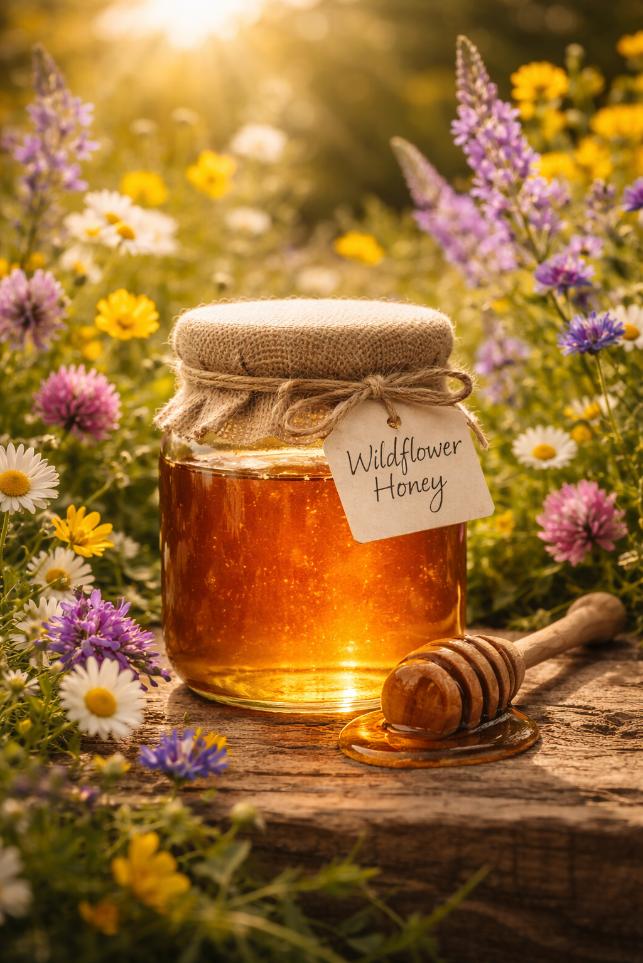
Multifloral honey is often called wildflower honey.
Bees forage on a wide range of plants, collecting nectar from multiple floral sources within a specific radius of their hive (usually 3–5 miles).
For honey to be considered polyfloral, no single flower species can dominate the nectar composition.
The mix of nectars is processed and transformed into honey by the bees, creating a naturally blended product.
Unlike monofloral honey, polyfloral honey reflects the diverse blooms available in a specific area during the bees’ foraging period.
Key Features of Polyfloral Honey
Diverse Nectar Sources
Bees collect nectar from a variety of flowers, shrubs, and trees, resulting in a complex and multifaceted flavor. Commonly known as wildflower honey, though the specific floral composition depends on the region and season.
Unique Flavour Profile
The taste, aroma, and colour of polyfloral honey are highly variable, depending on the mix of flowers in bloom. Typically, polyfloral honey is richer and more complex than monofloral honey due to the interplay of different nectars.
Colour and Texture
Can range from light golden to dark amber, influenced by the nectar mix. Texture varies, but polyfloral honey often crystallises more evenly due to its balanced glucose-to-fructose ratio.
Seasonal Variability
The composition and characteristics of polyfloral honey change with the seasons and the availability of local blooms. For example: spring honey might be lighter and floral, while autumn honey could be darker and more robust.
Benefits of Polyfloral Honey
Rich Nutritional Content
- The diversity of nectar sources contributes to a wide range of enzymes, antioxidants, vitamins, and minerals.
- It may provide broader health benefits due to the variety of plant compounds from multiple flowers.
Balanced Crystallisation
- The mix of glucose and fructose tends to result in a smoother crystallisation process compared to monofloral honeys.
Environmentally Friendly
- Often produced from wild or natural areas, polyfloral honey supports biodiversity and natural ecosystems.
Versatile Flavour
- Its complexity makes it suitable for various uses, from spreading on toast to sweetening teas and enhancing recipes.
Examples of Polyfloral Honey
Wildflower Honey – Derived from a mix of flowers in a specific area, often reflecting the local flora of the region.
Forest Honey – Produced in wooded areas, with nectar from trees, shrubs, and understory plants.
Seasonal Honey – Spring or summer polyfloral honey varies based on what flowers bloom during those times.
| Feature | Polyfloral Honey | Monofloral Honey |
| Nectar sources | Multiple flower types | Predominantly one flower type |
| Flavour | Complex and variable | Distinct and consistent |
| Colour | Wide range (light to dark) | Depends on the specific flower |
| Nutritional profile | Broader, more diverse | Often focused on one plant’s properties |
| Crystallisation | Balanced and even | Depends on the nectar composition |
Why Choose Polyfloral Honey?
Polyfloral honey is perfect for those who enjoy varied and complex flavours and want a honey that reflects the natural diversity of its environment. Its rich composition, wide-ranging health benefits, and versatile taste make it a favorite among honey enthusiasts and a natural choice for supporting local ecosystems.
What Is Honeydew Honey?
Honeydew honey is produced when bees collect sugary secretions known as honeydew, which are produced by sap-feeding insects such as aphids that live on trees and other plants.
Instead of collecting nectar directly from flowers, bees gather this sweet liquid from leaves or bark and transform it into honey inside the hive.
Honeydew honeys often differ from blossom honeys in several ways:
• darker colour
• richer mineral content
• stronger, sometimes malty flavour
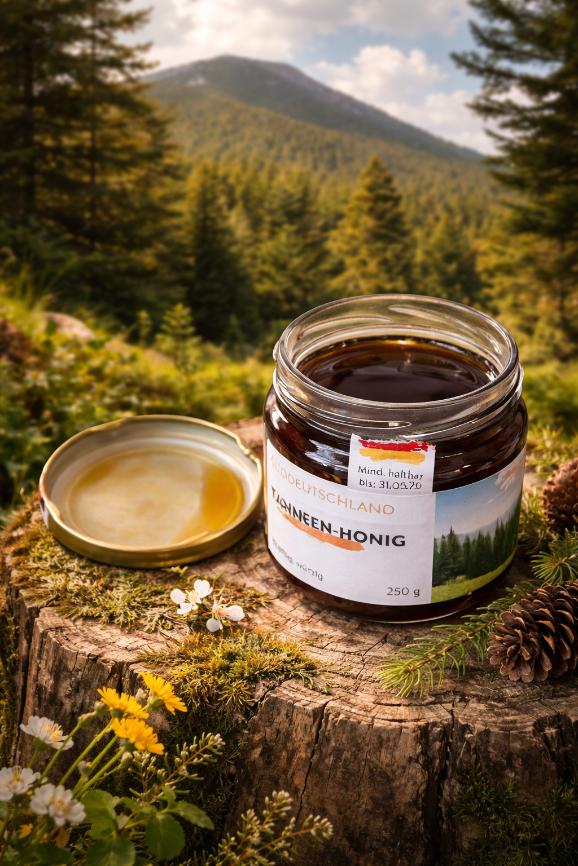
Honeydew honeys are common and particularly valued in many European regions, where forest honeys from pine, fir, or oak trees are known for their deep colour and complex flavour.
Honey Varieties and Regional Specialities
While honey types describe the source of sugars collected by bees, the term honey variety usually refers to honey associated with a particular plant species or geographic region. Many honey varieties are named after the dominant floral source, while others are recognised because they are produced in unique ecosystems.
Many well-known honey varieties are prized for their distinctive flavour or limited production.
Examples include: Tupelo honey, Sidr honey, Jarrah honey.
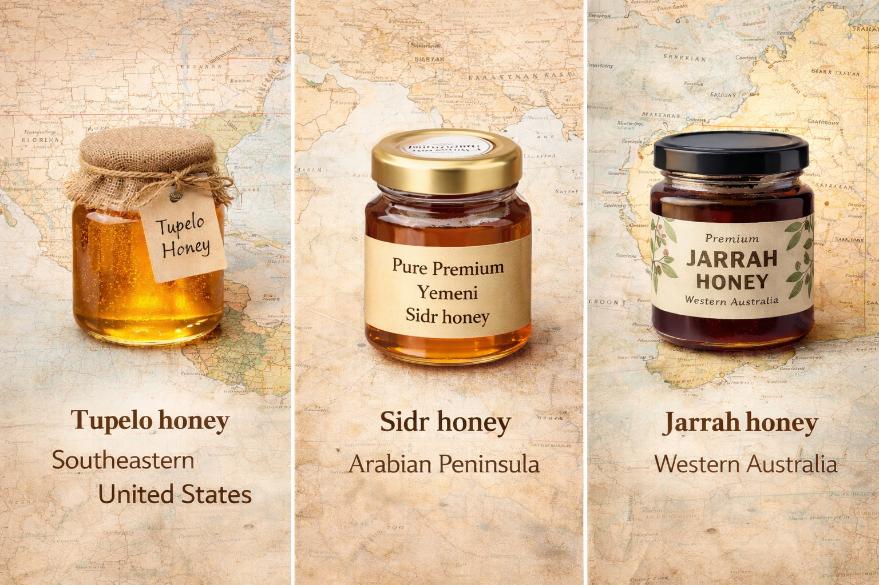
These honeys are often considered rare because they depend on specific ecosystems or short flowering seasons.
Why Floral Sources Shape Honey Characteristics
The plants visited by bees strongly influence the composition of nectar and therefore the flavour, colour, and crystallisation behaviour of honey.
Different plants produce nectar with varying proportions of sugars, aromatic compounds, and minerals. As a result, honeys from different botanical sources can vary widely in their taste and texture.
To learn more about these differences, see our guide to honey texture and taste and how floral origin influences honey characteristics.
How Bees and Plants Create Honey Diversity
The remarkable diversity of honey is the result of complex interactions between bees, plants, and the environment. The nectar collected by bees varies depending on the plant species, the landscape where the plants grow, and the environmental conditions during the flowering season. These factors influence the chemical composition of nectar and ultimately shape the colour, flavour, aroma, and texture of the honey produced.
Nectar Chemistry
Different plant species produce nectar with unique chemical compositions. Nectar typically contains varying proportions of sugars such as glucose, fructose, and sucrose, as well as trace amounts of organic acids, amino acids, and aromatic compounds.
These differences strongly influence the characteristics of honey. For example, some honeys remain liquid for long periods because their nectar contains a higher proportion of fructose, while others crystallise more quickly due to higher glucose levels. Nectar chemistry also contributes to the distinctive aromas and flavours associated with particular honey varieties.
Regional Flora
The plants available to foraging bees vary widely from one region to another. Meadows, forests, orchards, and mountain landscapes each support different communities of flowering plants. As a result, bees in different regions produce honey with distinctive botanical signatures.
Some honey varieties are closely associated with particular ecosystems. For example, citrus orchards produce fragrant orange blossom honeys, while forested regions may yield darker honeys derived from trees such as pine or oak.
Climate and Seasonal Conditions
Climate and seasonal weather patterns also influence honey production. Temperature, rainfall, and sunlight affect both the quantity and composition of nectar produced by flowering plants.
In favourable seasons with abundant rainfall and sunshine, plants may produce larger amounts of nectar, allowing bees to gather substantial honey harvests. In drier or cooler seasons, nectar production may be reduced, which can change both the yield and the characteristics of honey.
These environmental factors contribute to the subtle variations that make honey from different regions and seasons unique.
Together, all these factors explain why the world contains such a rich diversity of honey varieties, each reflecting the plants, landscapes, and environmental conditions where bees forage.
FAQ about Types of Honey
What are the two main types of honey?
Most honey belongs to one of two main types based on the source of sugars collected by bees. Blossom honey is produced from flower nectar, while honeydew honey is produced from the sugary secretions of insects feeding on plant sap.
What is the difference between blossom honey and honeydew honey?
Blossom honey comes from nectar collected directly from flowers. Honeydew honey originates from sweet secretions produced by insects such as aphids feeding on plant sap. Honeydew honeys are typically darker and richer in minerals than blossom honeys.
How many varieties of honey are there?
There are hundreds of honey varieties worldwide. Many are named after the dominant plant species visited by bees, such as acacia, lavender, or citrus blossoms, while others are associated with particular regions or ecosystems.
Why do different honeys taste different?
The flavour of honey depends mainly on the plants that provide nectar for bees. Different plants produce nectar with varying sugar compositions and aromatic compounds, which influence the colour, aroma, and taste of the honey.
Related Honey Guides
If you would like to explore honey in more depth, these guides explain its properties and uses in greater detail:
• Honey: A Complete Guide to Types, Taste, and Uses
• Honey Texture and Taste
• Honey Crystallisation
• Honey Quality Indicators
• Choosing Good Honey