Candles have been used for light, warmth, and ritual for thousands of years. Today, they also create atmosphere, add fragrance, and enhance wellbeing — but not all candles are created equal.
Among the most common options are paraffin, soy, and beeswax candles, each with distinct origins, properties, and environmental impacts. Understanding these differences can help you make more informed, sustainable choices for your home.
What Is Paraffin Wax?
Paraffin wax is the most widely used candle wax in the modern world, largely because it is inexpensive, consistent, and easy to manufacture. However, it is not a natural product in the way beeswax or plant waxes are.
How paraffin wax is made
Paraffin is a by-product of petroleum refining. During crude oil processing, heavier hydrocarbons are separated and further refined through a series of steps including distillation, solvent treatment, and crystallisation. The result is a waxy substance composed mainly of long-chain alkanes.
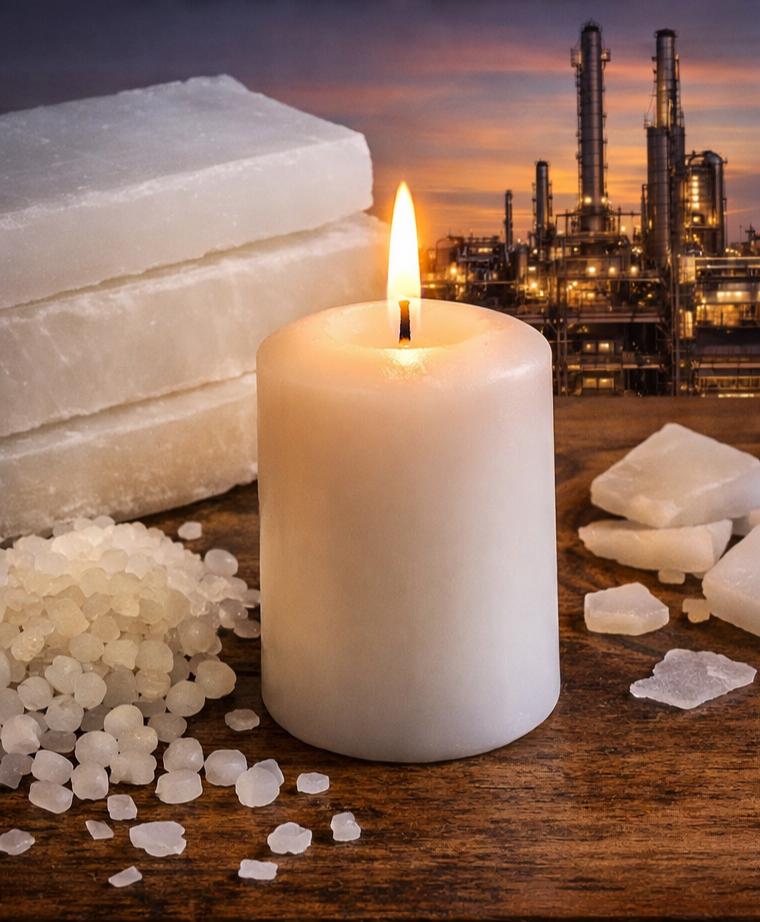
In simple terms, paraffin wax is derived from the same industrial process that produces fuels such as petrol and diesel.
What paraffin looks like
- Colour: Naturally colourless to white
- Appearance: Opaque, smooth, and slightly glossy
- Texture: Brittle when cold, softens quickly when warmed
- Scent: Odourless in its raw form (fragrance is usually added)
Common forms of paraffin wax
- Solid slabs or blocks
- Pastilles or pellets (for industrial use)
- Fully refined candle wax blends
- Container candle waxes with additives to improve scent throw
Is paraffin eco-friendly?
This is where paraffin raises concerns:
- ❌ Non-renewable: Derived from fossil fuels
- ❌ High carbon footprint: Linked to oil extraction and refining
- ❌ Not biodegradable in the short term
- ⚠️ When burned, paraffin candles can release soot and volatile organic compounds (VOCs), especially in poorly ventilated spaces
While food-grade paraffin is considered safe for some industrial uses, its environmental profile is poor, which is why many people seeking sustainable living alternatives now avoid paraffin candles altogether.
What Is Soy Wax?
Soy wax is often marketed as a natural or eco-friendly alternative to paraffin, but its story is a little more nuanced.
How soy wax is made
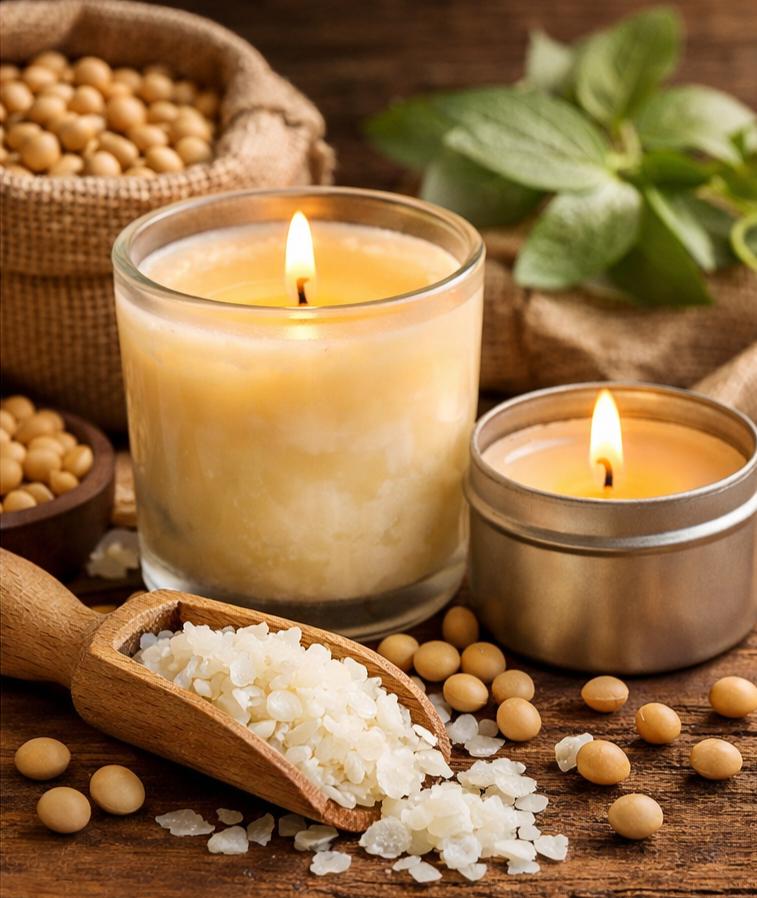
Soy wax begins with soybeans, which are harvested, cleaned, and pressed to extract soybean oil. This oil then undergoes hydrogenation, a chemical process that alters the fatty acids so the oil becomes solid at room temperature.
While soy wax originates from a plant source, it is not a raw or unprocessed material.
What soy wax looks like
- Colour: Creamy white to pale ivory
- Appearance: Matte and slightly frosted
- Texture: Soft and smooth; lower melting point than beeswax
- Scent: Mild, neutral (designed to carry added fragrances)
Common forms of soy wax
- Flakes (most common for candle making)
- Blended container waxes (often mixed with paraffin or additives)
- Pre-formulated scented candle bases
Is soy wax eco-friendly?
Soy wax sits somewhere between paraffin and beeswax:
| Pros | Cons |
| ✅ Plant-based and renewable ✅ Burns more slowly than paraffin ✅ Produces less visible soot ✅ Biodegradable under the right conditions | ⚠️ Often highly processed ⚠️ Many soy crops are genetically modified (GMO) ⚠️ Large-scale soy farming can contribute to deforestation and monoculture agriculture ⚠️ Some “soy candles” contain blends with paraffin, unless clearly labelled as 100% soy |
For readers focused on sustainability, organic, non-GMO soy wax sourced responsibly is a far better option — but it still lacks the natural complexity and hive-derived benefits of beeswax.
Beeswax
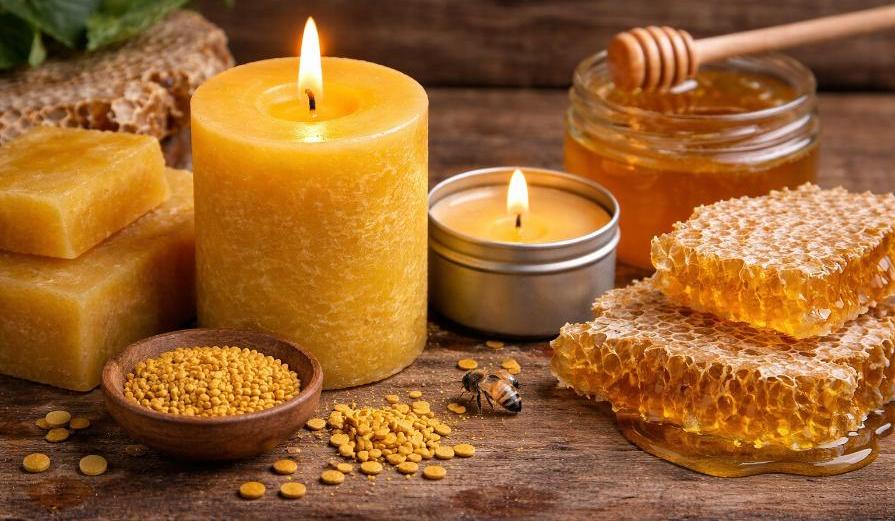
Beeswax is a natural substance produced by honey bees. Worker bees secrete wax flakes to build honeycomb, which is used for brood rearing and food storage. It is renewable, biodegradable, and supports ethical beekeeping when responsibly sourced.
Burn Quality and Indoor Air Considerations
Paraffin Candles
- Burn quickly
- Produce visible soot and VOCs
- Often contain synthetic fragrances and dyes
Soy Candles
- Burn slower than paraffin
- Produce less visible soot
- Often scented with added fragrance oils
Beeswax Candles
- Burn cleanly and slowly
- Produce minimal smoke
- Naturally lightly scented with a honey-like aroma
Indoor Air Quality and Candle Safety: What You Should Know
Recent studies show that burning candles, incense, or wood indoors can release fine particulate matter (PM2.5) and volatile organic compounds (VOCs). In poorly ventilated spaces, these emissions may be comparable in concentration to second-hand smoke — though far less toxic overall.
Key points for safe candle use:
- Beeswax candles burn cleaner than paraffin and synthetic soy blends.
- Ventilation is crucial: open a window or use a fan to reduce particle buildup.
- Limit burn time to 1–2 hours per session to minimise indoor exposure.
- Always trim wicks to ~5 mm to reduce smoke and soot.
By following these precautions, you can enjoy the warm glow and natural aroma of candles without compromising indoor air quality.
Sustainability and Environmental Impact
Paraffin
- Fossil-fuel based, non-renewable
- Not biodegradable
Soy
- Plant-based and renewable, but can be linked to monoculture farming and pesticide use
- Choose certified organic or non-GMO sources
Beeswax
- Fully biodegradable and renewable
- Supports ethical beekeeping
- Harvesting should prioritise colony health over volume
Longevity and Value
| Feature | Paraffin | Soy | Beeswax |
| Burn time | Short | Moderate | Long |
| Soot | High | Low | Minimal |
| Additives | Common | Common | None |
| Biodegradable | No | Yes | Yes |
| Renewable | No | Yes | Yes |
Beeswax candles are usually more expensive upfront but often provide longer burn time and better indoor air quality, making them a worthwhile investment.
Ethical and Practical Considerations
Even natural beeswax can be unsustainable if overharvested. Responsible producers:
- prioritise hive health
- harvest as part of routine maintenance
- avoid taking excessive wax
Supporting local, small-scale beekeepers ensures the wax is a by-product of healthy colonies, not an extractive industry.
Which Candle Is Right for You?
- Paraffin: inexpensive, but lower quality and less sustainable
- Soy: plant-based, slower burn, but verify sourcing
- Beeswax: clean-burning, sustainable, minimal additives, naturally fragrant
Practical Fire Safety Tips
- Never leave candles unattended
- Keep away from draughts, pets, and soft furnishings
- Burn in stable, heatproof containers
- Avoid burning for more than 1–2 hours at a time
- Trim wicks to 5 mm to minimise soot
Discover Further
👉 Beeswax in Natural Skincare: Benefits, Safety & DIY Basics (upcoming)
👉 DIY Beeswax Candle Tutorial (upcoming)
👉 Complete Guide to Beehive Products and Their Uses
FAQs
Do beeswax candles smell like honey?
Yes, subtly and naturally, without artificial fragrance.
Are beeswax candles safer for indoor air?
Yes, they produce minimal soot and VOCs compared to paraffin candles.
How long should I burn a beeswax candle?
1–2 hours per session is ideal for safety and optimal burn.
Can soy candles be eco-friendly?
Yes, but verify organic/non-GMO sourcing to ensure sustainability.