Bee venom has moved from ancient remedy to modern skincare ingredient, appearing in serums, gels, masks, and creams marketed for anti-ageing, skin repair, and rejuvenation. Often described as “nature’s Botox”, bee venom skincare is both intriguing and controversial.
Understanding how bee venom works on the skin — and who should not use it — is essential before adding it to any routine. This article explores the history, science, safety, and practical use of bee venom in skincare, separating evidence from marketing hype.
A Brief History of Bee Venom in Skin Care
The cosmetic use of bee venom is relatively recent, but its therapeutic use stretches back thousands of years. Ancient Egyptian, Greek, and Chinese medical traditions documented the use of bee stings for pain, inflammation, and healing.
In skincare, bee venom gained popularity in the early 2000s, particularly in South Korea and later Europe, where controlled extracts were developed for topical use. Early cosmetic interest centred on bee venom’s ability to stimulate the skin’s natural repair responses without invasive procedures.
How Is Bee Venom Made — and How Does It End Up in Skincare?
How bees produce venom
Bee venom is produced by worker bees as part of the hive’s defence system. It contains biologically active compounds, such as melittin (the main active peptide), apamin, and others.
How bee venom is collected
For cosmetic use, venom is typically collected using electrical stimulation devices placed at the hive entrance. Bees release venom onto a glass plate without losing their stinger, making this method far more sustainable than traditional extraction.
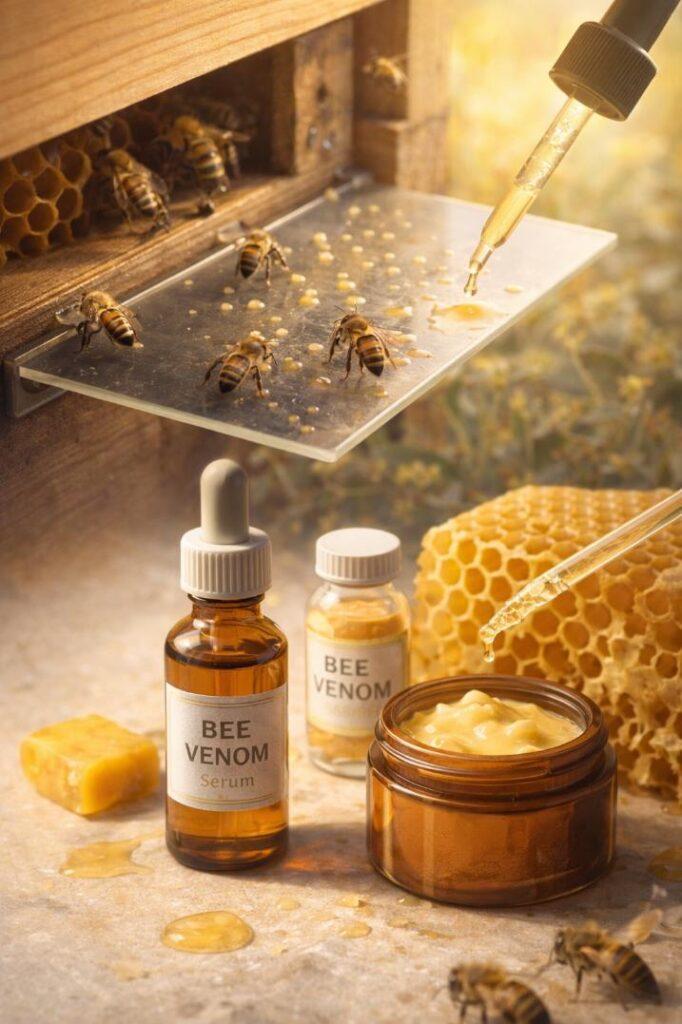
The dried venom is then purified, diluted, and incorporated into skincare formulations at very low concentrations.
How Does Bee Venom Work in Skincare?
Bee venom does not paralyse muscles like injectable treatments. Instead, it works through a mild biological response:
- The skin perceives bee venom as a micro-stress signal
- This triggers increased blood flow and cellular activity
- Collagen and elastin production may be stimulated
- Skin repair pathways are gently activated
This mechanism explains why bee venom is associated with skin firming, smoothing, and repair, rather than dramatic “freeze” effects.
Benefits of Bee Venom for Skin
Anti-ageing
Research suggests bee venom may help:
- Reduce the appearance of fine lines
- Improve skin elasticity
- Support collagen synthesis
Bee venom and skin repair
Its anti-inflammatory and antimicrobial properties may support:
- Barrier repair
- Healing of stressed or damaged skin (often paired with propolis for its role in inflammation modulation)
- Recovery from environmental exposure
Bee venom gel and serum benefits
Lightweight formulations such as bee venom gels or serums are often preferred for:
- Targeted application
- Faster absorption
- Reduced risk of irritation
Natural skincare with bee venom
Bee venom works best when combined with:
- Beeswax (for barrier repair and moisture retention)
- Propolis (for calming and protective properties)
This synergy mirrors how bees themselves protect and repair their hive.
Key References
Park, J.H., Kim, K.H., Lee, W.R., Han, S.M., Park, K.K. (2014) Protective effect of bee venom on UVB-induced skin damage. Journal of Cosmetic Dermatology, 13(4), pp. 297–304.
Zhang, S., Liu, Y., Ye, Y., Wang, X.R., Lin, L.T., Xiao, L.Y. (2018) Bee venom therapy: Potential mechanisms and therapeutic applications in inflammatory skin conditions. Evidence-Based Complementary and Alternative Medicine, Article ID 9082094.
Bee Venom vs Hyaluronic Acid: A Useful Comparison
| Feature | Bee Venom | Hyaluronic Acid |
| Main action | Skin stimulation | Hydration |
| Collagen support | Indirect | Minimal |
| Immediate plumping | Mild | Strong |
| Best use | Long-term skin vitality | Short-term moisture |
Rather than replacements, these ingredients often work best together, with hyaluronic acid supporting moisture while bee venom supports skin renewal.
Is Bee Venom Safe for Skin?
Who can usually use it
- Adults without bee venom allergy
- Users with resilient or mature skin
- Those introducing it gradually
Who should avoid bee venom skincare
- Anyone with bee sting allergy
- People with severe eczema, rosacea, or compromised skin barriers
- Pregnant or breastfeeding women (precautionary)
- Children
Patch testing is essential, even for those without known allergies.
Can You Make DIY Bee Venom Skincare?
In short: no — and it’s not recommended.
Unlike beeswax or honey, bee venom requires:
- Precise dosing
- Purification
- Controlled formulation
- Specialised equipment for ethical collection
DIY use of raw venom or unverified extracts poses serious safety risks. For home skincare, beeswax, honey, and propolis are far safer and more suitable options.
DIY alternatives:
- Honey and beeswax balms
- Propolis-infused oils
- Botanical actives that support similar skin goals
Myths, Misuse and Ineffective Practices
❌ Myth: Bee venom works like Botox
✔ Reality: It stimulates skin activity — it does not paralyse muscles.
❌ Myth: More venom = better results
✔ Reality: Higher concentrations increase irritation without added benefit.
❌ Ineffective use
- Applying too frequently
- Combining with harsh exfoliants
- Using without barrier-support ingredients (like beeswax)
Fun & Fascinating Facts
- Only 0.1–0.3 mg of venom is produced per sting
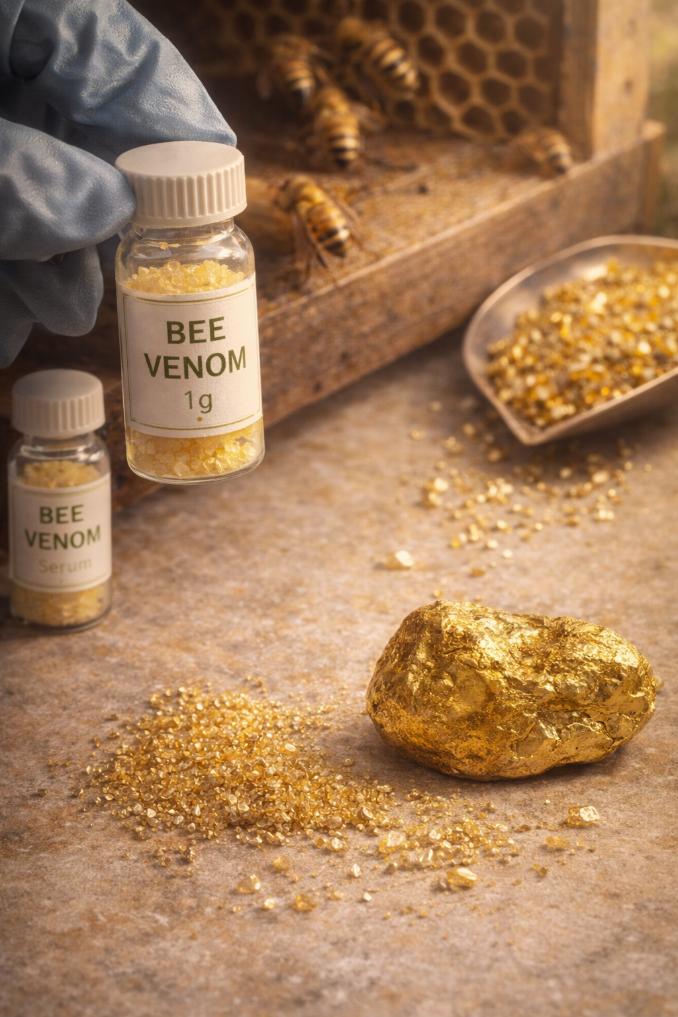
- One gram of bee venom can be worth more than gold
- Bees do not die during modern venom collection
- Bee venom skincare uses less venom than medical apitherapy
Sustainability and Ethical Considerations
Ethical bee venom skincare depends on:
- Non-lethal collection methods
- Minimal stress to colonies
- Transparent sourcing
Smaller producers and suppliers who prioritise bee welfare tend to disclose collection practices openly. Supporting these brands helps ensure skincare use does not come at the expense of hive health.
FAQs
Is bee venom safe for skin?
For most people without allergies, yes — when used in low concentrations and reputable products.
How do I use bee venom products?
Apply as directed, usually once daily at first. Avoid broken skin and always patch test.
Does bee venom really reduce wrinkles?
It may help soften fine lines over time by supporting skin repair, but results vary.
Can bee venom help acne?
Its antimicrobial and anti-inflammatory effects may benefit some acne-prone skin types, though sensitivity is possible.
Is bee venom skincare suitable for sensitive skin?
Sometimes — but only with patch testing and low-strength formulas.
Is bee venom better than synthetic anti-ageing ingredients?
Not better — different. It works through biological signalling rather than surface hydration or chemical exfoliation.
Final Thoughts
Bee venom skincare sits at the intersection of traditional knowledge and modern cosmetic science. When ethically sourced and carefully formulated, it offers an intriguing approach to skin repair and ageing support — but it is not suitable for everyone.
As with all beehive products, understanding how it works, how it is sourced, and who should avoid it is essential to responsible use.
For a broader context on how bee venom fits alongside other hive substances — from propolis and beeswax to honey and royal jelly — you may find our Complete Guide to Beehive Products and Their Uses a helpful next step.